

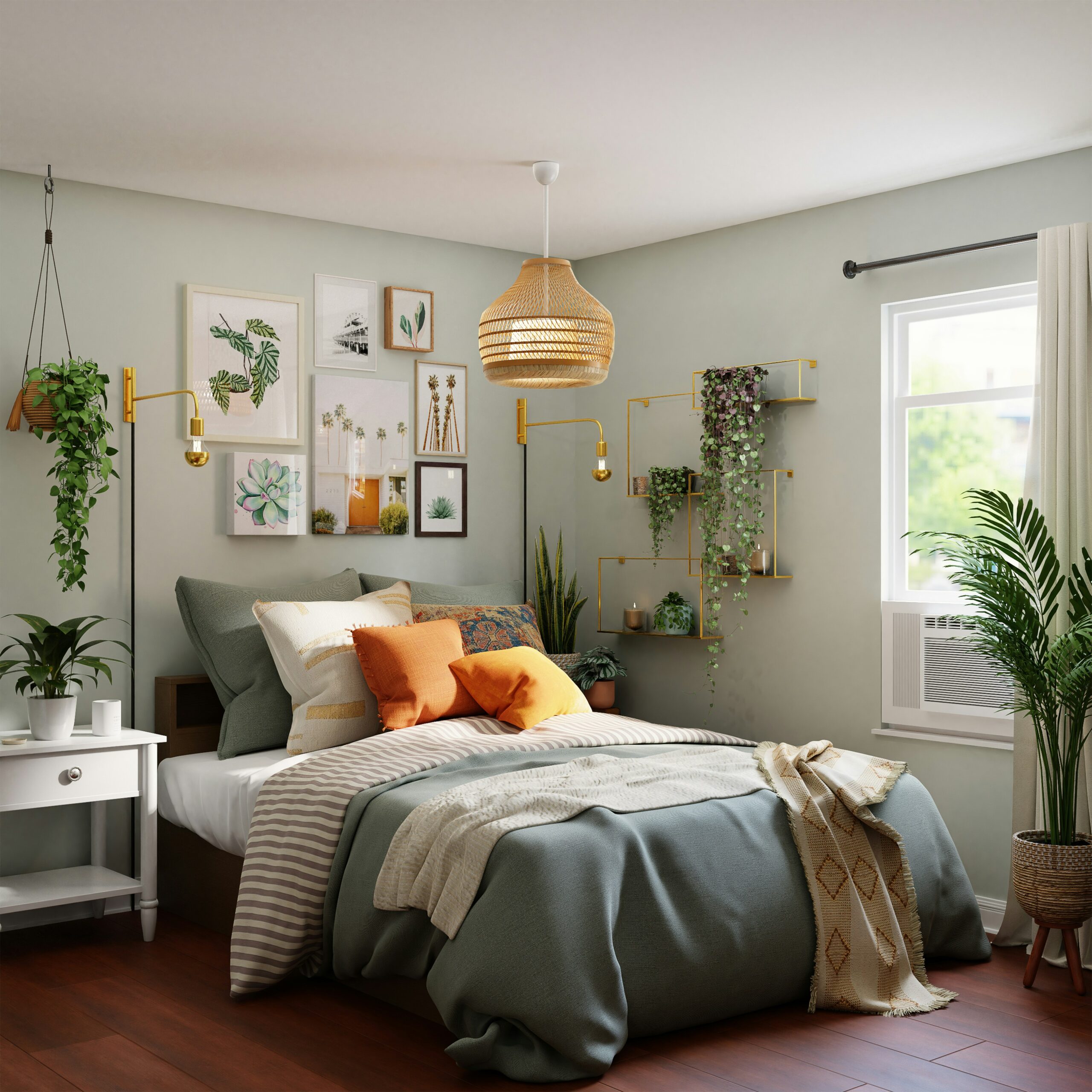
Making a small bedroom work feels impossible when you’re staring at a cramped space wondering where everything will fit. The reality is that most people deal with bedrooms that measure between 70 to 100 square feet, and somehow need to sleep, store clothes, and maintain their sanity.
The good news? Small bedrooms force you to think smarter about every inch. You need a clear plan that prioritizes function without sacrificing comfort.
Why Floor Space Matters More Than You Think?
Clear floor space isn’t just about aesthetics. When you can walk freely around your bedroom, the entire room feels larger. Your brain processes open floor areas as breathing room, which directly impacts how comfortable you feel in the space.
A bedroom crammed with furniture triggers stress responses. You bump into things, feel claustrophobic, and start avoiding the room altogether. Keeping at least 24 inches of walking space around your bed makes a measurable difference in daily comfort.
Starting With the Right Bed Position
Your bed takes up roughly 40% of your bedroom’s square footage. Position it wrong, and you’ve already lost the layout battle.
Place your bed against the longest wall first. This sounds obvious, but many people default to centering it on a short wall because it “looks balanced.” That balance costs you precious floor space on both sides.
Corner placement works exceptionally well in rooms under 100 square feet. Push your bed into a corner, and you immediately reclaim an entire wall for storage or movement. Yes, you lose access to one side, but you gain significant floor area where it counts.
Platform beds with built-in storage eliminate the need for separate dressers. Look for options with drawers that pull out from the sides rather than the foot of the bed. Side-access drawers work better in tight spaces because you’re not blocking walkways.
Vertical Storage Beats Horizontal Every Time
Small bedrooms die from horizontal thinking. Dressers, nightstands, and low shelving eat floor space while leaving your walls empty and useless.
Wall-mounted shelves above your bed, along empty walls, or even above doorways provide storage without touching the floor. Install them at varying heights to avoid the “college dorm” look. Mix 8-inch deep shelves for books with 12-inch options for folded clothes or bins.
Tall wardrobes and armoires reach toward the ceiling instead of spreading across your floor. A single 24-inch wide wardrobe that stands 7 feet tall holds more than a traditional dresser while using half the floor footprint.
Over-door organizers seem minor but add up quickly. A hanging shoe rack on your closet door stores 24 pairs without requiring any floor or shelf space. These work equally well for accessories, cleaning supplies, or small items that clutter surfaces.
The Closet Deserves Better Treatment
Most bedroom closets waste 50% of their potential. The single hanging rod and maybe one shelf above it leave the entire lower half empty.
Double hanging rods immediately double your hanging capacity. Install one rod at 80 inches for full-length items and another at 40 inches below it for shirts and folded pants. This works because most shirts only need 38 inches of vertical clearance.
Closet floor space shouldn’t just hold shoes. Use stackable drawer units or rolling carts underneath your hanging clothes. These create accessible storage that pulls out when needed and pushes back out of sight.
Vacuum storage bags compress bulky items like winter coats and extra bedding down to one-third their original size. Store these flat on the upper closet shelf or slide them under your bed. Each bag you use effectively triples your storage capacity for seasonal items.
Furniture That Earns Its Keep
Every piece of furniture in a small bedroom should serve multiple purposes. If it only does one thing, it’s taking up space you can’t afford to waste.
Ottoman storage benches at the foot of your bed provide seating, storage, and a place to lay out tomorrow’s clothes. Choose ones with lift-top lids rather than drawers to maximize what fits inside.
Wall-mounted fold-down desks disappear when not in use. These work perfectly for small laptops or as makeup stations. When folded up, they protrude only 2-4 inches from the wall.
Nightstands with drawers or shelves beat simple table surfaces. Look for designs that extend upward with multiple tiers rather than outward with width. A tall, narrow nightstand stores the same items as a wide one while using less floor space.
Light and Color Make Space
Dark colors absorb light and make walls feel closer than they are. Paint small bedrooms in light neutrals like soft whites, pale grays, or warm beiges. These shades reflect natural light and push walls visually outward.
Mirrors strategically placed across from windows bounce light around the room. A large mirror on the wall opposite your window effectively doubles the natural light your room receives. This makes the space feel open even when furniture fills it.
Sheer curtains instead of heavy drapes keep windows from feeling blocked. Natural light reaching deep into your room creates the illusion of more space. If privacy concerns require something heavier, use cellular shades that stack compactly at the top when raised.
Under-Bed Storage Done Right
The space under your bed represents roughly 20-25 cubic feet of unused storage. Ignoring it means leaving a small closet’s worth of capacity empty.
Rolling storage containers with wheels pull out easily for access. Measure your bed’s clearance first—most beds offer 10-14 inches underneath. Containers should be 2 inches shorter than this clearance to roll smoothly.
Bed risers lift your bed frame an additional 3-7 inches if you need more under-bed clearance. These inexpensive additions cost less than $20 but can double your under-bed storage capacity.
Store items you access seasonally under the bed rather than daily-use items. Out-of-season clothes, extra linens, or sports equipment belong here. Things you need daily should stay more accessible.
The Five-Zone Layout Method
Divide your small bedroom mentally into five functional zones: sleeping, dressing, storage, work, and entry. Each zone needs definition but shouldn’t require separate furniture.
Your sleeping zone is obvious—the bed and immediate area around it. Keep this clear except for one nightstand with essentials like a lamp and phone charger.
The dressing zone combines your closet area with a small mirror and perhaps a hamper. Position these together on one side of the room so getting dressed follows a natural flow.
Your storage zone uses vertical wall space and under-bed areas. This zone shouldn’t occupy floor space—it lives above and below your primary living area.
The work zone can be as simple as a wall-mounted shelf that holds a laptop. It doesn’t need a full desk unless you work from home regularly.
The entry zone is the first two feet inside your door. Keep this completely clear so entering and exiting feels natural, not like navigating an obstacle course.
What Actually Doesn’t Belong?
Small bedrooms become cluttered because people try to squeeze in non-bedroom items. Some things don’t belong, regardless of how well you organize.
Exercise equipment rarely gets used when stored in bedrooms. The treadmill becomes a clothes rack, and weights gather dust. If you can’t dedicate a separate workout space, consider whether you actually use these items.
Excess furniture “just in case” kills small spaces. That accent chair you never sit in? Remove it. The second nightstand when one works fine? Get rid of it. Extra furniture makes a room feel cramped even when organized well.
Collections and decorative items add visual clutter. Small bedrooms need calm, minimal surfaces. Display your favorite three items and store the rest. You can rotate displays seasonally if you want variety.
Measuring Before Buying Anything
Eyeballing dimensions doesn’t work in small spaces. A dresser that looks perfect in the store becomes an immovable obstacle when it’s six inches wider than expected.
Measure your room’s exact dimensions, including ceiling height. Note where doors swing, where outlets are located, and how much clearance windows need. Draw a simple floor plan on graph paper with one square equaling one foot.
Measure every piece of furniture before purchasing. Check the actual dimensions, not just the size category. “Standard” dressers range from 30 to 72 inches wide—that variation determines whether you have a functional bedroom or a storage warehouse.
Leave 30 inches of clearance in primary pathways. This allows comfortable movement even when you’re carrying laundry or rushing to turn off an alarm. Tight spaces that save six inches of floor space create daily frustration worth avoiding.
Making It Actually Work Long-Term
Small bedroom layouts fail when they’re too rigid. Life changes, needs shift, and what works today might feel cramped in six months.
Schedule quarterly decluttering sessions. Set a calendar reminder to remove items you haven’t used in three months. Small spaces accumulate junk quickly, and regular purging keeps things functional.
Use consistent storage containers and labels. When everything has a designated spot, maintaining organization becomes automatic rather than a constant battle. Clear bins let you see contents without opening everything.
Keep surfaces clear except for daily essentials. Your dresser top shouldn’t hold random items that never get put away. Limit each surface to three items maximum—a lamp, a plant, and one decorative piece creates visual calm without clutter.
The Reality of Small Bedroom Living
Small bedrooms require discipline that larger spaces forgive. You can’t buy something new without removing something old. Every item needs a designated home.
This restriction becomes freedom once you adjust. Less stuff means less cleaning, less organizing, and less time wasted looking for things. Small bedrooms force intentional living that many people find surprisingly satisfying.
Your bedroom should feel like a retreat, not a storage unit. When you prioritize sleep and calm over cramming in everything you own, even 70 square feet becomes enough. The key is making every choice deliberate and every inch functional.
