

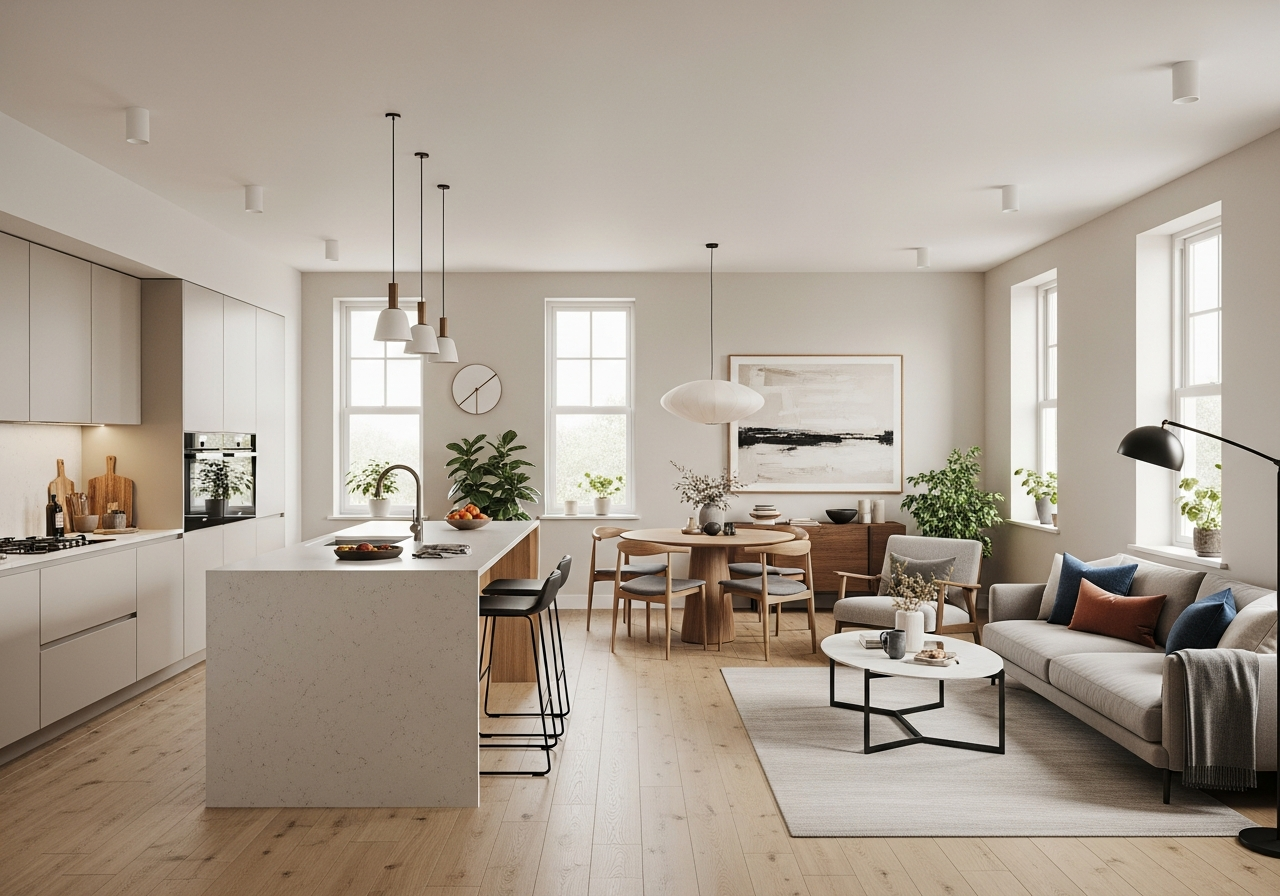
Walking into a beautifully designed open-plan kitchen and living room feels like breathing fresh air. The space expands before you, light bounces between areas, and everything works. But achieving that effortless flow while keeping chaos at bay requires more than knocking down walls.
Why Open Plan Layouts Work for Modern Living?
Open plan spaces have dominated home design for good reason. They suit how we actually live today—cooking while helping kids with homework, entertaining guests without being isolated in the kitchen, and making smaller homes feel significantly larger.
The challenge isn’t whether to embrace this layout. It’s how to make it work without creating a disorganized mess where cooking smells invade your couch and kitchen clutter becomes your living room view.
Defining Zones Without Building Walls
Your biggest ally in conquering open plan design is creating distinct zones that feel connected yet separate. This invisible structure keeps your space organized while maintaining that coveted open feeling.
Kitchen islands serve double duty as the most practical zone divider. Position your island to face the living area, creating a natural boundary that allows conversation while providing extra prep space and storage. Add bar stools on the living room side to establish a casual dining zone that bridges both areas.
Flooring changes signal transitions effectively without interrupting sightlines. Run wood flooring through your living area, then switch to tile or luxury vinyl in the kitchen zone. This practical choice also handles spills better where they’re most likely to happen.
Furniture placement creates invisible walls. Float your sofa away from the wall with its back toward the kitchen. This defines the living space boundary while keeping the room feeling open. A console table behind the sofa adds functionality and reinforces the division.
Rugs anchor living areas and prevent your seating from floating awkwardly in space. Choose a rug large enough that all furniture legs sit on it, creating a cohesive conversation area that feels intentional.
Managing the Visual Clutter Problem
Open plan living puts everything on display. What happens in your kitchen is now part of your living room scenery, so managing visual clutter becomes critical.
Closed storage wins in kitchens connected to living spaces. Upper cabinets that reach the ceiling hide everyday items and make your space look taller. Reserve open shelving for a single display area rather than exposing all your dishware.
Matching cabinet doors to walls makes kitchens recede visually. Paint cabinets the same color as your walls, and they’ll fade into the background, letting your living area take center stage.
Conceal appliances when possible. Panel your dishwasher and refrigerator to match the cabinets. Choose a range hood that makes a design statement rather than looking purely functional, or opt for a sleek, hidden downdraft system.
Create a drop zone near your kitchen entrance with closed storage for mail, keys, and daily clutter. This prevents the kitchen counter from becoming a dumping ground visible from your living space.
Lighting Strategy for Multifunctional Spaces
Single overhead lights fail spectacularly in open plan layouts. You need layered lighting that adapts to different activities happening simultaneously.
Task lighting focuses on work areas. Install under-cabinet lights in your kitchen to illuminate countertops without casting shadows. Pendant lights over islands provide focused light for food prep and casual dining.
Ambient lighting sets the overall mood. Recessed ceiling lights on dimmer switches let you adjust brightness for cooking, entertaining, or movie watching. Space them evenly throughout the entire open area for balanced illumination.
Accent lighting adds depth and interest. LED strips above upper cabinets create a soft glow that makes ceilings feel higher. Table lamps in your living area add warmth and make the space feel layered rather than flat.
Match light temperatures across zones for visual harmony. Stick with warm white (2700-3000K) throughout to create cohesion, or use slightly cooler light in the kitchen (3500K) if you prefer brighter task lighting.
Color and Material Continuity
Visual flow happens when your eye moves smoothly through the space without jarring transitions. Strategic color and material choices make this possible.
Limit your color palette to three main colors used in varying proportions throughout both zones. Let one neutral dominate, add a secondary supporting color, and include an accent color in smaller doses.
Repeat materials between spaces to create visual links. If your kitchen has brass hardware, echo it with brass picture frames or lamp bases in the living room. Wood tones from kitchen stools can appear again in coffee table legs.
Maintain consistent trim and molding throughout the entire space. Paint all baseboards, door frames, and crown molding the same color to unify the areas.
Choose complementary rather than matching furniture styles. Your kitchen cabinets don’t need to match your living room furniture exactly, but they should share similar design sensibilities—modern with modern, traditional with traditional.
Traffic Flow and Practical Layouts
How people move through your space determines whether it functions smoothly or creates daily frustrations.
The kitchen work triangle still matters even in open layouts. Keep your sink, stove, and refrigerator within easy reach of each other, with clear paths between them. Avoid placing your island where it blocks this natural workflow.
Create multiple pathways between areas. Don’t force everyone through the kitchen to reach the living room. Design at least two ways to move through the space so people aren’t constantly in each other’s way.
Maintain 42 to 48 inches of walkway space between furniture pieces and between the island and other kitchen elements. This allows comfortable passage, even when cabinet doors or the dishwasher are open.
Position seating away from main traffic routes. Nobody wants people walking behind them while they’re relaxing. Arrange your sofa and chairs in spots that feel protected from foot traffic.
Controlling Noise and Smells
Open plans share everything—including sounds and odors that you’d rather contain.
Invest in a powerful range hood rated for your space size. Look for models with at least 300 CFM for regular cooking or 600+ CFM if you cook frequently. Proper ventilation stops cooking smells from settling into your furniture and fabrics.
Add soft materials that absorb sound. Area rugs, upholstered furniture, and curtains all help reduce the echo that makes open spaces feel loud. A rug pad under your living room rug adds extra sound-dampening.
Choose quieter appliances when replacing old ones. Check decibel ratings—dishwashers under 44 dB and range hoods under 60 dB run quietly enough for open layouts.
Consider acoustic ceiling treatments if noise becomes problematic. Coffered ceilings, wood beam details, or acoustic panels disguised as design features reduce sound bounce without obvious soundproofing materials.
Furniture Selection for Open Spaces
Furniture scale makes or breaks open-plan layouts. Too large, and your space feels cramped. Too small, and the rooms look sparse and awkward.
Choose lower-profile seating that maintains sightlines. A low-back sofa lets you see into the kitchen from the living area, keeping the space feeling open. Save high-back chairs for corner spots where they won’t block views.
Select proportional dining solutions. If your space is tight, skip the full dining table and rely on island seating for everyday meals. For homes with room, choose an extendable table that grows for gatherings but stays compact daily.
Avoid blocking windows with furniture whenever possible. Natural light is precious in open plans—let it flow throughout both zones by keeping windows clear.
Match furniture scale to room size. A massive sectional overwhelms a small open plan, while a tiny loveseat looks lost in a large space. Measure carefully and choose pieces that fit your specific dimensions.
Making It Personal Without Making It Messy
Open plan spaces need personality, but too many decorative items create the chaos you’re trying to avoid.
Follow the rule of three for decorative groupings. Arrange items in odd numbers—three candlesticks, five frames, seven books—for arrangements that feel intentional rather than cluttered.
Create one focal point per zone. Let your fireplace or TV anchor the living area while a beautiful range or striking backsplash highlights the kitchen. Multiple competing focal points create visual confusion.
Rotate seasonal decor instead of displaying everything at once. Store off-season items and refresh your space periodically, keeping displays from feeling stale without adding clutter.
Choose meaningful art and objects rather than filling every surface. A few pieces you genuinely love create more impact than dozens of meaningless decorations.
The Reality Check
Designing an open plan kitchen and living room that flows beautifully while staying organized requires honest planning. Think about how you actually live. Do you cook messy meals? You need serious storage and powerful ventilation. Have kids who scatter toys? Build in dedicated storage solutions.
The most successful open plans balance aspiration with reality—they look beautiful but also accommodate real life without constant stress.
