

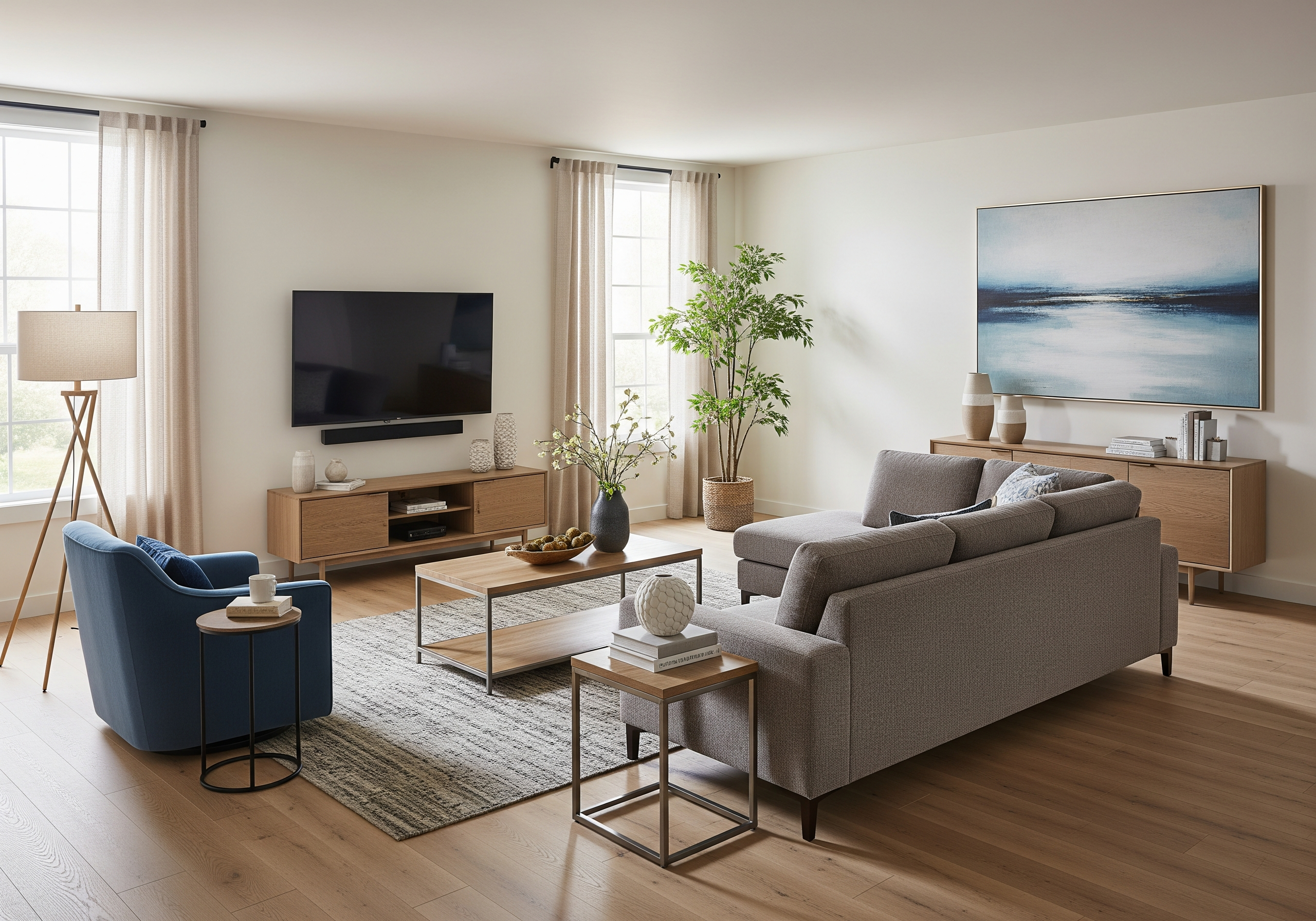
Your living room should be the most inviting space in your home, but poor furniture placement can make it feel cramped, awkward, or just plain uncomfortable. Let’s fix the mistakes that are holding your space back.
1. Pushing All Furniture Against the Walls
This is the biggest mistake homeowners make, especially in smaller spaces. Shoving Everything against the walls might create more room, but it actually does the opposite.
Floating your furniture away from the walls creates intimate conversation areas and makes your room feel larger. Pull your sofa 12-18 inches away from the wall. Add a console table behind it for depth and functionality. Your room will instantly feel more intentional and professionally designed.
The only exception? Tiny apartments where you genuinely need every inch of floor space.
2. Blocking Natural Light Sources
Walking into a room and finding a sofa backed against a window is frustrating. You’re blocking your best light source and wasting a beautiful view.
Position furniture to complement your windows, not compete with them. Place seating at angles that let you enjoy natural light without glare hitting screens or faces. If you must put something near a window, choose low-profile pieces like a bench or ottoman that won’t obstruct light flow.
Consider how sunlight moves through your space at different times. Morning light in the east, afternoon glow from the west—plan accordingly.
3. Ignoring Traffic Flow Patterns
Your living room isn’t a museum. People need to move through it naturally without playing furniture Tetris.
Create clear pathways at least 30 inches wide between seating areas and doorways. The main walkways should be 36-42 inches to accommodate two people passing comfortably. Map out how you actually move through the space daily before committing to a layout.
Common trouble spots include the path from the entryway to the kitchen and the route to the bathrooms. Keep these lanes obstacle-free.
4. Choosing the Wrong Size Rug
A rug that’s too small makes your entire room look cheap and disconnected. This mistake shrinks your space visually and breaks up your furniture grouping.
Here’s what works:
- All furniture legs on the rug (best for larger rooms).
- Front legs only on the rug (works for most spaces).
- Rug extends 18-24 inches beyond furniture on all sides.
Avoid rugs that barely reach the front of your sofa or leave awkward gaps. Your rug should anchor the seating area and tie Everything together, not float randomly in the middle of the room.
5. Centering Everything on the TV
Not every living room needs to worship at the altar of television. When you design your entire layout around a screen, you sacrifice conversation and flexibility.
Create multiple focal points. A fireplace, large window, or stunning piece of art deserves attention, too. Arrange seating to encourage face-to-face interaction first, with the TV as a secondary consideration.
If you’re a dedicated TV watcher, fine—but don’t sacrifice comfort and conversation for screen time. Angle chairs slightly toward each other even in TV-focused rooms.
6. Mismatched Furniture Heights
When your coffee table towers over your sofa or your end tables barely reach the armrests, something’s off. These proportions matter more than you think.
Coffee tables should sit 1-2 inches lower than your sofa seat height. End tables should align with or sit slightly below the sofa arm. Table lamps need to be at eye level when seated—typically 58-64 inches from the floor to the bottom of the shade.
These measurements create visual harmony and practical functionality. Your drink stays stable, your reading light hits the page correctly, and Everything feels right.
7. Overcrowding the Space
More furniture doesn’t mean better design. Cramming every piece you own into your living room creates visual chaos and physical discomfort.
Leave breathing room. Negative space is a design element, not wasted space. Each piece should serve a clear purpose. That extra chair you never sit in? Find it a new home.
Aim for balance: enough furniture for function and comfort, but not so much that you’re navigating an obstacle course. When in doubt, remove something and see if you miss it.
8. Ignoring Conversation Distance
Seating arranged too far apart kills conversation. Too close feels intrusive. The sweet spot is 4-8 feet between facing seats.
This distance lets people hear each other clearly without shouting or invading personal space. It’s based on actual human interaction patterns, not arbitrary design rules.
Create conversation zones by grouping furniture in shapes like L’s, U’s, or facing arrangements. Even large rooms benefit from multiple intimate seating areas rather than one sprawling setup.
9. Neglecting Lighting Layers
Relying solely on overhead lighting is like wearing only sunglasses indoors—it’s all or nothing, and neither option works well.
Layer these three lighting types:
- Ambient lighting (overhead fixtures, recessed lights).
- Task lighting (reading lamps, desk lights).
- Accent lighting (picture lights, uplights, candles).
Place table lamps on end tables, floor lamps in dark corners, and consider dimmer switches for mood control. Good lighting transforms a room from flat to dimensional, cold to warm, and dysfunctional to purposeful.
10. Wrong Coffee Table Size and Placement
Your coffee table should be roughly two-thirds the length of your sofa. Anything smaller looks dinky; larger overwhelms the space.
Leave 14-18 inches between the coffee table and seating. This gives enough room for legs and feet while keeping drinks and remotes within easy reach. Less than 14 inches feels cramped; more than 18 inches forces awkward stretching.
Round or oval tables work better in tight spaces and homes with small children. Rectangular tables suit traditional layouts. Your lifestyle should drive this choice.
11. Forgetting About Scale and Proportion
A massive sectional in a small room or tiny furniture in a spacious area throws off the entire balance. Scale matters tremendously.
Match furniture size to room dimensions—measure before you buy. A 90-inch sofa might look perfect in the showroom, but it will dominate your 12×12 living room. Conversely, apartment-sized furniture gets lost in a sprawling space.
Consider ceiling height, too. Standard 8-foot ceilings call for lower-profile furniture. Rooms with 10+ foot ceilings can handle taller pieces and more dramatic vertical elements.
12. Positioning Furniture Without Testing First
Committing to a layout without testing it first is like buying shoes without trying them on. You might get lucky, but probably not.
Use painter’s tape to map out furniture footprints on the floor before moving anything heavy. Live with the layout for a day or two. Sit in different spots at different times. Watch TV from each angle. Have a conversation about proposed seating positions.
This testing phase reveals problems before they become permanent headaches. You’ll discover that the sofa blocks the vent, the chair crowds the doorway, or the coffee table creates an awkward zigzag through the room.
Quick Measurement Guide
Keep these numbers handy when planning your layout:
- Sofa to coffee table: 14-18 inches.
- Conversation seating distance: 4-8 feet.
- Walkway width: 30-36 inches.
- Main traffic paths: 36-42 inches.
- Rug extension beyond furniture: 18-24 inches.
- Coffee table height vs. sofa: 1-2 inches lower.
- TV viewing distance: 1.5-2.5 times screen diagonal size.
The Bottom Line
Great furniture placement isn’t about following rigid rules—it’s about creating a space that works for how you actually live. Start by identifying your room’s purpose and traffic patterns, then arrange furniture to support both.
Walk through your space with fresh eyes. Sit in every seat. Move through every pathway. If something feels off, it probably is. Trust that instinct and adjust accordingly.
