

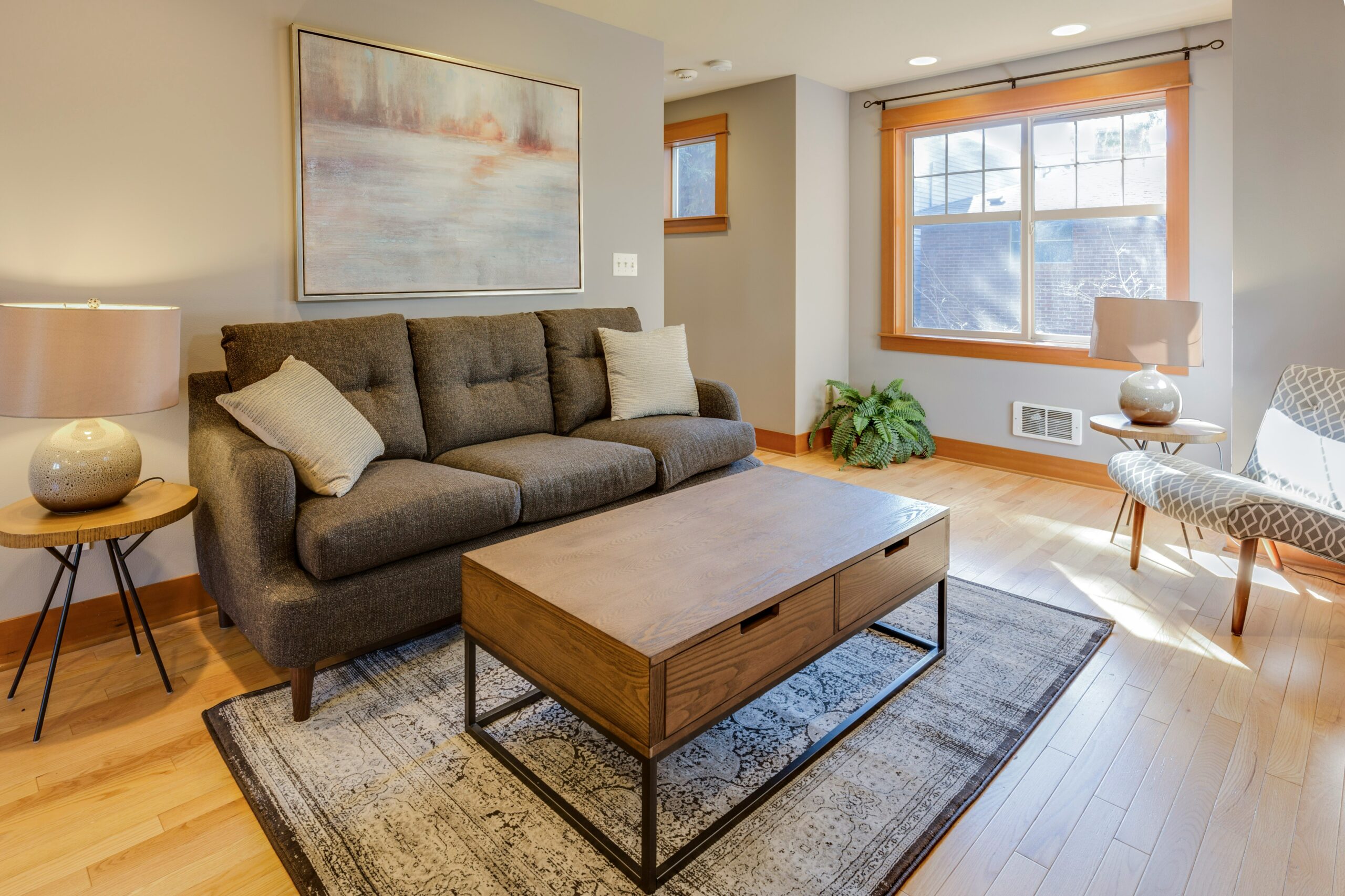
Living in a small space doesn’t mean sacrificing style or comfort. The right furniture placement can transform a cramped living room into a functional, inviting retreat that feels surprisingly spacious.
Most people make the mistake of pushing furniture against walls, thinking it creates more space.
The reality? This approach often makes rooms feel smaller and disconnected. Strategic placement matters more than square footage.
Why Furniture Placement Makes or Breaks Small Spaces?
Your furniture arrangement directly impacts how you move through and use your living room. Poor placement creates awkward traffic patterns, wasted corners, and a cluttered feeling, regardless of how much stuff you actually own.
Smart layouts maximize every inch while maintaining breathing room. The goal is to create zones that serve multiple purposes without overwhelming the space.
Layout 1: The Floating Furniture Setup
Pull your sofa 12-18 inches away from the wall. This counterintuitive move creates depth and makes the room feel larger.
Place a narrow console table behind the sofa for extra storage and display space. Add a floor lamp in the corner to eliminate dead space while providing ambient lighting.
This works best in rooms at least 12 feet wide. The key is maintaining clear walkways of at least 30 inches around furniture pieces.
Layout 2: The L-Shaped Conversation Zone
Position your sofa along one wall and place a loveseat or two accent chairs perpendicular to it. This creates an intimate conversation area without blocking sight lines.
Use a small round coffee table instead of a rectangular one. Round tables allow easier movement and prevent bruised shins in tight quarters.
Anchor the arrangement with a 5×7 or 6×9 area rug. The rug defines the space and makes it feel intentional rather than cramped.
Layout 3: The Sectional Corner Solution
Small sectionals designed for apartments fit snugly into corners while providing ample seating. Look for pieces under 80 inches on each side.
Face the sectional toward a wall-mounted TV or focal point. This opens up the center of the room for a coffee table and easy traffic flow.
Skip the bulky entertainment center. Wall-mount your TV and use floating shelves underneath for components and decorative items.
Layout 4: The Dual-Purpose Dining Combo
Place a small sofa or loveseat facing the room’s longest wall. Behind it, position a narrow console table that doubles as a dining surface or workspace.
Add two stools or folding chairs that tuck underneath when not in use. This gives you dining space without dedicating square footage to a separate table.
Use a floor-to-ceiling bookshelf in one corner for storage and visual height. Vertical storage draws the eye up and makes ceilings feel higher.
Layout 5: The Angled Furniture Trick
Position your main seating at a 45-degree angle in one corner. This unexpected placement creates dynamic energy and makes the room feel less boxy.
The diagonal arrangement naturally creates two distinct zones on either side. Use one for seating and the other for a reading nook or plant display.
Balance the angled piece with straight-lined furniture elsewhere to prevent the space from feeling chaotic.
Layout 6: The Symmetrical Split
Divide your living room down the middle with two identical loveseats facing each other. Place a small coffee table or ottoman between them.
This formal arrangement works well in narrow rectangular rooms. It creates a clear path down the center while maximizing seating capacity.
Use matching table lamps on side tables at each end to reinforce the symmetry. Balanced lighting makes small spaces feel more cohesive and intentional.
Layout 7: The Multi-Functional Ottoman Layout
Replace your coffee table with a large storage ottoman. You gain hidden storage, extra seating, and a footrest in one piece.
Surround the ottoman with a small sofa and two compact armchairs. Add a tray on top of the ottoman when you need a stable surface for drinks or remotes.
Choose an ottoman at least 18 inches from the sofa edge. This provides adequate legroom while keeping everything within easy reach.
Layout 8: The Window-Focused Setup
Place your seating to face your best natural light source rather than automatically centering on the TV. A sofa positioned perpendicular to windows maximizes daylight while creating an inviting reading spot.
Mount the TV on a wall adjacent to the windows. Use blackout curtains or shades for movie watching without glare issues.
Add a slim console table along the wall opposite the windows for balance and storage without blocking light flow.
Layout 9: The Modular Flexibility Layout
Invest in modular seating pieces that separate and reconfigure. Two armless chairs can push together to form a loveseat or split apart for additional seating when guests arrive.
Include a nesting coffee table set. The smaller tables tuck underneath the larger one daily but pull out when you need extra surface space.
This adaptable approach lets you customize the layout based on whether you’re relaxing solo or entertaining friends.
Layout 10: The Minimalist Open Floor
Use just one statement sofa and one accent chair. Leave a significant open floor space in the center of the room.
This sparse approach works when you prioritize a feeling of openness over maximum seating. The space becomes a design feature rather than something to fill.
Add a large plant in the open area and a floor pouf that moves easily. The room breathes while remaining functional for daily use.
Essential Furniture Sizing Guidelines
Small living rooms demand right-sized furniture. Standard pieces often overwhelm tight spaces.
Sofa dimensions for small rooms:
- Length: 72-84 inches maximum.
- Depth: 32-36 inches.
- Arm width: Under 6 inches (track arms or English arms).
Coffee table proportions:
- It should be two-thirds the length of your sofa.
- Height of 16-18 inches (level with sofa cushions).
- At least 18 inches from seating on all sides.
Accent chair measurements:
- Width: 28-32 inches.
- Depth: 30-34 inches.
- Choose armless styles when possible.
Traffic Flow and Clearance Requirements
Maintain these minimum clearances for comfortable movement:
- Main walkways: 36 inches wide.
- Between furniture pieces: 18-24 inches.
- Around coffee tables: 12-18 inches minimum.
- In front of seating: 3-4 feet for legroom.
Map your traffic patterns before committing to a layout. Walk the paths you’d use daily to test if the arrangement supports natural movement.
Visual Tricks That Amplify Space
Furniture placement works hand-in-hand with visual strategies that make rooms feel larger.
Use furniture with exposed legs rather than skirted pieces. Visible floor space underneath creates an airier feeling.
Choose glass or acrylic coffee tables. Transparent surfaces don’t add visual weight despite providing function.
Mount mirrors opposite windows to reflect light and create depth. A large mirror can visually double your square footage.
Select furniture in light to medium tones. Dark pieces can anchor small spaces, but too many create a cave-like atmosphere.
Common Mistakes to Avoid
Oversized furniture is the number one killer of small living rooms. That sectional might seem cozy in the showroom, but it’ll dominate a 10×12 room.
Blocking windows with tall furniture prevents natural light from spreading throughout the space. Keep window areas clear or use low-profile pieces nearby.
Creating too many small zones fragments the room and makes it feel choppy. Stick to one or two primary functions per space.
Ignoring scale with accessories matters too. One large piece of artwork works better than a gallery wall of small frames in compact rooms.
Making Your Layout Work Long-Term
Test your layout for at least a week before committing. Live with the arrangement to identify awkward moments or traffic bottlenecks.
Take photos from different angles. Pictures reveal what your eye might miss about proportion and balance.
Measure everything twice. A few inches can mean the difference between comfortable and cramped in small spaces.
Consider seasonal needs. Can you rearrange easily if you want the sofa closer to the fireplace in winter or facing the windows in summer?
Final Thoughts on Small Space Success
The best small living room layout balances function, flow, and personal style. What works for someone else might not suit your daily routines or preferences.
Start with one layout that addresses your biggest pain point—whether that’s seating capacity, storage, or just feeling less cramped. Make incremental adjustments rather than overhauling everything at once.
