

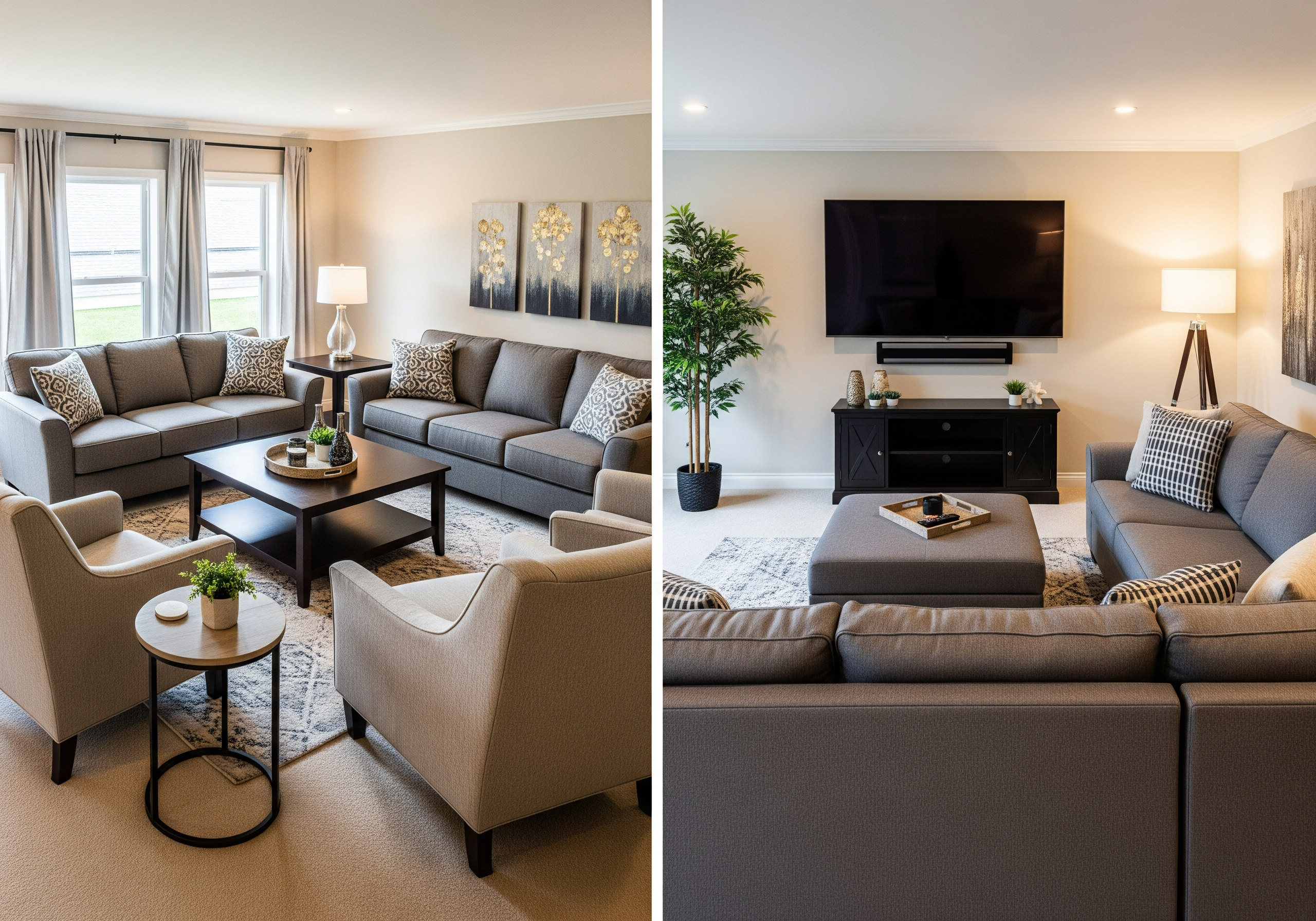
Getting your sofa placement right can make or break your living room’s functionality. Whether you’re hosting friends or settling in for movie night, where you position your furniture determines how well the space works for you.
Understanding Your Living Room’s Primary Purpose
Before moving a single piece of furniture, ask yourself one honest question: How do you actually use this room?
If you host dinner parties every weekend and watch Netflix once a month, your setup should reflect that. If you’re streaming something every evening but rarely have guests, that’s a different story entirely.
Most people fall somewhere in the middle. You want flexibility without compromise. The good news? You can have both with smart placement strategies.
The Conversation-First Layout
When prioritizing conversation, your sofa becomes the anchor of a social hub rather than stadium seating for a screen.
Creating the Classic Conversation Zone
Place your sofa facing into the room, not toward a wall-mounted TV. Position it perpendicular to the room’s entrance so guests naturally flow into the seating area.
Add chairs across from the sofa, creating a U-shape or L-shape arrangement. This setup puts everyone within comfortable speaking distance—roughly 8 to 10 feet apart.
The sweet spot for conversation distance is close enough to hear whispers but far enough that you’re not invading personal space. Anything beyond 12 feet and you’re shouting across the room.
The Floating Sofa Technique
Pull your sofa away from the walls. Yes, really.
A sofa floating in the middle of the room creates a defined conversation area and makes the space feel intentional rather than pushed against the perimeter like a middle school dance.
Leave at least 30 inches between the sofa back and the wall behind it. This creates a natural walkway and prevents that cramped, furniture-showroom feeling.
If you’re working with a smaller room, even 12 to 18 inches of breathing room makes a difference.
Coffee Table Positioning for Conversation
Your coffee table should sit 14 to 18 inches from the sofa edge. Closer than that and you’re bumping knees. Further away, and you’re doing ab workouts, reaching for your drink.
Keep the table height within 2 inches of your sofa seat height. This makes setting down glasses and plates feel natural rather than awkward.
The TV-Viewing Layout
When the screen takes priority, your sofa placement follows different rules based on viewing angles and distance.
Finding the Optimal Viewing Distance
Take your TV screen size in inches and multiply by 1.5. That’s your minimum viewing distance in feet. For a 55-inch TV, you want at least 7 feet between the screen and sofa.
For a more cinematic experience, multiply the screen size by 2 or 2.5. This prevents eye strain during longer viewing sessions and gives you a more immersive feel without overwhelming your field of vision.
Sitting too close turns movie night into a neck-craning exercise. Sitting too far, and you’re squinting at faces during dialogue-heavy scenes.
Angle Matters More Than You Think
Position your sofa directly facing the TV, not at an angle. Even a 15-degree offset creates uncomfortable viewing for whoever sits on the ends.
If you have a sectional, place the TV where the majority of seats face it straight-on. The person on the chaise or corner seat might have a slight angle, but most viewers should have dead-center positioning.
Mount your TV at eye level when seated. This usually means the center of the screen sits 42 to 48 inches from the floor, depending on your sofa height.
Managing Glare and Lighting
Never position your sofa facing windows during daytime viewing. You’ll spend half the movie adjusting blinds or fighting screen glare.
Place the TV perpendicular to the windows instead. This gives you natural light without reflections destroying your viewing experience.
If your room layout forces a window situation, invest in blackout curtains or shades. Your future self will thank you during that sunny Saturday afternoon binge session.
The Hybrid Layout That Actually Works
Most people need a living room that handles both scenarios without constantly rearranging furniture.
The Angled Sectional Solution
A sectional positioned at a slight angle can face both a conversation area and a TV. Place the long side facing the screen, with the shorter section angling toward additional seating.
This creates natural zones within one room. TV watchers sit in the main section, while someone reading or chatting can use the angled portion without feeling excluded from either activity.
Add a swivel chair or two to maximize flexibility. These let people turn toward conversation or the screen as needed.
Multiple Seating Groups
In larger rooms, create two distinct seating areas. One primary sofa faces the TV while a secondary grouping focuses on conversation.
This works particularly well in open-concept spaces where your living room bleeds into a dining area. The TV zone handles entertainment while the conversation area provides a quieter space for chatting.
Use area rugs to separate these zones visually. Different rugs signal different purposes without building walls.
The Modular Approach
Invest in lightweight, movable seating pieces. A sofa that faces the TV most of the time can be repositioned for parties with 10 minutes of effort.
Ottoman seating, lightweight accent chairs, and poufs give you flexibility without permanent commitment. Slide them into conversation circles when hosting, push them aside for movie night.
This approach requires storage space for occasional furniture, but it’s worth it if you regularly switch between entertainment modes.
Room Shape Considerations
Your room’s dimensions dictate what layouts actually function versus what looks good on paper.
Long, Narrow Rooms
Place your sofa perpendicular to the longest wall, not parallel. This breaks up the bowling alley effect and creates better proportions.
Put the TV on one short wall, sofa facing it from the middle of the room. Use the space behind the sofa for a console table or additional seating facing the opposite direction.
This arrangement creates two zones in a challenging space.
Square Rooms
Center your sofa on one wall with the TV on the opposite wall. Flank the sofa with matching chairs or a loveseat perpendicular to create an L-shape.
This maximizes seating while maintaining clear sightlines for both conversation and viewing.
Open-Concept Spaces
Use your sofa as a room divider. Position it with the back toward the kitchen or dining area, creating a visual boundary between spaces.
The TV goes on the wall facing into the living zone, keeping screens out of sight during meals.
Traffic Flow and Doorway Placement
Never block natural pathways with your sofa placement. People should move through the room without playing a furniture obstacle course.
Leave at least 30 inches of clearance between furniture pieces for comfortable passage. Main walkways need a minimum of 36 inches.
If your living room has multiple doorways, position the sofa so it doesn’t create a barrier between entry points. People entering the room should see the seating area welcoming them in, not a sofa back blocking their path.
Common Mistakes to Avoid
Pushing all furniture against the walls makes rooms feel larger on paper but uncomfortable in reality. You end up shouting across space with no sense of intimacy.
Buying a sofa that is too large for your room before measuring. That showroom sectional loses its appeal when you can’t walk around it at home.
Ignoring your room’s focal point. Every living room has one—a fireplace, a stunning window view, and architectural detail. Work with it rather than against it.
Forgetting about side table placement. You need surfaces within arm’s reach for drinks, phones, and remotes, regardless of whether you’re prioritizing conversation or viewing.
Treating the TV as the only focal point when your lifestyle doesn’t support it. If you rarely watch TV but feel obligated to orient everything toward it, you’re designing for someone else’s life.
Making Your Decision
Walk through a typical week in your living room. Count how many hours you spend watching TV versus hosting people versus reading or doing other activities.
If TV watching dominates your usage by a 3:1 ratio, optimize for viewing comfort. If you host gatherings weekly, conversation setup deserves priority.
For balanced usage, go hybrid with movable elements that adapt to your needs.
The perfect living room layout serves your actual lifestyle, not an idealized version of how you think you should live. Design for Tuesday nights and lazy Sundays, not just the occasional party.
