

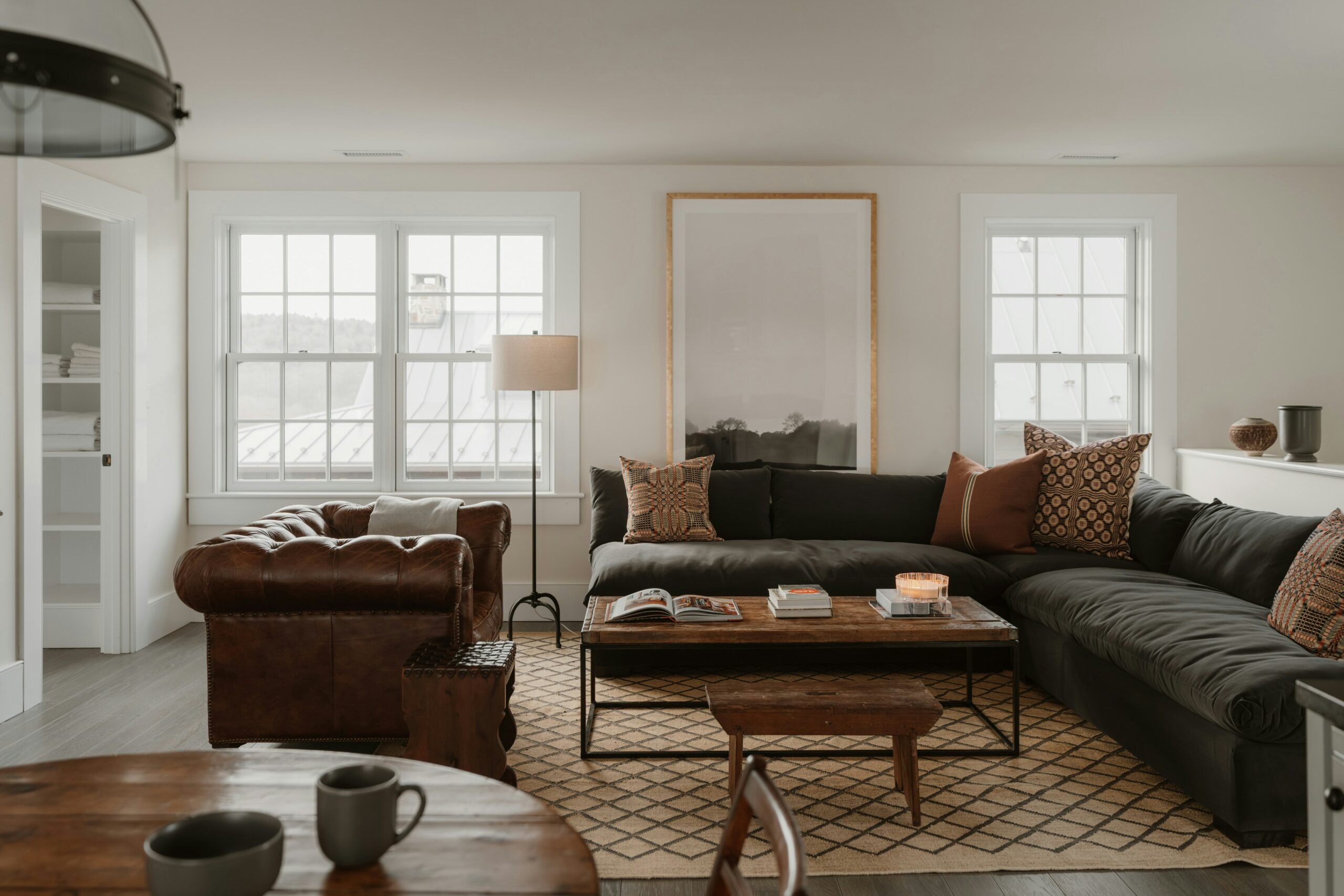
Your living room deserves better than furniture pushed against walls. The right layout transforms how you live, entertain, and feel in your most-used space.
Why Your Current Layout Probably Isn’t Working?
Most people arrange furniture based on where it fits, not how they actually use the room. You watch TV from an awkward angle. Guests perch uncomfortably on chairs too far from the conversation. Traffic flow feels like an obstacle course.
The solution isn’t buying new furniture. It’s working with what you have, smarter.
The Foundation: Measure Before You Move
Grab a tape measure. You need three numbers:
- Room dimensions (length and width).
- Doorway and window locations.
- Your largest furniture pieces.
Sketch this on paper or use a free app like MagicPlan. Moving furniture in your head beats moving it with your back.
1. The Conversation Circle Layout
Pull furniture away from walls. Create a circular seating arrangement with 8-10 feet between facing sofas or chairs.
This works because humans naturally gather in circles. Your guests will thank you when they don’t need to shout across a canyon-sized room.
Best for: Homes where entertaining matters more than TV watching.
You’ll need: A sofa, two chairs, and a coffee table as your anchor point.
2. The L-Shaped Sectional Setup
Place your sectional in a corner, extending into the room. Add a chair opposite the longest section to complete the seating area.
This creates natural boundaries without walls. Perfect for open-plan spaces where you need to define the living area without blocking sightlines.
Best for: Open floor plans and families who need flexible seating.
Pro tip: Float the sectional away from walls by 12-18 inches. It makes your room look bigger, not smaller.
3. The Symmetrical Balance Layout
Mirror furniture on both sides of a focal point, like a fireplace or window: two identical chairs, two matching lamps, two side tables.
Your brain loves symmetry. This arrangement feels calm and intentional without effort.
Best for: Traditional homes and formal living rooms.
Watch out: Too much symmetry feels sterile. Break it with varied throw pillows or a unique coffee table.
4. The Floating Furniture Arrangement
Nothing touches the walls. Your sofa sits 3 feet into the room. Chairs create conversation zones in empty corners.
This sounds wrong until you try it. Floating furniture makes small rooms feel larger because your eye travels around pieces instead of stopping at walls.
Best for: Square rooms and spaces that feel boxy.
Quick fix: Worried about the gap behind your sofa? Add a console table with lamps—instant purpose.
5. The Dual-Purpose Zone Layout
Split your living room into two distinct areas—seating for conversation on one side, a reading nook or workspace on the other.
Use your sofa as a room divider. Face it away from the secondary zone to create psychological separation without building walls.
Best for: Large living rooms and remote workers who need home office space.
Furniture you’ll use: Sofa as divider, bookshelf as boundary, area rugs to define zones.
6. The Corner Focus Setup
Angle your TV or fireplace in a corner. Arrange seating in an arc facing this focal point.
Corner placement opens up wall space you didn’t know you had. Suddenly, there’s room for that bookshelf or bar cart.
Best for: Small to medium rooms with challenging layouts.
Bonus: Corner mounting your TV frees up an entire wall for art or storage.
7. The Traffic Flow Priority Layout
Map how people actually move through your room. Keep 30-36 inches of clear pathways between furniture groupings.
Your beautiful arrangement means nothing if guests do an awkward shuffle to reach the bathroom.
Best for: Every living room, especially high-traffic spaces.
Test it: Walk your normal routes. If you bump into furniture or turn sideways, rearrange.
8. The Small Space Maximizer
Use furniture that works overtime:
- Ottoman with storage instead of a coffee table.
- Armless chairs that tuck completely under when not needed.
- Nesting tables you pull out for guests.
- Wall-mounted TV to free up floor space.
Small rooms need furniture that earns its place twice over.
Best for: Apartments and compact living rooms under 200 square feet.
Avoid: Oversized sectionals and bulky recliners that dominate the space.
9. The Family-Friendly U-Shape
Create a U-shaped seating arrangement with your sofa as the base and chairs or loveseats forming the sides.
Everyone gets a seat, everyone can see each other, and kids have a contained play area in the middle.
Best for: Families with young children and regular game nights.
Smart addition: A large ottoman in the center serves as a coffee table, extra seating, and Lego containment zone.
10. The Narrow Room Solution
Long, skinny rooms defeat most people. The fix: Create two separate seating areas along the length.
First zone handles TV watching. The second zone becomes a reading space or conversation area. Connect them with a runner rug to unify the design.
Best for: Rectangular rooms with awkward proportions.
Divide with: A console table, bookshelf, or simply space between furniture groupings.
11. The Open Concept Definer
Use area rugs as your secret weapon. A rug under your seating arrangement tells your brain “this is the living room” even without walls.
Add a sofa table behind your floating couch. It creates a visual boundary between living and dining zones.
Best for: Open floor plans where rooms blend.
Size matters: Your rug should fit all front furniture legs, or all furniture legs—nothing in between.
12. The Fireplace-First Layout
Center everything around your fireplace. Arrange seating in a semi-circle facing the hearth.
A fireplace is architecture’s gift to furniture arrangers. Use it as your anchor point, and the room practically designs itself.
Best for: Traditional homes with working fireplaces.
TV dilemma: Mount the TV above the fireplace or on an adjacent wall. Never compete with your focal point.
13. The Minimalist Approach
Less furniture, more breathing room. One sofa, two chairs, one coffee table. That’s it.
Negative space isn’t wasted space. It makes your room feel calm, intentional, and expensive.
Best for: Modern homes and people tired of clutter.
Key principle: Every piece must be beautiful or functional. Preferably both.
14. The Angled Arrangement
Rotate your sofa 45 degrees off the wall. Add chairs at complementary angles.
Angles create energy and interest. They also solve awkward corner situations where traditional layouts fail.
Best for: Square rooms that feel too boxy and homes with architectural quirks.
Warning: This only works if you have space. Tight rooms need parallel lines.
15. The Multi-Functional Modern Layout
Your living room juggles TV watching, homework, entertaining, and relaxation—design for all of it.
Create zones with furniture placement and lighting. Bright task lighting over the homework corner. Soft ambient light for the TV area. Accent lighting to highlight your good taste.
Best for: Modern families who live in their living rooms.
Essential pieces: Comfortable seating, adequate surfaces for drinks and laptops, smart storage solutions.
Common Layout Mistakes to Avoid
Pushing all furniture against the walls makes your room feel like a doctor’s waiting area. Pull pieces forward.
Blocking natural light with tall furniture frustrates everyone. Keep window areas clear or use low-profile pieces.
Ignoring scale turns your space into a furniture showroom. A massive sectional overwhelms a small room. Tiny chairs disappear in large spaces.
Forgetting about electrical outlets creates extension cord chaos. Plan furniture around power access.
Making Your Choice
Pick the layout that matches how you actually live. Binge-watchers need TV-centric designs. Social butterflies need conversation-focused arrangements.
Start with your largest piece, usually the sofa. Everything else orbits around it.
Test your layout for a week. Live with it. Walk through it. Entertain in it. Adjust what doesn’t work.
Your living room layout should make life easier, not just look good in photos. When furniture placement supports how you move and gather, you’ve nailed it.
