

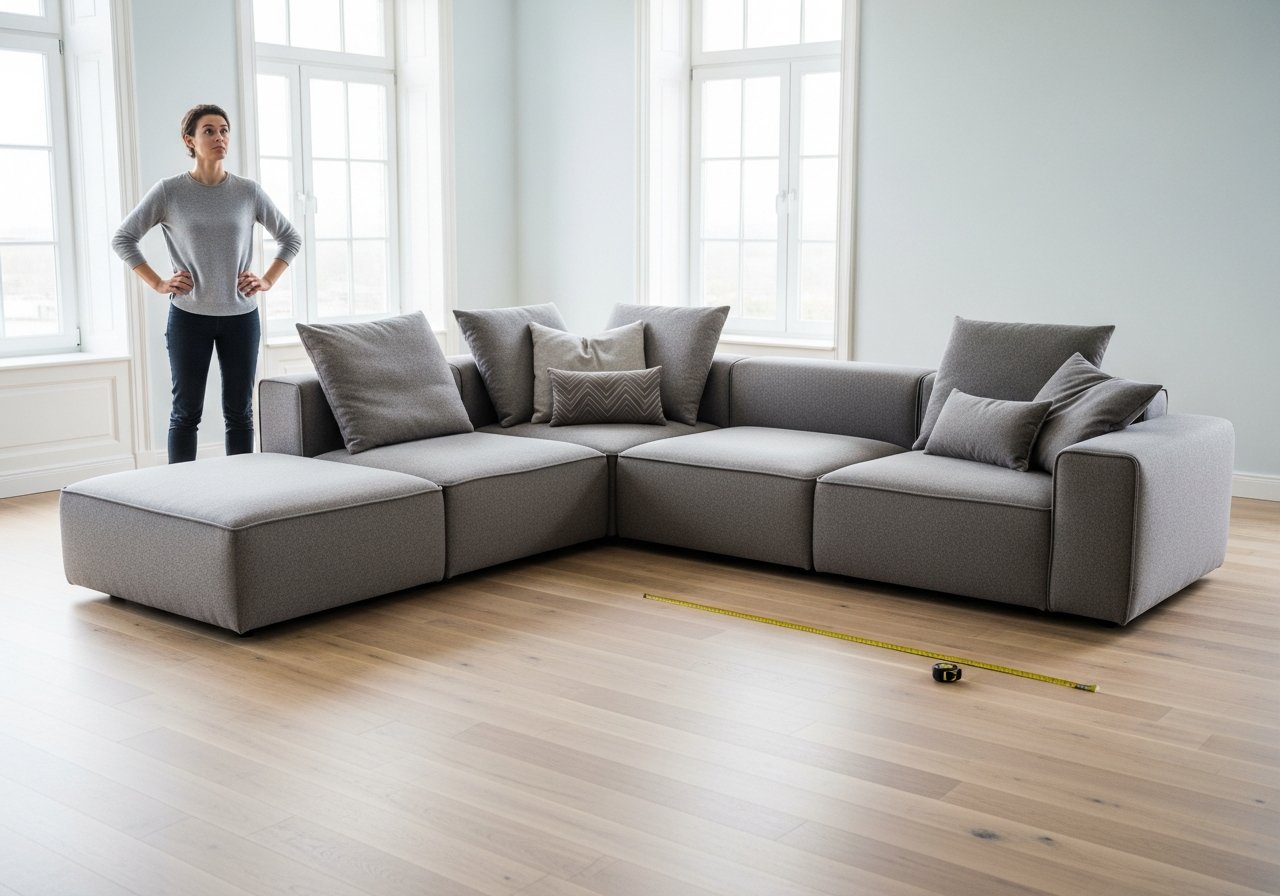
Moving into a new space should feel exciting, but that excitement quickly fades when you realize your sofa refuses to fit against any wall.
Maybe your living room has awkward angles, too many doorways, or windows taking up every wall. Whatever the reason, you’re stuck with a floating furniture dilemma that leaves you wondering if you made a terrible decorating mistake.
Why Your Sofa Won’t Fit and Why That’s Actually Fine?
Before panicking about your furniture arrangement, understand that many modern homes have layouts that make wall-hugging furniture impossible. Open floor plans, radiators under windows, French doors, and architectural features often claim every available wall space.
Here’s the reality: Interior designers have been floating furniture for decades. It’s not a compromise; it’s a legitimate design technique that can make your room feel larger and more intentional.
Float Your Sofa in the Middle of the Room
The most straightforward solution is embracing the float. Position your sofa away from the walls, creating a conversation area in the center of your space.
This works especially well in large rooms where pushing everything against the walls actually makes the space feel empty and unwelcoming. When furniture floats, it creates intimate zones within a larger area.
How to make floating work:
- Leave at least 3 feet of walking space behind the sofa.
- Anchor the arrangement with a large area rug that fits under the front legs of all seating.
- Add a console table behind the sofa for visual weight and function.
- Ensure the sofa faces a focal point like a fireplace, TV, or window with a view.
The key is making the floating placement look intentional rather than random. Everything should relate to everything else in the room.
Create Zones Within Your Space
If your living area connects to a dining room or kitchen, use your sofa as a room divider. This creates separate zones without building walls.
Position the sofa perpendicular to the wall, with the back facing the dining area. This naturally separates the spaces while maintaining an open feel. You can even add a bookshelf or credenza behind the sofa to reinforce the division.
This approach works brilliantly in studio apartments and lofts where defining separate areas makes the space feel more organized and purposeful.
Angle Your Sofa for Better Flow
Sometimes the solution isn’t placing the sofa parallel or perpendicular to the walls—it’s positioning it at an angle.
Angled furniture placement can solve multiple problems at once. It accommodates awkward room shapes, creates better traffic flow, and adds visual interest to boxy spaces.
Place your sofa at a 45-degree angle in a corner, leaving space behind it. This works particularly well in square rooms where traditional arrangements feel stiff. The angled placement softens the geometry and makes the room feel less predictable.
Just make sure the angle serves a purpose. It should improve conversation, viewing angles for the TV, or traffic patterns. Random angles without reason look accidental.
Use the Sofa to Define Your Conversation Area
Think of your sofa as the anchor piece that everything else relates to, not something that must touch a wall.
Create a U-shaped or L-shaped seating arrangement with your sofa and additional chairs. The sofa doesn’t need wall contact when it’s part of a larger furniture grouping that faces inward.
Elements of a successful conversation area:
- Sofa plus two chairs facing each other.
- Coffee table in the center, reachable from all seats.
- Side tables within arm’s reach of each seat.
- Lighting that illuminates the entire zone.
- Rug that unifies all pieces
This configuration makes your living room feel like an actual living space designed for human interaction rather than just TV watching.
Add Furniture Behind the Sofa
A floating sofa needs something behind it to avoid looking unfinished. The empty gap between the sofa back and the wall shouldn’t just sit there collecting dust.
A console table is the classic solution. It adds visual weight, provides surface space for lamps and decor, and creates storage. Choose one that’s roughly the same length as your sofa and stands a few inches below the sofa back.
Other options for behind the sofa:
- Low bookshelf for storage and display.
- Pair of matching side tables at each end.
- A bench with storage underneath.
- Floor lamps on either side with a small table between them.
- Large plants to add height and life.
Whatever you place behind the sofa should feel purposeful and proportional. Too small looks wimpy, too large overwhelms.
Consider a Sectional Instead
If your standard sofa creates impossible placement problems, a sectional might be your answer.
Sectionals naturally work well in corners and can wrap around spaces in ways that separate sofas and chairs can’t. The L-shape configuration means that at least one part usually fits against a wall, even in tricky rooms.
Modern sectionals come in modular pieces that you can rearrange as needed. If your current sofa won’t cooperate with your space, trading it for a sectional could solve everything.
Work With Awkward Windows and Radiators
Windows and radiators often claim wall space where sofas would naturally go. Instead of fighting these fixtures, work around them.
If you have a large window, consider placing the sofa perpendicular to it rather than blocking the view or light. This lets you enjoy the window while still having somewhere to sit.
For radiators, you need at least 6 inches of clearance for air circulation. If that prevents wall placement, float the sofa and let the radiator do its job unobstructed. You’ll stay warmer and avoid damaging your furniture.
Balance the Room Visually
When your sofa floats, you need to balance the visual weight in your room. A heavy piece of furniture in the middle with empty walls behind creates an awkward, top-heavy feeling.
Add substantial pieces to the walls: tall bookshelves, large artwork, or an entertainment center. These anchor the perimeter and prevent the room from feeling like all the weight sits in the center.
The goal is visual distribution. Your eye should move comfortably around the room without getting stuck on the floating sofa as the only important element.
Test Before Committing
Before you rearrange everything, use painter’s tape to mark where the sofa would sit in different configurations. This lets you walk through the space and test traffic flow without moving heavy furniture multiple times.
Sit where each option would place you. Can you see the TV? Is there enough walking space? Does it feel comfortable for conversation? Does it block natural light or heat sources?
This testing phase saves your back and your frustration. It’s much easier to move a tape than a sofa.
Make Peace With Imperfect Layouts
Some rooms don’t offer ideal furniture placement. That’s okay. Real homes have quirks, and working with those quirks often creates more character than fighting them.
Your sofa doesn’t need to touch a wall to make your living room functional and attractive. What matters is creating a space where you actually want to spend time.
Focus on Functionality First
Pretty pictures in magazines show perfectly arranged rooms, but your home needs to work for your actual life.
If floating the sofa means better traffic flow for your family, that matters more than following traditional placement rules. If angling it improves TV viewing angles for everyone, that’s the right choice.
Design rules exist to guide us, not restrict us. The best furniture arrangement is the one that makes your daily life easier and your home more comfortable.
Add Finishing Touches
Once you’ve found a workable sofa placement, complete the look with thoughtful details.
Good lighting becomes especially important when furniture floats. Add floor lamps, table lamps, or even pendant lights overhead to illuminate your seating area properly.
Layering textures through throw pillows, blankets, and rugs makes the space feel intentional and inviting. When placement seems unconventional, polish and attention to detail signal that everything is exactly where you want it.
Conclusion
A sofa that won’t fit against any wall isn’t a problem that needs solving—it’s a design opportunity waiting to happen. Whether you float it, angle it, use it as a room divider, or add furniture behind it, you can create a living space that works beautifully.
The key is approaching the situation with flexibility instead of frustration. Some of the most interesting, comfortable rooms break traditional placement rules. Your living room doesn’t need to look like everyone else’s to function well and feel like home.
