

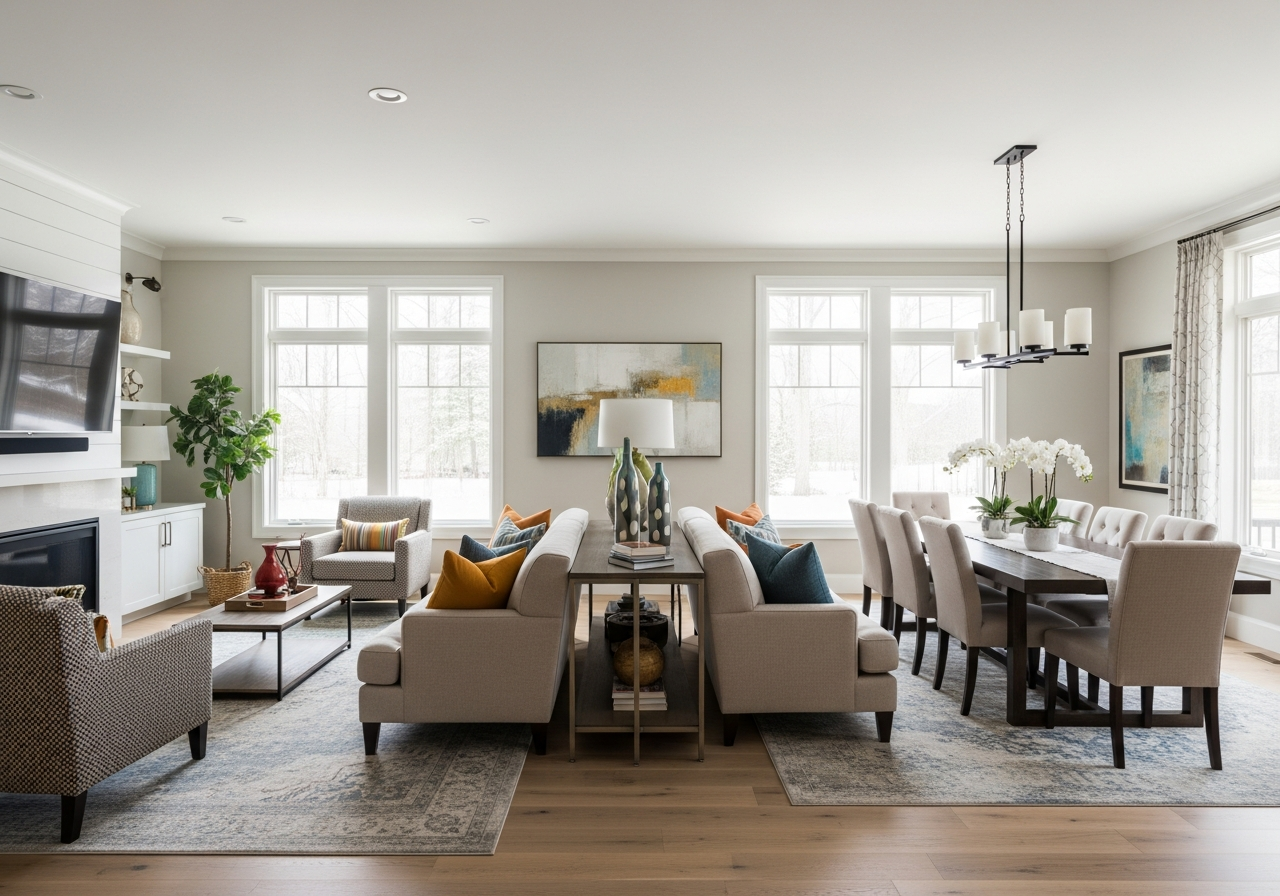
Open floor plans and elongated rooms can feel overwhelming. You walk in and see one endless stretch of space with no clear purpose or definition. That’s where back-to-back furniture placement comes in, a simple yet powerful design technique that transforms awkward, tunnel-like spaces into functional, inviting areas.
What Is Back-to-Back Furniture Placement?
Back-to-back furniture arrangement means positioning two pieces of furniture with their backs touching or facing away from each other. Think of a sofa floating in the middle of a room with a console table behind it, or two desks placed back-to-back in a long home office.
This isn’t just about filling space. It creates natural divisions without walls, defines distinct zones, and makes large rooms feel more intimate and purposeful.
Why Long Spaces Need Strategic Division?
Long, narrow rooms present unique challenges. They often feel like bowling alleys—uninviting and difficult to furnish effectively. Without proper division, these spaces lack intimacy and functionality.
Walking into an undefined 40-foot open area doesn’t feel comfortable. Your brain struggles to understand how to use the space. Breaking it into zones gives each area meaning and makes the entire room more livable.
The Psychology Behind Zone Creation
Humans naturally seek defined spaces. We feel more comfortable in areas with clear boundaries, even when those boundaries aren’t walls. Back-to-back furniture creates psychological markers that signal different activities and purposes.
A living area flows into a dining space when you place a credenza behind your sofa. Suddenly, you’ve created two distinct rooms without construction, permits, or losing the open feel that makes modern homes so appealing.
Best Furniture Combinations for Back-to-Back Placement
Sofa and Console Table
This classic pairing works beautifully in open living spaces. The console behind your sofa provides surface space for lamps, books, and decor while creating separation between the living area and whatever lies beyond—a dining room, entryway, or home office.
Keep the console height at or slightly below the sofa back. This maintains sightlines while providing functional separation.
Two Sofas Facing Away
In expansive living rooms, position two sofas back-to-back to create distinct seating areas. One faces the television or fireplace while the other defines a conversation area or reading nook.
This works exceptionally well in loft spaces where you need a living room on one side and a guest area or secondary lounge on the other.
Desk-to-Desk Configuration
Long home offices benefit enormously from back-to-back desk placement. This creates individual workstations in shared spaces, perfect for couples working from home or multi-use office environments.
Each person gets their own defined work zone with privacy and focus, even without physical barriers.
Bookshelf as Room Divider
A tall bookshelf placed perpendicular to the wall, with its back facing one zone, serves double duty. It stores items while creating a substantial visual and physical barrier between spaces.
This works particularly well, separating living areas from dining spaces or creating a home office corner in a bedroom.
Planning Your Back-to-Back Layout
Start by measuring your space. Long rooms typically exceed 20 feet in length. Identify natural breaking points—usually somewhere near the center, but not always exactly in the middle.
Consider traffic flow first. You need clear pathways through the space, typically 30-36 inches wide for comfortable movement. Back-to-back furniture shouldn’t create bottlenecks or force people into awkward navigation patterns.
Think about the purpose of each zone. What activities happen in this room? Where do they make the most sense? Your furniture placement should support natural movement from one activity to another.
Maintaining Visual Connection
The beauty of back-to-back furniture is that it divides without completely separating. You’re not building walls. You’re creating gentle suggestions about how to use different areas.
Keep furniture heights varied but coordinated. If everything sits at the same level, the division feels too rigid. Mix a tall bookshelf with lower seating or pair a standard-height sofa with a slightly lower console.
Use consistent design elements across both zones. Similar color palettes, coordinating styles, or repeated materials help both areas feel cohesive despite their separation.
Lighting Considerations for Divided Spaces
Each zone needs its own lighting. When you break up a long space, overhead lighting alone won’t cut it anymore. You’ve created multiple areas, and each deserves appropriate illumination.
Place table lamps on console tables behind sofas. Add floor lamps beside seating areas. Use pendant lights to define dining zones. This layered lighting approach reinforces your spatial divisions while providing practical task lighting.
The back-to-back furniture piece itself can help with lighting placement. A console table is the perfect spot for lamps that illuminate both the living area in front of the sofa and the space behind it.
Color and Pattern to Reinforce Zones
Strategic use of color strengthens the divisions you’ve created with furniture. You don’t need drastically different palettes—subtle shifts work beautifully.
Try different accent colors in each zone. If your living area features blue throw pillows, use warm terracotta tones in the adjacent dining space. The furniture placement creates the physical division while color reinforces the mental separation.
Area rugs are particularly powerful here. Each zone gets its own rug, anchoring the furniture grouping and visually cementing the space’s boundaries.
Common Mistakes to Avoid
Creating Dead Zones
Don’t position back-to-back furniture so that it creates awkward leftover spaces. Every inch of your room should have a purpose. If your layout leaves weird corners or unusable areas, rethink the placement.
Blocking Windows or Light
Keep sightlines to windows clear when possible. Natural light should flow through your space. Tall furniture placed back-to-back near windows can create dark, uninviting areas.
Ignoring Scale
Your furniture needs to fit the space proportionally. Oversized pieces in a narrow room divide feel cramped rather than organized. Measure carefully and choose appropriately scaled furniture.
Forgetting About the Back
The back of your furniture will be visible. If you’re using a sofa, make sure the back looks finished. If placing a bookshelf back-to-back with something, consider how that blank back appears from the other zone.
Making It Work in Different Room Types
Open Concept Living Areas
These benefit most from back-to-back placement. Use a sofa with a console table to separate the living from the dining. Add a bookshelf perpendicular to another wall to create a small home office nook.
The key is maintaining the open feel while adding definition. Keep furniture low enough to see over in most places.
Long Narrow Bedrooms
Create a sleeping zone and a sitting area by placing a bench or low credenza at the foot of the bed, then positioning a small seating arrangement beyond it. This makes oversized bedrooms feel more intimate and functional.
Extended Hallways or Passages
Wide hallways that feel more like rooms benefit from strategic furniture placement. A console table back-to-back with a slim bench creates a makeshift mudroom or transitional space without blocking flow.
Studio Apartments
These open spaces desperately need definition. Back-to-back furniture lets you create a bedroom area, living space, and dining zone without permanent walls or expensive renovations.
Budget-Friendly Implementation
You don’t need expensive furniture to use this technique effectively. Start with what you have and add one key piece to create the back-to-back arrangement.
A simple console table behind your existing sofa costs less than $200 and instantly transforms the space. Build your own bookshelf room divider with basic lumber and brackets for under $100.
Thrift stores and online marketplaces offer countless options for console tables, desks, and shelving units perfect for back-to-back placement. Focus on functionality first, aesthetics second—you can always update pieces later.
Enhancing Definition with Accessories
Once your furniture is placed, accessories strengthen the zone separation. Tall plants on console tables create natural barriers. Decorative screens placed near back-to-back furniture add visual weight to the division.
Table lamps, books, and decorative objects on surfaces between zones draw the eye and reinforce that you’re moving from one area to another. These small touches make the psychological boundary stronger.
Mirrors placed strategically can make divided spaces feel larger while reflecting light throughout the room. Position them to capture light from windows and spread it to both zones.
Flexibility and Future Changes
The beauty of this approach is its flexibility. Unlike walls, you can rearrange back-to-back furniture whenever your needs change. Seasons change, families grow, work situations shift—your space can adapt.
This temporary nature makes back-to-back placement perfect for renters who can’t make structural changes. It’s equally valuable for homeowners who want adaptable spaces without commitment.
Consider using furniture sliders under heavy pieces. This makes experimentation easier and protects your floors when you decide to try a new configuration.
When Back-to-Back Furniture Works Best?
This technique excels in rooms longer than 20 feet. Anything shorter might feel cramped with furniture positioned in the middle. Evaluate your specific space before committing.
Ceiling height matters too. Rooms with 9-foot or higher ceilings handle back-to-back furniture better because the vertical space prevents the arrangement from feeling crowded.
Open floor plans are ideal candidates. If you’re already working with a large, undefined space, back-to-back placement solves multiple problems simultaneously.
The Result: Functional, Defined Living
Breaking up long spaces with back-to-back furniture transforms how you live in your home. Each area gains purpose. Movement through the space becomes more intuitive. The room feels thoughtfully designed rather than accidentally empty.
You’re not just arranging furniture, you’re creating an experience. When guests enter, they immediately understand how to navigate and use the space. That clarity makes everyone more comfortable.
