Design and positioning
Motorola has pushed the Edge line further into fashion-forward territory with the Edge 70, a phone that unmistakably prioritizes thinness and style. Priced at a recommended €799, it continues the series’ focus on clean software, bold displays and occasionally daring design, but its specs leave important questions unanswered.
The phone’s 6.0 millimeter-ish ambitions are backed up by a metal frame and an impressively light 159 gram weight, and Motorola even touts MIL-STD-810H certification alongside IP68 and IP69 ingress protection. That combination is rare among competitors and can appeal to users who want rugged credentials without bulky cases.
Display and build
The Edge 70 uses a 6.67-inch P-OLED panel at 2712 x 1220 pixels with a 120 Hz refresh rate. It supports Water Touch, which improves touchscreen responsiveness with wet hands, and peaks at 4500 nits in HDR. The flat, 1.5K screen is a welcome change for people tired of curved edges, and Gorilla Glass provides everyday protection.
Motorola did not include LTPO, so refresh rate options are fixed to 60, 90 and 120 Hz rather than dynamically variable. Dolby Atmos stereo speakers are present, but sound quality is middling with limited bass. There is no 3.5 mm jack.
Hardware and battery
Under the hood the Edge 70 runs Qualcomm’s Snapdragon 7 Gen 4 with up to 12 GB of RAM and a 512 GB storage option. Motorola claims the Adreno 722 GPU brings roughly 30 percent better graphics performance over the prior generation, and a VC cooling system helps keep temperatures lower than many other ultra-thin phones.
Battery capacity is 4800 mAh, a noticeable drop from the 6000 mAh pack in the previous, closely related Edge 60 Pro. Wired charging tops out at 68 W Turbo Charge, wireless at 15 W, and USB-PD is limited to 30 W. With typical active use you can expect roughly a day of battery life; lighter use yields about five-plus hours of screen-on time. Using a non‑Motorola PD charger during testing reached a full charge in roughly 40 minutes.
Camera system
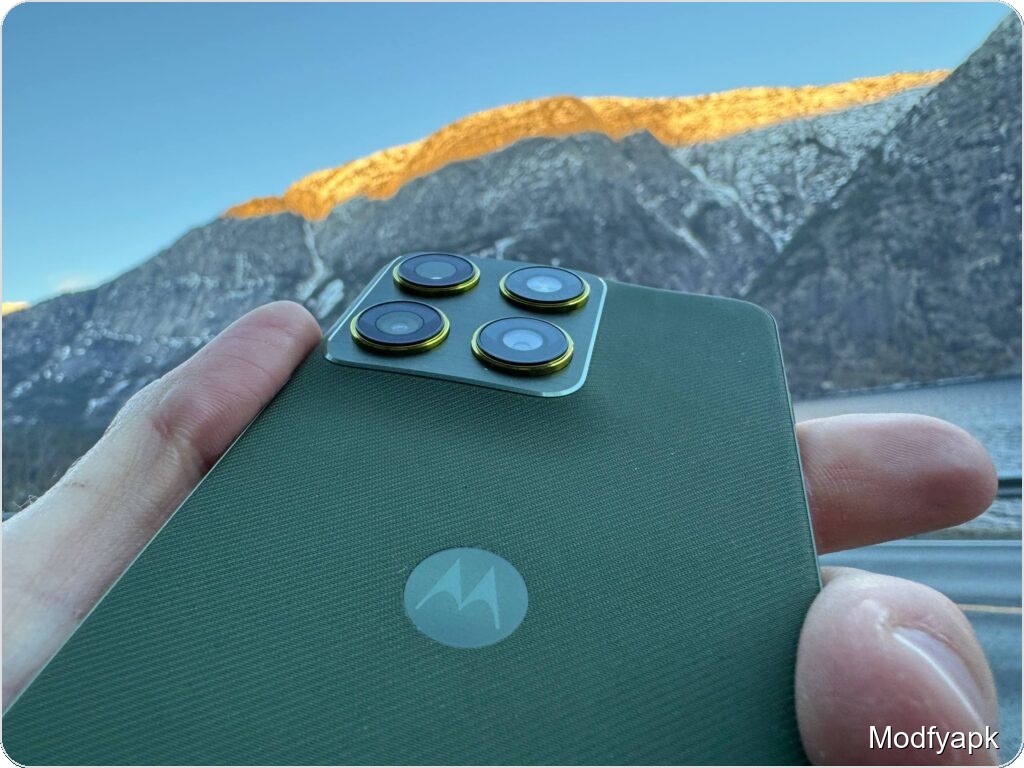
Motorola trimmed the camera array. The Edge 70 has two 50 MP rear sensors — a primary 50 MP (Samsung GNJ) with f/1.8 and OIS, and a 50 MP 120-degree ultrawide (Samsung JNS) with AF and macro capabilities. The front camera is also 50 MP, f/2.0. The telephoto lens from the previous model is gone, leaving only digital zoom.
Daylight shots from the main camera are solid but not class-leading. Quad-pixel processing produces 12.5 MP output to improve dynamic range and reduce noise. Night mode helps low-light shots but does not rival flagship results. The ultrawide is surprisingly detailed for the class, and the auto‑focus macro performs well. Video is supported up to 4K/60 on all cameras, with slow motion at 120 fps in 1080p and 240 fps in HD, but overall video handling struggles in fast-changing lighting.
Software and AI features
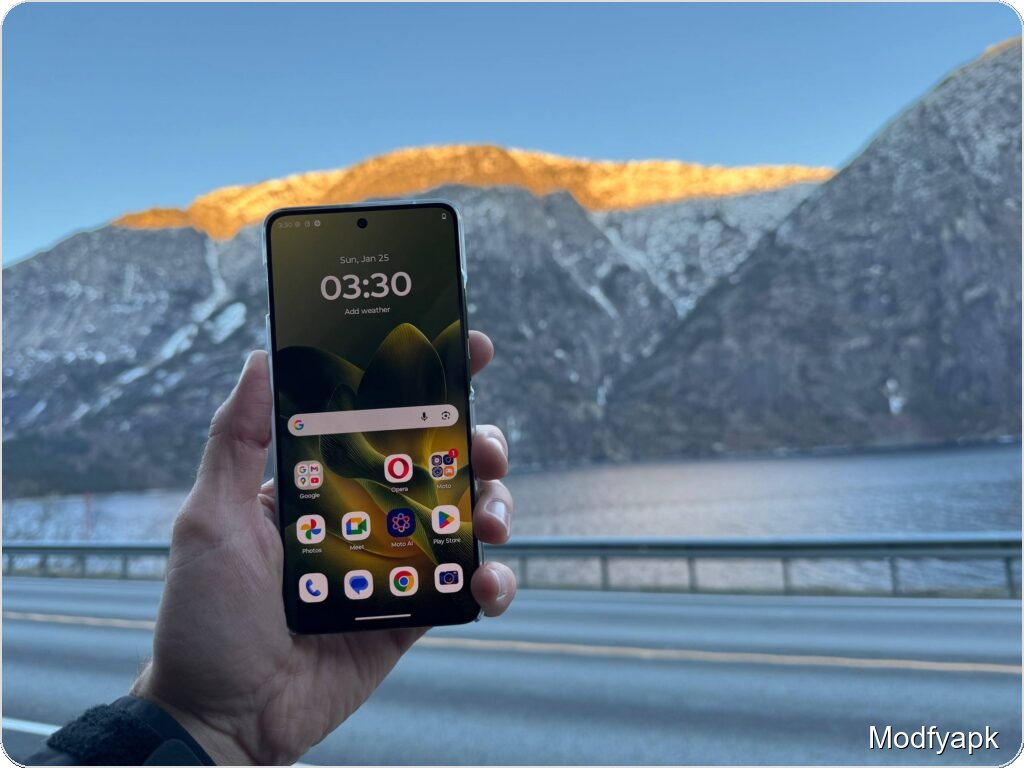
Edge 70 runs Android 16 with Motorola’s Hello UI on top. The interface stays close to stock Android but arrives with a noticeable amount of preinstalled apps, including TikTok, Amazon Music and Perplexity, all removable but initially cluttering the experience. A live lock screen can surface promotional content and requires diving deep into settings to disable.
Motorola bundles a set of AI tools under Moto AI, activated by a dedicated AI button on the left side of the frame. Features include Remember This for reminders based on images and text, Pay Attention for live transcription, Catch Me Up for notification summaries, and Image Studio for AI edits. Motorola promises four years of major Android updates and six years of security updates.
Performance and benchmarks
The Snapdragon 7 Gen 4 chipset delivers smooth everyday use and handles titles like Call of Duty: Mobile and Genshin Impact at reduced settings. Motorola’s RAM Booster can extend virtual memory to a theoretical 16 GB to aid multitasking.
In benchmarks the Edge 70 lags behind true flagships. It trails devices such as the OnePlus 15R (Snapdragon 8 Gen 5), Honor Magic8 Pro (Snapdragon 8 Elite Gen 5), Galaxy S25 Ultra (Snapdragon 8 Elite for Galaxy) and Pixel 10 (Tensor G5) in CPU- and GPU-focused tests. Geekbench 6 positions the Edge 70 well behind rivals, and 3D workloads like Wild Life Extreme underline its relative underperformance. PCMark results were unexpectedly strong in some productivity tests, occasionally outpacing higher-spec rivals.
Practical trade-offs
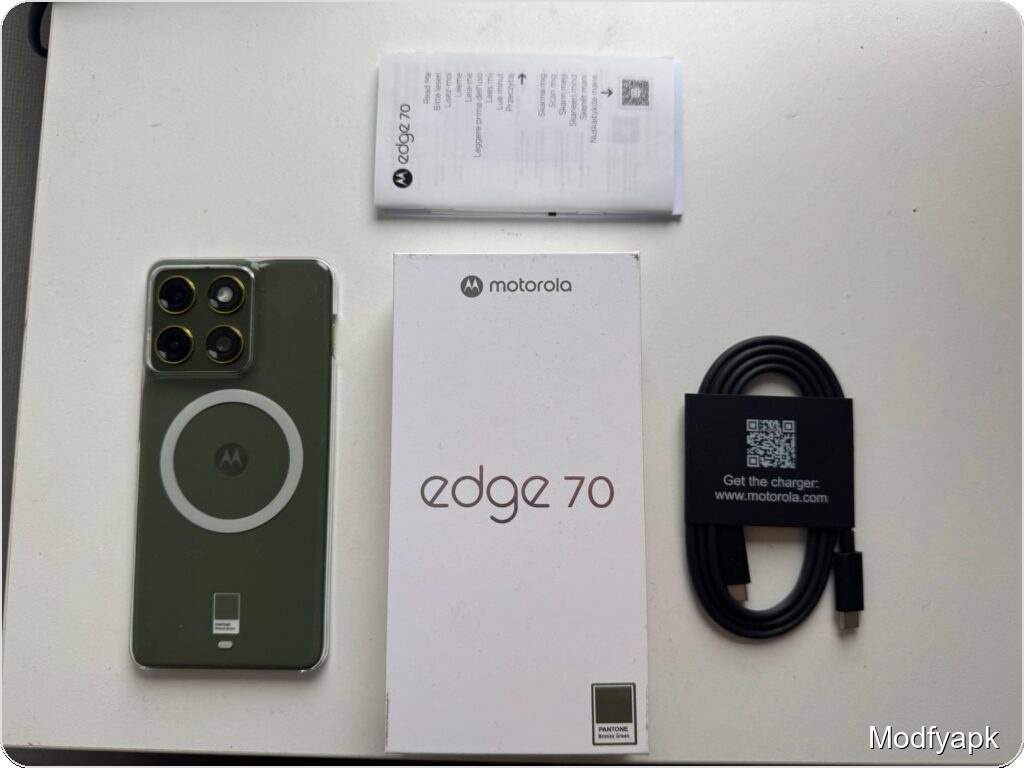
Motorola follows the current trend and excludes a charging brick from the box but includes a hard plastic protective case that supports MagSafe and Qi. The in-display fingerprint sensor works reliably. Physical buttons are well placed, and a separate AI button is locked to AI features only.
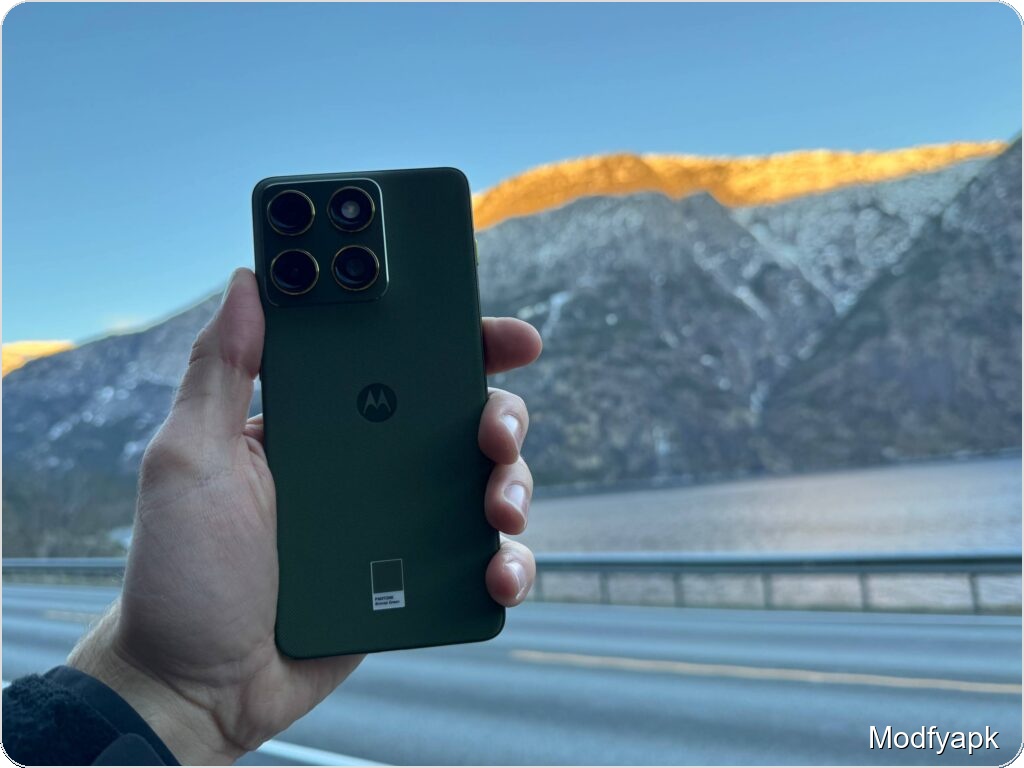
Where the Edge 70 stands out is design: a matte silicone-textured back that resists fingerprints and a tasteful green colorway make the phone feel premium. The trade-off is clear — ultra-thin hardware has real consequences for battery life, camera versatility and thermal headroom under sustained load.
Verdict
Motorola’s Edge 70 is an elegant exercise in industrial design. Its 5.99 millimeter profile and 159 gram weight make it strikingly thin and light, and the durability specs are a real differentiator.
But at a €799 price, the package feels unbalanced. Comparable hardware and camera quality are available at roughly €400–500, and competing devices near this price point include the OnePlus 15R and Nothing Phone 3, with thin alternatives like the iPhone Air and Galaxy S25 Edge also in the same conversation.
The Edge 70 will appeal most to buyers who prioritize a svelte, well-finished handset and extended update promises. For performance, battery life and camera versatility at this price, other options offer stronger value.
| Price | €799 (12 + 512 GB) |
| Display | 6.67”, 2712 x 1220, up to 120 Hz pOLED |
| Chipset | Snapdragon 7 Gen 4 |
| Cameras | 50 MP main f/1.8 OIS; 50 MP 120° ultrawide AF; 50 MP front; video up to 4K@60 |
| Battery & Charging | 4800 mAh; 68 W Turbo Charge; 30 W USB-PD; 15 W wireless |
| Connectivity | Bluetooth 5.4 (BLE, SBC, AAC, LDAC), NFC, GPS, AGPS, LTEPP, SUPL, GLONASS, Galileo |
| Dimensions & Weight | 159.9 x 74 x 6 mm, 159 g |
| Other | IP69K, MIL-STD-810H |
Pros: Elegant thin design; light in hand; 512 GB storage option.
Cons: Pricey for the performance and cameras; no telephoto lens; smaller battery than predecessor; preinstalled apps.