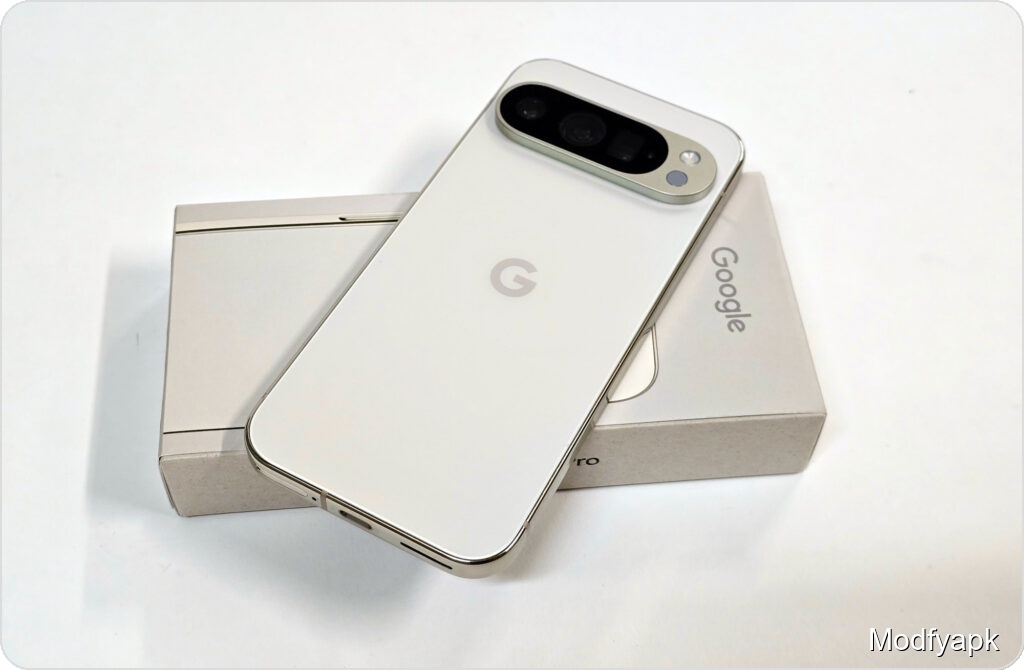
Overview
We previously tested Google’s Pixel 9 and Pixel 9 Pro XL, and now we’ve spent time with the third member of the core lineup: the Pixel 9 Pro. It sits between the two earlier models, packing nearly all the same flagship features as the Pro XL into the smaller footprint of the base Pixel 9. The result is the most compelling phone in the standard Pixel family.
What’s in the box
The Pixel 9 Pro ships with the phone, a SIM tool, a USB-C to USB-C cable, and documentation. There is no charger in the box.
Design and build
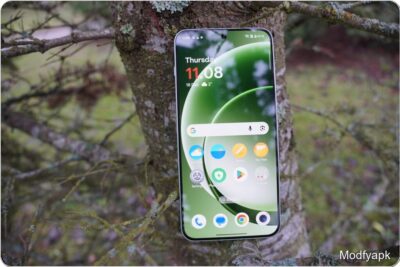
All Pixel 9 models share the same distinctive camera bump and a flat-edged design with flat front and back glass. The Pixel 9 Pro looks and feels premium, built from high-quality materials and rated IP68 for dust and water resistance.
The Pixel 9 and Pixel 9 Pro are physically identical at 152.8 x 72 x 8.5 mm, so cases fit both models. That size is very comfortable in hand and more manageable for one-handed use than the larger Pixel 9 Pro XL.
The Pixel 9 Pro weighs 199 grams. It’s on the heavier side for its footprint but feels well balanced. The back glass is matte Gorilla Glass Victus 2, which helps hide fingerprints.
The power button sits above the volume keys, an order that’s reversed from most phones and may take some getting used to. That button also doubles as the quick-launch for the camera and, by long press, Google’s Gemini AI — easy to reach on the Pro, less so on the larger XL.
Speakers, USB-C port, and the single nano-SIM tray sit on the bottom. The phone supports eSIM in addition to the physical SIM. A secondary speaker grille and microphone are at the top corner.
Display and audio
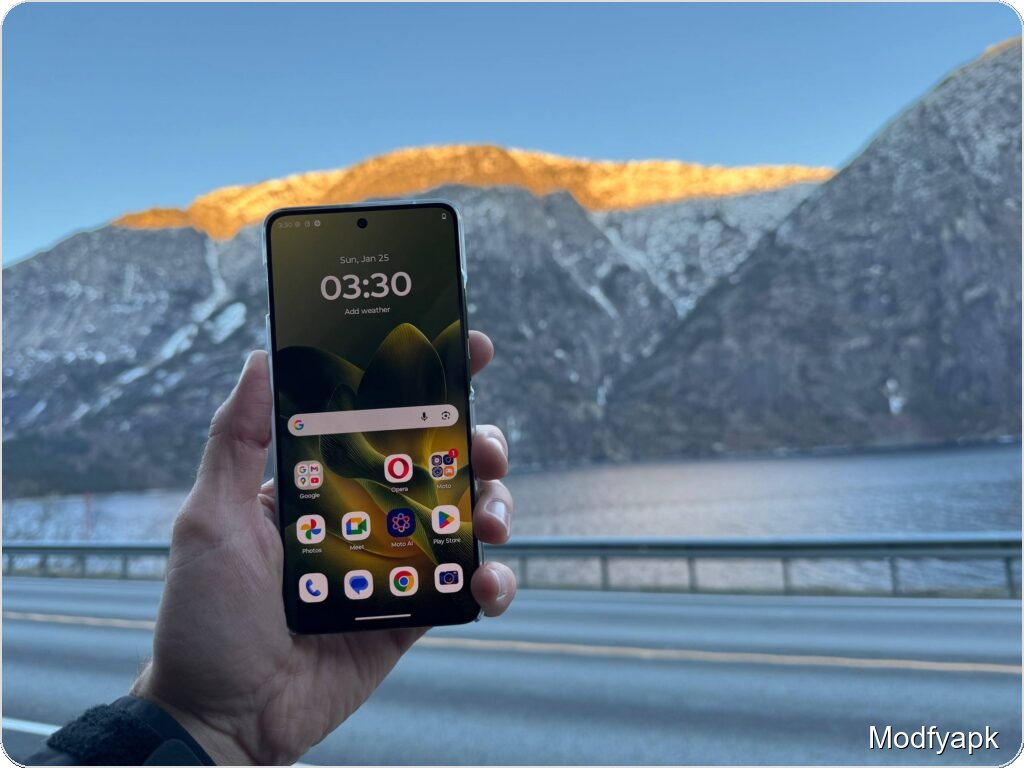
The Pixel 9 Pro uses a flat 6.3-inch LTPO OLED with a 20:9 aspect ratio and a 1280 x 2856 resolution. The panel adapts its refresh rate between 1 and 120 Hz. Peak brightness reaches up to 3000 nits.
In practice the screen is excellent. It’s bright enough for outdoor use and delivers accurate color. Stereo speakers sound commendable for a smartphone when volume is kept moderate.
Software and AI
Pixel phones ship with a clean Android experience. At launch these Pixels ran Android 14; an Android 15 update arrived after our test period toward the end of October.
Google promises up to seven years of OS and security updates, keeping the Pixel 9 Pro current through about 2031. That pledge is among the best in Android land and matches what at least one other major manufacturer offers.
All Pixel 9 phones include Google’s Gemini AI (formerly Bard). Gemini can be summoned quickly by holding the power button to talk, type, or submit images. Gemini integrates tightly with Google services, for example searching Gmail attachments or pulling flight info from Google Flights. Other AI features include Circle to Search and camera enhancements such as Magic Eraser, Zoom Boost, and a new Add Me mode that inserts you into group shots without handing the phone to a stranger.
Pixel 9 Pro buyers receive a one-year free trial of Google One AI Premium, which includes 2 TB of cloud storage for Google Photos, Drive, and Gmail plus access to Gemini Advanced. After the trial, that service costs $22.99 per month.
Cameras
Camera hardware is a Pixel strong point, and the 9 Pro continues the trend.
The phone carries a 50 MP main sensor (1/1.31 inch, f/1.7, OIS), a 48 MP ultrawide (1/2.55 inch, f/1.7, 123-degree field, AF), and a 48 MP telephoto camera (1/2.55 inch, f/2.8, AF, OIS) with 5x optical reach and up to 30x digital zoom. The selfie camera is 42 MP. By default Google bins pixels rather than saving at full sensor resolution, but a 50 MP capture mode is available for all three rear cameras.
Main-camera image quality is excellent with a natural color profile and restrained sharpening. Shadows are occasionally deepened more than necessary, but low-light shots generally show low noise and well-controlled exposure. The ultrawide is especially strong and color-matched to the main camera. The telephoto camera performs well in good light but is the weakest in low-light situations, where detail drops and highlights can clip.
AI camera tools include Zoom Boost, which attempts to reconstruct detail at long reach (resulting images are roughly 3 MP), and Magic Eraser for removing or altering scene elements. Video tops out at 4K at 60 fps on the rear cameras; Video Boost enables up to 8K/30 fps. Video quality is solid but does not fully match expectations for a phone at this price.
Performance and battery
The Pixel 9 Pro runs Google’s Tensor G4 with Mali G715 MC7 graphics. Performance is competent for everyday use and benchmarks but it is not the outright performance champion among this year’s flagship Android chips.
Battery capacity is 4700 mAh, smaller than the Pro XL. The smaller screen helps, but endurance is roughly average. The phone comfortably lasts a single day under heavy use, while a second day is unlikely. Wired charging supports up to 45 W and the phone charges to near full in under an hour. Wireless charging is 23 W and the device supports reverse wireless charging.
Storage, colors, pricing
Google offers the Pixel 9 Pro in three storage configurations, all with 16 GB of RAM: 128 GB, 256 GB, and 512 GB. There is no 1 TB option and no microSD card slot. Color choices are Porcelain, Haze, Obsidian, and Rose Quartz.
Pricing starts at $1,149 for the 16+128 GB model, $1,249 for 16+256 GB, and $1,379 for 16+512 GB. That places the Pro between the cheaper Pixel 9 and the pricier Pro XL; it is about $100 less than the XL but roughly $200 more than the base Pixel 9. The limited 128 GB entry-level storage feels stingy for a flagship over $1,000.
Competition
The Pixel 9 Pro competes with most of this year’s Android flagships. The most direct rival is the Samsung Galaxy S24, which is widely available at lower street prices. Other competitors include the Sony Xperia 1 VI and Apple’s iPhone 16 Pro.
Verdict
It’s great to see Google’s Pixels available officially in more markets, and the Pixel 9 Pro stands out in the current lineup. It packs flagship hardware into a pleasantly compact package and offers a clean software experience with industry-leading update promises. The display, build quality, and camera system are all reasons to consider it.
Weaknesses include a high starting price, the base model’s modest 128 GB of storage, middling battery life, and some Pixel features not yet available in all regions. Video recording also falls a bit short of expectations for the class.
Overall, the Pixel 9 Pro is an easy recommendation for anyone who values compact size, premium fit and finish, excellent still photography, and long-term software support — provided they can stomach the premium price.
Pros and cons
Pros
- Excellent display
- Premium build quality
- Very good still-photo quality
- Seven-year update promise
- Clean, smooth software experience
- Compact size with flagship features
Cons
- Expensive
- Base model only 128 GB
- Battery life is middling
- Not all Pixel features available in all regions
Key specifications
| Price | $1,149 (16+128 GB), $1,249 (16+256 GB), $1,379 (16+512 GB) |
| SoC / GPU | Google Tensor G4, Mali G715 MC7 |
| OS | Android 14 |
| Display | 6.3″ LTPO OLED, 20:9, 1280 x 2856, 1–120 Hz, up to 3000 nits |
| Cameras | 50 MP main (1/1.31″, 1.2 um, f/1.7, OIS, PDAF) + 48 MP ultrawide (1/2.55″, f/1.7, AF, 123°) + 48 MP tele (1/2.55″, f/2.8, AF, OIS, 5x); 42 MP front (f/2.2, AF); video max 4K@60fps (Video Boost 8K/30fps) |
| Connectivity | Dual SIM (nano), LTE, 5G, Wi-Fi 7, Bluetooth 5.3 |
| Ports | USB Type-C |
| Battery | 4700 mAh, 45 W wired, 23 W wireless, reverse wireless |
| Dimensions / Weight | 152.8 x 72.0 x 8.5 mm, 199 g |
| Other | In-display fingerprint sensor, IP68, stereo speakers, thermometer |