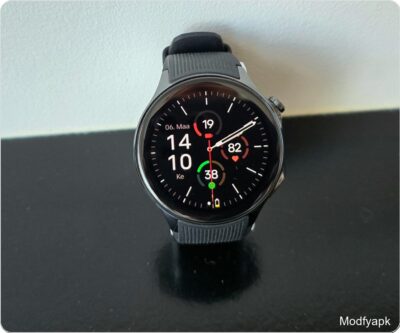
The new Suunto Ocean is a combination device that has both a sports watch and a dive computer built into one case. Active people who want a single gadget that can track both workouts and dives will be interested in it.
Technical specifications
| Price | 799 euros |
| Display | 1.43″ (466×466, sapphire crystal) |
| Case | Stainless steel |
| Dimensions | Width 50 mm, thickness 13.2 mm, weight 99 grams with 22 mm silicone strap |
| Positioning | GPS, GLONASS, GALILEO, QZSS, BEIDOU, Dual Band |
| Water resistance | 100 m, diving supported to 60 m depth |
| Sports modes | Over 95 sports modes, 50+ SuuntoPlus sport apps, audio feedback via Suunto app |
| Compatibility | Android, iOS, Strava, TrainingPeaks, Endomondo |
Positioning and price
The Suunto Ocean is a watch that is both a sports watch and a dive computer in one. At this price point, there aren’t many straight competitors for a device that does both of those things. The Ocean costs 799 euros to buy. Compare the Garmin Descent Mk3 (1,059 euros) and the Apple Watch Ultra 2 (899 euros). The Apple Watch has diving tools, but you have to pay extra for them.
How does it compare within Suunto’s lineup?
The Ocean is more than just a dive watch; it’s also a full-on sports watch. If you don’t need dive functions, the Suunto Vertical (from €599) and the Garmin Fenix 7 Pro Solar are good alternatives.
The Ocean comes in a stylish box with the watch, instructions, and a charging wire. The blue strap shown by Suunto is sold separately, but it is the same as the strap that comes with the watch.
Design and hardware
The case is 50 mm across and 13.2 mm thick. It is made of stainless steel and has a sapphire display that can’t be scratched. The watch weighs 99 grams, which is a little more than many titanium-based rivals. The Ocean is small, though, for a dive computer. It has a classic sporty look that is also practical.
Strap and fit
The strap that Suunto ships can be used for both sports and diving. To fit over a bodysuit, the strap is a little longer than most. The band is stronger than most sports watch straps, so the watch won’t come off by chance. It’s also still comfortable to wear every day and for exercise. A quick release lets you switch straps, and Suunto sells different colors separately.
Controls and display
There are three buttons on the right edge. They have great tactile input, so you can use them even if you’re wearing dive gloves. Touch control can also be used on the watch. The button at the top scrolls up, the button at the bottom scrolls down, and the button in the middle confirms the choices made. Most of the time, pressing and keeping the middle button takes you back to the main screen.
The touch screen is nice. While it’s not as quick as an Apple Watch, it works just fine. Personally, I like using the buttons to move around.
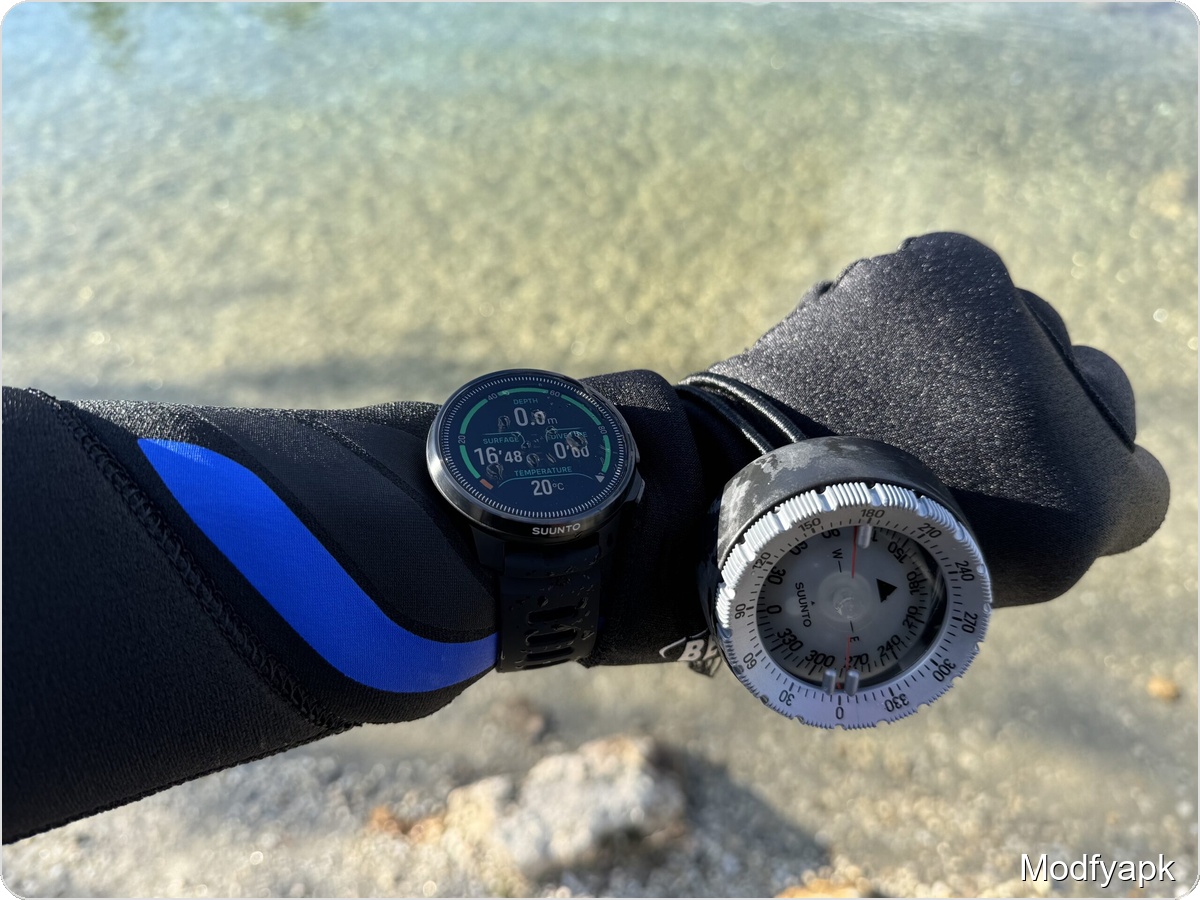
It has a 1.43-inch AMOLED screen with 466 x 466 pixels. The display quality is great, and the brightest point is quite high. The screen can be read on the outside even in bright sunlight, and it works well underwater.
Sensors, charging, and straps
There is an optical heart rate monitor and charging pins on the back of the watch. The Ocean can only be charged with the cord and dock that come with it. It does not support USB-C or wireless charging. Keep the first wire close by.
The optical heart rate monitor works well and is very similar to the Garmin Enduro 2 that was used as a standard. For more accurate readings, the Suunto Ocean also works with external heart straps and sensors. Testing showed that it was easy to connect a Garmin HR2+ heart strap to a different device. Power meters for riding can also be used. For diving, the watch can connect to Suunto’s Tank Pod to show how much gas is left in tanks.
As a dive computer
As someone who occasionally goes diving for fun, I think the Suunto Ocean is a great dive computer. Underwater, the screen is bright, and the important numbers, like depth and dive time, are easy to see. You can also show the temperature of the water. If paired with a Tank Pod, the dive screen shows how much gas is left. Unfortunately, a Tank Pod was not available for this study.
The interface can’t be changed in a lot of ways, but Suunto’s basic layout works well and looks good. For freediving, you can use the same dive features.
The Ocean shows and times safety stops correctly and shows climb rate with a green-yellow-red color scale and arrows in the middle of the screen. If the climbing speed gets too fast, the watch will vibrate very loudly to let the user know.
A Buhlmann 16 GF dive algorithm based on the Buhlmann ZHL-16C model is used by Suunto Ocean. The algorithm is a little on the safe side, which is good for occasional or new dives. Using GPS, accelerometers, and pressure sensors, the watch tries to map out a dive route that you can then look at in Suunto’s mobile app. However, test dives showed that the recorded route isn’t always accurate and can be rough.
You can use one or two gas cylinders with the Ocean, and you can set nitrox mixes as well as air mixes. It’s easy to change air between dives. The watch is definitely made for recreational diving since it doesn’t work with trimix. There isn’t a lot of help for technical diving, and the maximum depth of 60 meters will make it impossible to do deep technical dives.
The watch can start the dive mode on its own if it senses a change in pressure. One very rare exception is when the writer goes skydiving, and the Ocean goes into dive mode because of a sudden change in pressure during a jump. When the watch was brought back to the surface, it still thought it was underwater, and it was not possible to directly leave the dive state. The device didn’t go back to normal until the next jump to altitude, so the tester had to turn off the watch during a flight to avoid getting false dives over and over again.
As a sports watch
When you’re not diving, the Suunto Ocean is a great sports watch. It comes with a lot of different sports modes, such as riding, running, padel, and bowling. You can make guided workouts and share them with both the Suunto app and other apps, such as Strava.
Dual-band GNSS gives you accurate route distance and tracking, but it takes a little longer to lock on to the satellites at first than the Garmin Enduro 2, which was used as a reference. From the top button, it’s easy to start a workout.
Tracking sleep works well. The Suunto app tells you how long you slept, how good your sleep was, and how to get better rest. Every morning, the watch shows a short “good morning” style summary on the screen. Later, you can look at the full numbers on the watch.
App and ecosystem
The Suunto app looks good and is simple to use. It’s easy to find your workout history, and you can look through a calendar of past sessions. The app also has built-in coaching features that can help you and tell you to recover. The watch only works with a few third-party apps that are mostly fitness and water prompts.
The Ocean comes with a dive-themed interface that shows you how long it’s been since your last dive and tells you how long you should stay away from flying. On the always-on screen, you can also see an icon that says “fly-ready.” If you want a watch face that isn’t dive-themed, you can change it.
Smartwatch features and music
On the Ocean, phone alerts show up. On Android, you can use the watch to send pre-written responses, but iOS doesn’t let you do that. You can play music on your phone from the watch, but you can’t store songs on its 32 GB of storage, and it doesn’t allow streaming.
Maps and navigation
You can get offline maps that are helpful for mountain bikes and trail runners. From the Suunto app, you can get free maps, and the built-in storage can hold about as much data as all of Europe. Downloads can be chosen by country in the app.
If you save a plan ahead of time, the watch will give you directions while you’re active. You can also look at maps when you’re not working out, but the phone is still easier to use for general map viewing. This means that the watch is best for telling you when to turn while you’re running.
Battery life
It has a long battery life, which is great for an AMOLED watch. As for how long it stays charged, Suunto says it lasts about 26 days when not being used. Depending on the action, those estimates worked well when tested in the real world. The dive time on a single charge is between 40 and 60 hours, and up to 50 hours with Multi-Band GPS. When the GNSS is in power-save mode, it can track for up to 200 hours.
Pros and cons
Good
- Excellent dive computer for recreational use.
- Also, a comprehensive sports watch.
- High-quality AMOLED display.
- Strong battery life.
Bad
- Slightly heavy compared with typical sports watches.
Verdict
The Suunto Ocean is pretty good all around. It is likely the best gadget on the market for tracking sports and recreational diving at the same time. It’s not made for skilled diving; if you want to do that, you should get a separate dive computer. If you don’t need diving features, models like the Suunto Vertical offer similar sports features for less money. However, the Ocean’s high-quality AMOLED display is still a big plus.