

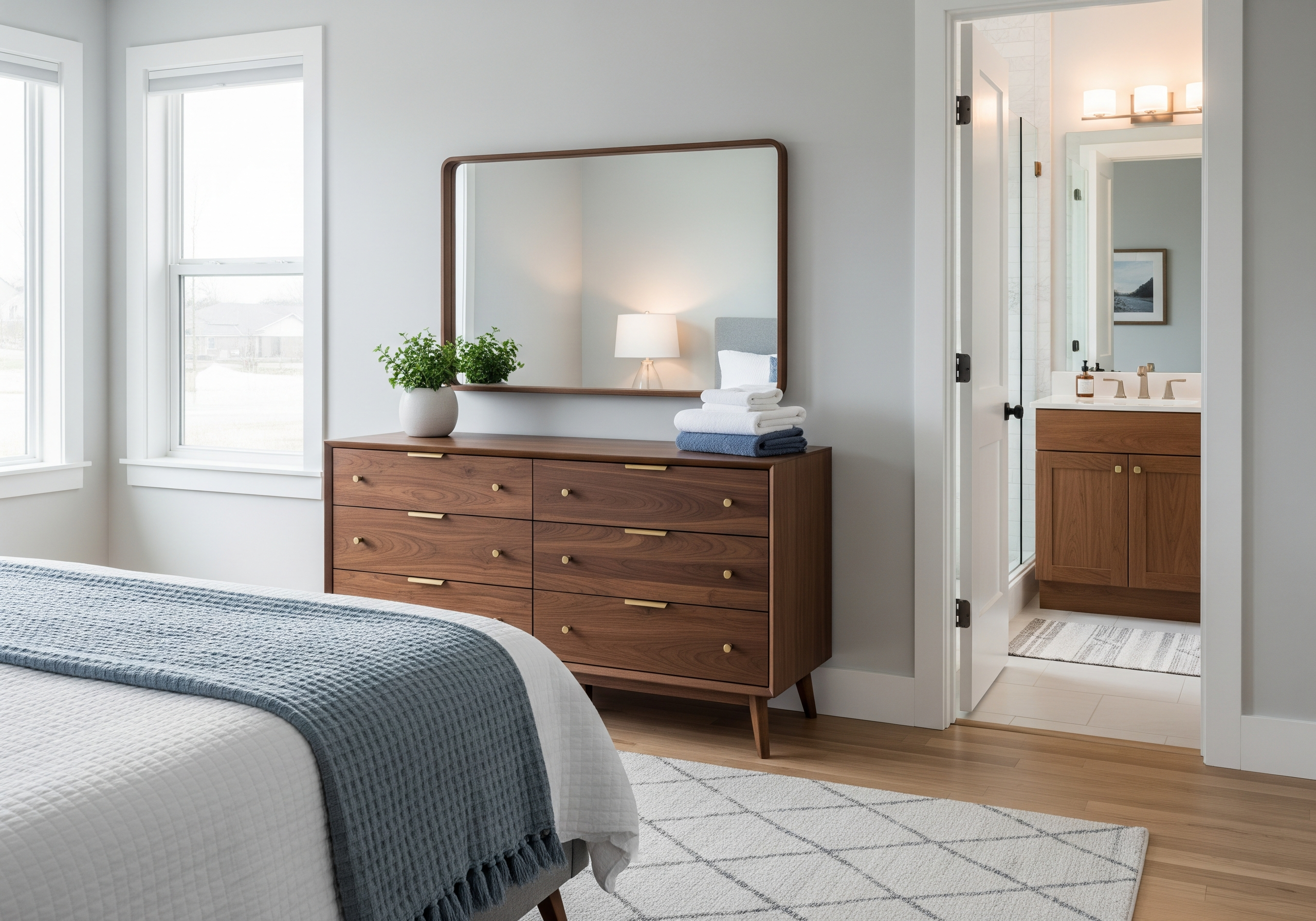
Getting your dresser placement right transforms your bedroom from cluttered chaos to a peaceful sanctuary.
Most people shove it against the nearest wall and call it done, but strategic positioning affects everything from your morning routine to how spacious the room feels.
Why Dresser Placement Matters More Than You Think?
Your dresser isn’t just storage. It’s one of the largest pieces in your bedroom, and where you put it impacts daily movement patterns, natural light flow, and whether the space feels open or cramped.
A poorly placed dresser creates bottlenecks. You bump into it, rushing to get dressed. Drawers hit the bed when opened. The room feels smaller than it is.
Get it right, and everything flows naturally.
The Traffic Flow Test
Before deciding on dresser placement, walk your bedroom’s natural pathways. Most bedrooms have three main traffic zones:
- Entry to bed.
- Bed to closet.
- Bed to bathroom or exit.
Your dresser should never block these paths. Leave at least 36 inches of clearance for comfortable movement. If you’re working with a tight space, 30 inches is the bare minimum.
Stand at your doorway and identify where you naturally walk. That’s your primary traffic lane. Keep it clear.
Opposite the Bed: The Classic Setup
Placing your dresser directly across from the bed is popular for good reason. This position creates visual symmetry and makes the dresser the focal point when you enter the room.
This works best when your bed sits against the wall opposite the door. You get a clean sightline, and the dresser becomes functional furniture you can actually see and access easily.
The downside? This spot often competes with windows or the TV location. If you’re choosing between a dresser and an entertainment center, consider which you use more during bedroom time.
Flanking the Bed: Split Storage Solutions
Two smaller dressers or a dresser paired with a nightstand on opposite sides of the bed creates balanced symmetry. This setup works particularly well in master bedrooms where two people need equal access to storage.
The key is keeping heights consistent. Mismatched furniture heights on either side of the bed create visual tension that makes the room feel off, even if you can’t pinpoint why.
This layout requires a wider room. Each side needs enough space for drawer clearance plus walking room—measure before committing.
The Window Wall Dilemma
Should your dresser go under a window? It depends on the window height and dresser dimensions.
Low windows and tall dressers don’t mix. You block natural light and create an awkward visual barrier. But if your window sits high on the wall and your dresser stays below the sill, this placement can work beautifully.
Consider how curtains or blinds operate. Will your dresser interfere with opening and closing them? Are you blocking a radiator or heating vent?
Natural light matters more than you realize. Blocking it makes the entire room feel darker and smaller.
Adjacent to Closet Doors: The Getting-Dressed Station
Positioning your dresser near the closet creates a functional dressing zone. You pull clothes from the closet, grab accessories from the dresser, and everything happens in one area instead of ping-ponging around the room.
This setup requires planning around the door swing. Closet doors need clearance to open fully. Measure the door’s arc and place your dresser outside that radius.
Sliding closet doors eliminate this concern. You can push the dresser right up to the closet wall.
Corner Placement: Maximizing Dead Space
Corners often become wasted space in bedroom layouts. Placing a dresser in the corner can reclaim this area while keeping the main walls available for the bed and other furniture.
Angled corner placement looks intentional and creates visual interest. Straight corner placement (flush against both walls) works better in small rooms where you need every inch of floor space.
The challenge with corner dressers is accessing the sides. Can you open drawers comfortably? Does the wall interfere with pulling items from the top?
Dresser Height and Proportion Rules
Your dresser’s dimensions matter as much as its location. A massive dresser in a small room overwhelms the space regardless of where you put it.
Standard dresser heights range from 30 to 50 inches. Lower dressers (horizontal) provide more surface area for decor or a TV. Taller dressers (vertical) offer more storage with a smaller footprint.
Match the dresser scale to the room size. A 10×12 bedroom needs different proportions than a 15×18 main suite.
The TV on the Dresser Question
Many people use their dresser as a TV stand. If you’re doing this, measure viewing angles from the bed. Your screen should sit at eye level when you’re sitting up against the headboard.
The dresser’s distance from the bed matters too. The optimal TV viewing distance is 1.5 to 2.5 times the screen’s diagonal measurement. A 50-inch TV needs 6 to 10 feet of distance.
Cable management becomes crucial when combining these functions. Built-in dresser cable management or strategic positioning near outlets prevents visible cord chaos.
Creating Visual Balance
Visual weight distribution keeps your bedroom from feeling lopsided. If you place a heavy dresser on one side of the room, balance it with another substantial piece elsewhere.
This doesn’t mean matching furniture. A tall bookshelf balances a long dresser. A bench at the foot of the bed offsets a dresser on the adjacent wall.
Stand in your doorway and scan the room. Does one side feel heavier or more cluttered? That’s your cue to redistribute visual weight.
Mirror Placement Above Your Dresser
Most dressers pair with mirrors. This combo affects perceived room size and light distribution dramatically.
Mirrors opposite windows bounce natural light deeper into the room, making spaces feel larger and brighter. Mirrors facing the bed can feel uncomfortable for some people during sleep.
Large mirrors make small rooms feel more spacious. But oversized mirrors on oversized dressers create top-heavy proportions that overwhelm the space.
Drawer Opening Clearance Math
This is where most people mess up. Dresser drawers need space to open fully. Measure your deepest drawer and add 6 inches for standing room while accessing contents.
Standard drawers extend 14 to 20 inches. You need roughly 24 to 30 inches of clearance in front of the dresser for comfortable use.
If your dresser faces the bed, ensure the bed frame doesn’t block drawer operation. This happens more often than you’d think, especially with platform beds that extend past the mattress edge.
Small Bedroom Strategies
Tight quarters require creative solutions:
- Choose tall dressers over long ones to minimize floor space consumption.
- Place dressers in alcoves or recessed areas if your room has them.
- Consider wall-mounted folding options for extremely small spaces.
- Use dresser tops efficiently with vertical organizers instead of spreading items horizontally.
Multi-functional furniture becomes essential in small bedrooms. A dresser that doubles as a desk or vanity maximizes limited square footage.
Large Bedroom Opportunities
Spacious bedrooms allow more experimental placement:
- Float the dresser away from the walls to create room zones.
- Pair dressers with seating areas for a boutique hotel feel.
- Use dressers as room dividers in open-plan or loft-style bedrooms.
- Create symmetrical flanking arrangements with matching pieces.
Don’t push everything against the walls just because that’s the default. Larger rooms benefit from layered furniture arrangements that create depth and visual interest.
The Feng Shui Perspective
Feng shui principles suggest avoiding dresser placement directly facing the bed, particularly mirrors. The reasoning centers on energy flow and restful sleep.
Whether you follow feng shui or not, some principles align with practical design. Keeping pathways clear and avoiding sharp furniture corners pointing at the bed creates safer, more comfortable spaces.
The “command position” places your dresser where you can see the door but not directly in line with it. This creates a sense of security and control over the space.
Dealing with Radiators and Vents
HVAC elements limit placement options. Never block heating or cooling vents with furniture. This reduces system efficiency and creates uneven temperature distribution.
Radiators need clearance for heat circulation and safety. Most building codes require 6 inches between radiators and furniture. Check local requirements.
Window AC units or baseboard heaters create similar constraints. Map these elements before finalizing dresser location.
Testing Before Committing
Before rearranging heavy furniture, test layouts with cardboard cutouts or painter’s tape outlining dresser dimensions on the floor. Live with these markers for a few days.
Walk the room at different times of day. Does morning sunlight create glare on a mirrored dresser? Do you trip over the placement during nighttime bathroom runs?
Most placement mistakes become obvious only after living with them. Testing prevents back-breaking repositioning later.
Final Positioning Checklist
Run through these questions before declaring your dresser placement final:
- Can all drawers open completely without hitting furniture or walls?
- Is there 30+ inches of walking space around the dresser?
- Does the placement block windows, doors, or vents?
- Can you access the dresser top comfortably for daily items?
- Does the position create visual balance with other bedroom furniture?
- Is the dresser secure and level on the floor surface?
A “yes” to all questions means you’ve nailed the placement. Even one “no” suggests reconsidering your choice.
Making Your Decision
The perfect dresser placement balances function and aesthetics. Prioritize access and daily use patterns first, then adjust for visual appeal.
Your bedroom is a personal space. What works in design magazines might not work for your specific layout, habits, or needs. Trust your instincts after considering practical limitations.
