

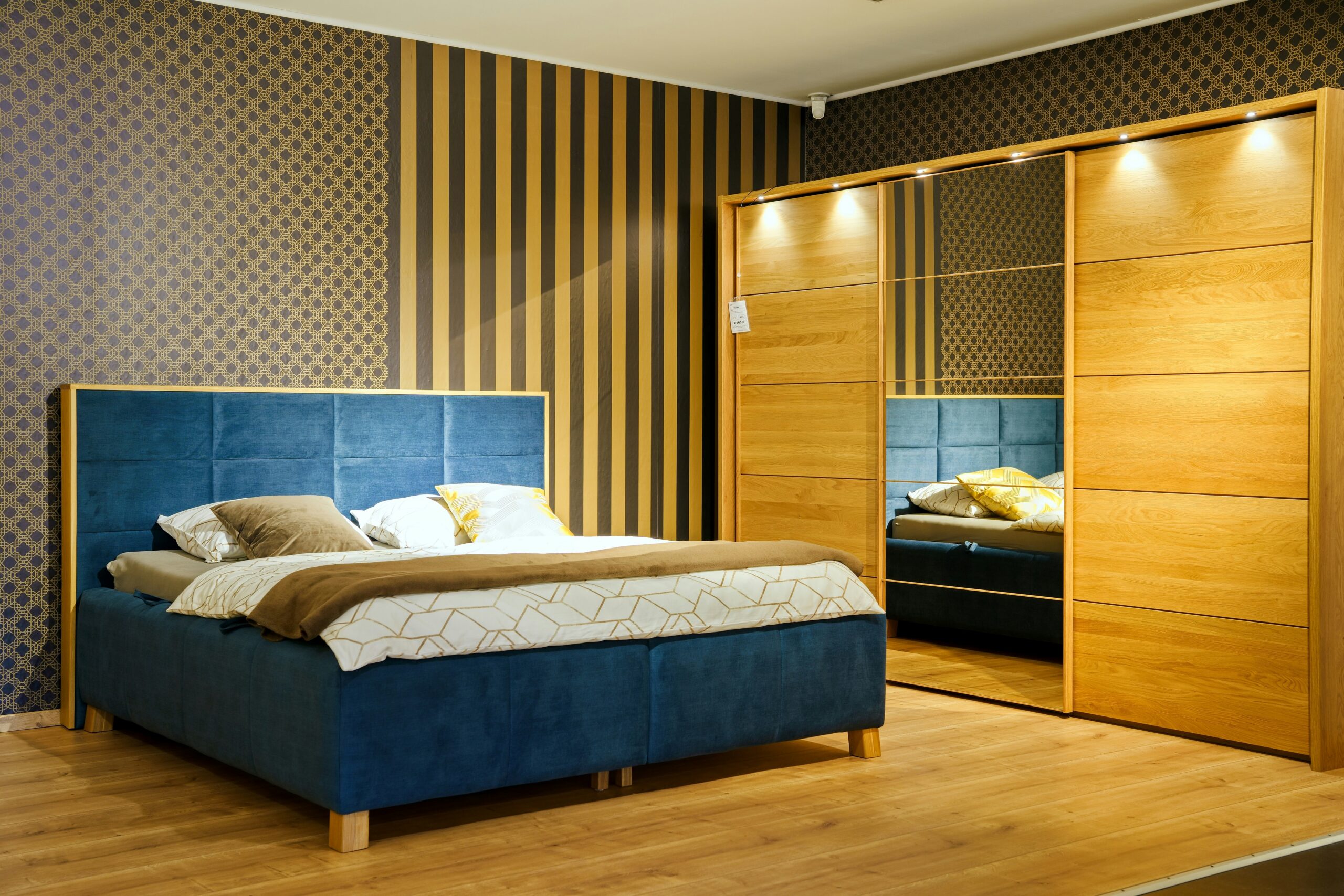
Your bedroom layout affects more than aesthetics. The way you arrange your furniture directly impacts your sleep quality, stress levels, and overall well-being.
Most people randomly place their bed and call it done, but strategic furniture placement can transform your bedroom into a true sanctuary.
Why Furniture Placement Matters for Sleep?
Poor furniture arrangement creates subtle disruptions that accumulate over time. A bed positioned under a window exposes you to temperature fluctuations and outside noise.
A dresser blocking natural light flow makes mornings harder. These seemingly minor issues compound into restless nights and groggy mornings.
Research shows the bedroom environment plays a significant role in sleep quality. Temperature regulation, light control, and spatial flow all contribute to how well you rest. Your furniture placement controls these factors.
Start With Your Bed Position
Your bed is the anchor. Everything else flows from this decision.
The Command Position
Place your bed where you can see the door without being directly in line with it. This “command position” reduces subconscious anxiety. You’ll feel more secure and relaxed, even if you don’t consciously notice the difference.
The headboard should sit against a solid wall, never under a window. This provides psychological grounding and physical support. It also protects you from drafts and outside disturbances that fragment sleep.
Distance from the Door
Keep your bed at least three feet from the doorway. Being too close to the entrance creates a sense of vulnerability. Your nervous system stays slightly activated, preventing deep sleep stages.
If your room is small and options are limited, use a room divider or tall plant to create visual separation between the entrance and sleeping area.
Window Considerations
Windows bring light and fresh air, but sleeping directly beneath one causes problems. Temperature swings near windows can be 10-15 degrees different from the rest of the room. Your body struggles to maintain optimal sleep temperature.
Position your bed perpendicular to windows when possible. You’ll benefit from natural light and ventilation without the downsides of direct exposure.
Creating Clear Pathways
Cluttered walking paths stress your mind before you even realize it. Your brain processes spatial navigation constantly, and obstacles create low-level friction.
Minimum Clearances
- 24 inches on each side of the bed for comfortable movement.
- 36 inches at the foot of the bed for easy walking.
- 30 inches in front of dressers and closets for opening drawers.
These measurements prevent the frustration of squeezing past furniture or stubbing toes in the dark. They also make your room feel larger and more open.
Traffic Flow
Map out how you naturally move through your bedroom. Most people follow the same path: door to bed, bed to closet, bed to bathroom. Arrange furniture to support these routes, not block them.
If you share your bedroom, ensure both partners can access their side of the bed without climbing over furniture or each other.
Nightstand Placement Strategy
Nightstands serve practical and psychological purposes. They ground the bed visually while keeping essentials within reach.
Height Matching
Your nightstand should sit level with your mattress top or slightly below. This makes grabbing your phone, glass of water, or book effortless. Reaching up or down repeatedly creates unnecessary strain.
Balanced Placement
Using nightstands on both sides creates visual symmetry, which promotes mental calm. If space only allows one, place it on the side where you sleep. Your partner can use a wall-mounted shelf or small floating table.
Size Proportions
A nightstand shouldn’t overwhelm your bed or disappear beside it. For a queen bed, look for nightstands 20-24 inches wide. King beds can handle 24-30 inch pieces. Twin or full beds work best with 16-20 inch nightstands.
Dresser and Storage Positioning
Storage furniture requires careful thought. Poor placement makes your morning routine harder and creates visual clutter.
Opposite Wall Strategy
Placing your dresser opposite the bed works well in most layouts. You avoid creating a cramped feeling around your sleeping area while keeping clothes easily accessible.
Never position dressers where you’ll see them first thing upon waking. Starting your day by looking at clutter affects your mental state, even if the dresser surface is organized.
Closet Proximity
Keep dressers near your closet when possible. This consolidates your getting-ready zone into one area. You’ll save time and reduce morning stress.
If your room has limited space, consider switching to a tall dresser instead of a wide one. Vertical storage preserves floor space while providing the same capacity.
Seating Areas and Their Impact
A chair or small bench transforms your bedroom into a multi-functional space, but placement matters.
The Corner Solution
Bedroom corners often go unused. A comfortable chair tucked into a corner with a small side table creates a reading nook that doesn’t interfere with main traffic patterns.
Add a floor lamp beside the chair to avoid relying on harsh overhead lighting. This gives you a retreat within your retreat.
Functional Bench Placement
A bench at the foot of your bed serves multiple purposes: seating while putting on shoes, a place to lay out tomorrow’s clothes, or extra storage underneath. Ensure at least 30 inches of clearance so it doesn’t obstruct movement.
Managing Technology in Your Layout
Electronics affect sleep quality, but most people can’t banish them completely. Strategic placement minimizes their impact.
TV Positioning Rules
If you must have a TV in your bedroom, mount it on the wall opposite your bed. This prevents you from falling asleep with your neck craned at an awkward angle.
Keep the screen at eye level when you’re sitting up in bed. Too high strains your neck; too low strains your eyes.
Charging Station Location
Create a charging station away from your bed. When devices charge within arm’s reach, you’re more likely to check them during the night. A dresser top or desk works better than a nightstand.
Use a decorative box or drawer to hide cords and keep the area tidy. Visual clutter from tangled cables affects sleep environment quality.
Lighting Layout Fundamentals
Light control is critical for healthy sleep patterns. Your furniture arrangement should support multiple lighting layers.
Three-Layer Approach
Your bedroom needs ambient lighting (overhead), task lighting (reading lamps), and accent lighting (decorative). Position furniture so each type serves its purpose without creating glare or shadows.
Table lamps on nightstands provide task lighting without disturbing a partner. Floor lamps near seating areas create ambient pools of light. Wall sconces save surface space while adding dimension.
Natural Light Management
Arrange furniture so you can easily access window treatments. If you need blackout conditions for shift work or light sensitivity, ensure curtain rods extend beyond the window frame and hang curtains high.
Position mirrors away from direct window sight lines. Reflected light can disrupt sleep, especially during summer months with early sunrises.
Small Bedroom Solutions
Limited space requires creativity, not compromise.
Wall-Mounted Options
Floating nightstands, wall-mounted lamps, and hanging organizers preserve floor space. This makes small rooms feel larger and easier to navigate.
Multi-Functional Pieces
A storage bed eliminates the need for a separate dresser. An ottoman with internal storage replaces a traditional bench while providing more functionality.
Scale Appropriately
Choose furniture sized for your room. A king bed in a 10×10 room leaves no space for anything else. A queen or full bed provides adequate sleep space while maintaining livable room proportions.
Room Shape Adaptations
Not all bedrooms are perfect rectangles. Work with your space, not against it.
Long Narrow Rooms
Place your bed along the short wall to avoid a bowling alley effect. This creates better proportions and leaves usable floor space.
Use vertical storage to maximize the room’s height. Tall dressers and floor-to-ceiling shelving draw the eye upward, making the room feel more balanced.
Square Rooms
Square layouts offer the most flexibility. Center your bed on one wall with matching nightstands. Use opposite corners for a dresser and seating area.
Oddly Shaped Spaces
Rooms with angled walls or architectural quirks need custom solutions. Place your bed along the most conventional wall, then use the unusual spaces for storage or decorative elements that don’t require precise measurements.
Testing Your Layout
Before committing to a furniture arrangement, live with it mentally first.
Walk through your normal routines in your mind. Can you open all drawers fully? Is there enough space to make the bed without contorting yourself? Can you vacuum easily?
Use painter’s tape on the floor to mark furniture footprints before moving heavy pieces. This simple step prevents multiple rounds of rearranging.
Common Mistakes to Avoid
Blocking Air Vents – Furniture over heating or cooling vents reduces system efficiency and creates temperature dead zones. Leave at least six inches of clearance.
Ignoring Electrical Outlets – Map outlet locations before deciding on furniture placement. Extension cords across walkways are trip hazards and fire risks.
Overcrowding – More furniture doesn’t mean better organization. A minimalist approach promotes better sleep than a packed room.
Neglecting Personal Height – Standard recommendations don’t account for individual differences. Taller people need higher nightstands and more legroom around furniture.
Your Sleep Sanctuary Starts With Smart Placement
The furniture arrangement you choose today impacts your sleep for years to come. Prioritize function over trends, comfort over aesthetics, and personal needs over design rules.
Start with your bed in the command position. Create clear pathways. Balance practical storage with open space. Control light and technology placement. These fundamentals apply regardless of room size or style preferences.
