

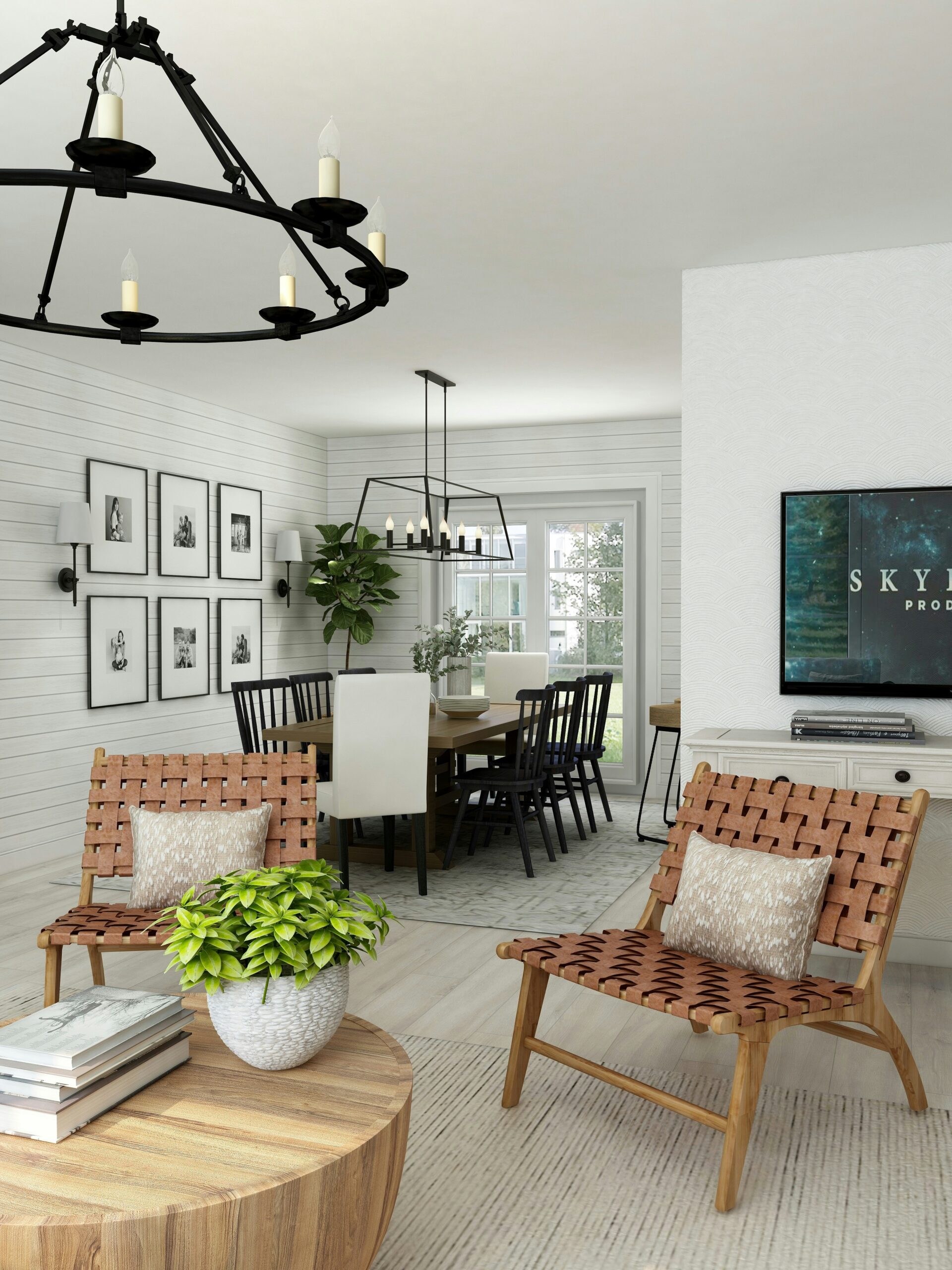
Open floor plans have become the standard in modern homes, but they come with a design challenge: how do you create distinct living and dining areas when there are no walls to separate them?
The key lies in using strategic design elements that establish clear zones while maintaining the airy, connected feel that makes these spaces so appealing.
Why Space Definition Matters?
Before diving into solutions, let’s address why this matters. A well-defined combo space prevents that awkward “everything floating in a big room” feeling. It helps guests understand where to sit, makes furniture arrangement logical, and ensures each area can serve its purpose without interference.
When done right, your living room feels like a living room, and your dining area feels like a proper dining space—even though they share the same four walls.
Use Area Rugs as Visual Boundaries
Area rugs are the easiest and most effective way to define separate zones. Place one rug under your living room seating arrangement and another beneath your dining table and chairs.
The rugs should be large enough that all furniture legs sit on them. For the living room, this means the front legs of your sofa and chairs should rest on the rug. For dining, the rug should extend at least 24 inches beyond the table on all sides so chairs remain on the rug when pulled out.
Choose rugs that complement each other but don’t match exactly. They can share a color palette or style while having different patterns or textures. This creates cohesion while reinforcing that these are two distinct areas.
Create a Furniture Arrangement That Acts as a Divider
Your sofa is one of your best tools for space division. Instead of pushing it against a wall, float it in the room with the back facing the dining area. This creates a natural boundary that signals “this is where the living room ends.”
Behind the sofa, add a console table. This serves multiple purposes: it gives you surface space for lamps and decor, provides storage, and reinforces the separation between zones. The console table should be the same height as your sofa back or slightly lower.
If your space allows, position two armchairs perpendicular to the sofa to create an L-shape or U-shape seating arrangement. This configuration naturally contains the living area and prevents it from bleeding into the dining space.
Lighting Defines Function
Different lighting treatments tell people how each space should be used. Your dining area needs a statement fixture centered over the table—a chandelier or pendant light that hangs 30-36 inches above the table surface.
The living room requires layered lighting: a ceiling fixture for ambient light, table lamps for task lighting, and possibly floor lamps for reading. The variety in lighting types creates visual interest and establishes the living room as a different zone.
Use dimmer switches in both areas. This lets you adjust the mood and further emphasize which space is in use. During dinner parties, you can brighten the dining area while keeping the living room more subdued.
Paint and Wall Treatments Create Subtle Divisions
You don’t need walls to use walls effectively. Paint the wall behind your dining table a different color or add wallpaper to create an accent wall. This anchors the dining area and gives it a distinct identity.
Alternatively, use the same paint color throughout but add wainscoting, board and batten, or picture molding to one zone. The architectural detail creates visual separation without color contrast.
Keep the ceiling consistent. Painting different ceiling sections or adding beams can make the space feel choppy rather than cohesive.
Strategic Storage and Display Units
A bookshelf, console cabinet, or low storage unit placed perpendicular to the wall can act as a room divider. The key is keeping it low enough that it doesn’t block sightlines—typically 30-42 inches high.
These pieces should be open or semi-open so they don’t create a visual wall. A bookshelf with both sides finished works perfectly because it’s attractive from both the living and dining perspectives.
Use the shelving to display items that make sense for both spaces: books, plants, decorative objects, or even dishware that serves double duty as decor.
Ceiling Details That Define Without Closing Off
Ceiling treatments are often overlooked but highly effective. Install a different light fixture style in each area—a flush mount in the living room and a chandelier in the dining space signal the functional difference.
Exposed beams running perpendicular to the space create subtle boundaries. If you’re building or renovating, a coffered ceiling in one zone and a flat ceiling in the other provides definition.
For renters or those avoiding major renovations, decorative ceiling medallions installed around light fixtures achieve a similar effect with minimal effort.
Color Blocking Through Furniture and Accessories
Even if your walls are all one color, you can use furniture colors to establish zones. Keep living room upholstery in one color family and dining chairs in another. The color shift helps the eye understand where one space ends and another begins.
Your accessories should follow suit. Living room throw pillows, blankets, and decor lean toward one palette, while dining area elements like table linens, centerpieces, and wall art use complementary but distinct colors.
This doesn’t mean the spaces should clash. Think of it as chapters in the same book rather than entirely different stories.
Flooring Transitions Mark Territory
If you’re installing or replacing flooring, use this as an opportunity to define spaces. Running hardwood planks in different directions for each area creates a subtle boundary. Switching from wood to tile under the dining table is another option, though this works better in casual spaces.
For an easier approach, use a floor border or inlay where the two spaces meet. This can be as simple as a strip of contrasting wood or as elaborate as a decorative tile pattern.
If changing flooring isn’t an option, those area rugs we discussed earlier accomplish the same goal without any construction.
The Power of Different Furniture Styles
Mixing furniture styles between zones creates natural definition. Your living room might feature a modern sectional and sleek coffee table, while your dining area showcases a rustic farmhouse table with traditional chairs.
The styles should still work together through shared elements like wood tones, metal finishes, or a common color thread. But the style variation clearly communicates that these areas serve different purposes.
This approach also makes decorating more interesting and personal, rather than everything matching in a catalog-perfect way that can feel sterile.
Vertical Elements That Don’t Block Views
Tall plants, floor lamps, or decorative screens placed at the boundary between spaces create division at eye level without blocking the sense of openness. A large fiddle leaf fig or bird of paradise in a substantial planter makes a statement while marking territory.
Floor screens or folding room dividers offer flexibility. Use them when you want more separation and fold them away when you want the space completely open. Choose designs with open work or translucent panels to maintain light flow.
Vertical elements should be substantial enough to read as intentional dividers, not random decor. They need visual weight to do their job effectively.
Traffic Flow Considerations
How people move through the space affects how you should define it. The pathway from the entry to other rooms should remain clear. Position furniture so the natural traffic pattern doesn’t cut through the middle of your living room seating arrangement or force people to weave between dining chairs.
Often, the best layout creates a clear circulation path along one side of the room, with the living area on one side of that path and the dining area on the other. This makes both spaces feel more contained and purposeful.
Test your layout by walking through it multiple times from different entry points. If you’re constantly bumping into furniture or the path feels awkward, adjust until movement feels natural.
Make Each Space Self-Sufficient
Each zone needs everything required for its function. The living area requires seating, a coffee table, side tables, lighting, and entertainment options. The dining area needs a table, adequate seating, proper lighting, and ideally some storage for dining essentials.
When each space has everything it needs, it naturally reads as a complete room rather than a portion of a bigger room. This self-sufficiency is crucial for the psychological separation that makes combo spaces work.
Avoid the temptation to shortcut one area to make the other work better. Both deserve equal attention and complete furnishing.
The Final Reality Check
Step back and photograph your space from multiple angles. Photos reveal what your eye might miss because you’re so familiar with the space. Do the two areas look distinct in the photos? Can you tell where one ends and the other begins? If not, you need a stronger definition.
