

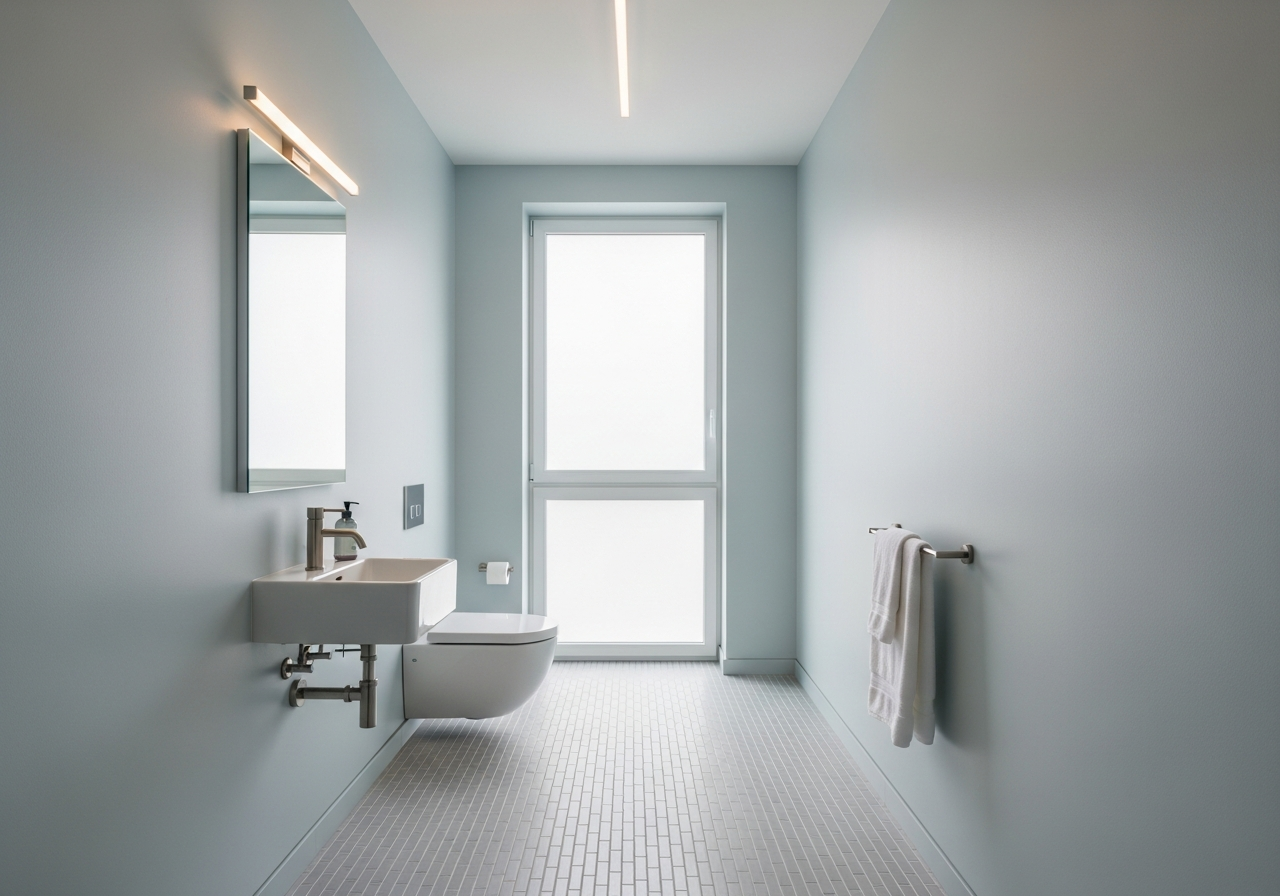
Walking into a long, narrow bathroom can feel like stepping into a hallway rather than a functional space. That cramped, tunnel-like sensation makes even the most well-appointed bathroom feel unwelcoming.
But here’s the good news: with smart design choices, you can transform that awkward corridor into a bathroom that feels open, balanced, and surprisingly spacious.
Understanding the Tunnel Effect
The tunnel effect happens when your eye travels straight down a long, narrow space with nothing to break up the visual journey. In bathrooms, this typically occurs in layouts that are 5 feet wide or less but stretch 10 feet or longer. The walls seem to close in, the ceiling feels lower, and the whole room becomes uncomfortable.
This isn’t just about aesthetics. A poorly planned, narrow bathroom creates real functional problems. You’ll struggle with storage, lighting becomes uneven, and daily routines feel more difficult than they should.
Strategic Fixture Placement
Where you position your toilet, sink, and shower makes or breaks a narrow bathroom. The goal is to create visual interest while maintaining easy movement through the space.
- The one-wall approach works exceptionally well. Line up your fixtures along a single wall, leaving the opposite side open. This creates a clear pathway and makes the room feel wider than it actually is. Place the toilet at the far end, followed by the vanity, with the shower or tub closest to the door.
- Diagonal positioning offers another solution. Angle your vanity at 45 degrees in a corner. This unexpected placement stops the eye from racing straight down the room and creates the illusion of more floor space.
For shower placement, corner units are your best friend. They tuck neatly away without eating up valuable real estate. If you’re set on a bathtub, position it along the narrow end wall rather than the long side. This turns the tub into a focal point that anchors the space instead of emphasizing its length.
Color and Pattern Strategies
Paint color dramatically impacts how narrow bathrooms feel. Light, cool tones make walls appear to recede. Soft grays, pale blues, and crisp whites all work beautifully. But don’t stop at plain white walls.
Horizontal stripes are game-changers. Whether through tile work, wallpaper, or painted stripes, horizontal lines visually widen narrow spaces. Keep stripes subtle and sophisticated rather than bold and overwhelming.
Consider a two-tone approach. Paint the lower third of your walls a slightly darker shade than the upper portion. This horizontal division breaks up the vertical emphasis and makes the room feel wider.
For floor tiles, run them perpendicular to the long walls. This creates horizontal lines that guide the eye sideways rather than straight back. Large-format tiles work better than small ones because they reduce grout lines, which can create visual clutter in tight spaces.
Lighting Solutions That Open Things Up
Poor lighting amplifies the tunnel effect. Many narrow bathrooms rely on a single overhead fixture that casts shadows and creates dark corners.
Layer your lighting instead. Start with recessed ceiling lights spaced evenly down the length of the room. Add sconces flanking your mirror at eye level. These multiple light sources eliminate shadows and make the space feel more open.
Wall-mounted fixtures keep the ceiling clear and draw attention horizontally across the room. Choose sconces with arms that extend slightly from the wall to create depth and dimension.
Under-cabinet lighting adds another layer while making your vanity area more functional. LED strips hidden beneath wall-mounted cabinets cast a gentle glow that softens the space.
Natural light deserves special attention. If you have a window, maximize it. Skip heavy curtains in favor of frosted glass treatments that maintain privacy while letting light flood in. No window? A sun tunnel or light tube brings natural light from your roof into windowless bathrooms.
Mirror Magic
Mirrors are your secret weapon against the tunnel effect. A large mirror doesn’t just help with grooming—it doubles your visual space.
Full-wall mirrors behind the vanity create the most dramatic effect. The reflection makes the room appear twice as wide. If a full wall feels like too much, extend your mirror beyond the vanity on both sides.
Position mirrors to reflect light sources and windows. This bounces light around the room and creates a brighter, more open feeling.
Avoid mirror placement on the long walls. This actually emphasizes length and makes the tunnel effect worse. Stick with mirrors on the short end walls where they’ll counteract the narrow proportions.
Storage Without Sacrifice
Narrow bathrooms make storage challenging, but you can’t let towels and toiletries pile up on limited counter space.
Vertical storage is your answer. Floor-to-ceiling cabinets take advantage of often-wasted space near the ceiling. Tall, narrow units work better than short, wide ones in these layouts.
Recessed medicine cabinets and shelving built into wall cavities provide storage without protruding into your limited floor space. These built-ins look custom and intentional rather than like afterthoughts.
Open shelving creates storage without the visual weight of closed cabinets. Floating shelves mounted high on walls keep necessities within reach without cluttering sight lines.
The space above the toilet offers prime storage real estate. Over-toilet organizers or custom cabinetry turn this dead zone into functional storage.
Shower and Tub Considerations
Your shower or tub takes up the most square footage in a narrow bathroom. Choose wisely.
Frameless glass shower enclosures are essential. The lack of heavy framing lets your eye travel through the shower rather than stopping at an opaque barrier. This makes the entire bathroom feel larger.
Clear glass works better than frosted or textured glass in narrow spaces. You want as much visual flow as possible.
For shower dimensions, go narrow and deep rather than wide and shallow. A 32-inch-wide by 60-inch-deep shower fits nicely in tight spaces while providing a comfortable room inside.
Walk-in showers without doors or with minimal glass panels create the most open feeling. A curbless design allows the floor tile to flow continuously, which visually expands the space.
If you need a tub, consider a Japanese-style soaking tub. These deep, compact tubs take up less space while still providing a relaxing soak.
Flooring That Expands Space
Your floor treatment influences perceived room size more than you might expect.
Large-format tiles reduce grout lines and create a cleaner, more expansive look—tiles measuring 12×24 inches or larger work exceptionally well in narrow bathrooms.
Continuous flooring throughout the space makes the room feel longer and more cohesive. Avoid breaking up the floor with different materials or patterns that segment the space into smaller visual chunks.
Light-colored flooring reflects more light and makes the room feel airier. Pale grays, warm taupes, and soft beiges all work beautifully.
The direction you lay rectangular tiles matters. Running them perpendicular to the long walls creates horizontal lines that counteract the narrow proportions.
Visual Tricks and Design Details
Small details add up to significant perceptual changes in narrow bathrooms.
Floating vanities create breathing room beneath the cabinet. That visible floor space tricks the eye into thinking the room is larger than it actually is. The unbroken floor line also emphasizes width.
Keep your color palette simple. Too many competing colors create visual chaos in small spaces. Stick with two or three coordinating shades throughout the room.
Minimize visual clutter. Every item on your counter or hanging on the walls draws attention and makes the space feel smaller. Edit ruthlessly and keep only daily essentials visible.
Crown molding draws the eye upward and makes ceilings feel higher. This vertical emphasis helps balance the narrow proportions.
Pocket doors or sliding barn doors save space compared to traditional swing doors. They also allow for more flexible furniture and fixture placement since you don’t need clearance for door swing.
Ventilation Matters
Proper ventilation prevents moisture buildup that can make narrow bathrooms feel even more closed in.
A quality exhaust fan sized appropriately for your bathroom’s square footage is non-negotiable. In narrow spaces, consider fans with higher CFM ratings to ensure adequate air circulation through the entire length of the room.
Position the fan centrally rather than at one end. This ensures proper air movement throughout the space.
Creating Zones in Narrow Bathrooms
Breaking your narrow bathroom into distinct zones stops the tunnel effect by giving the eye places to rest.
The vanity area becomes your grooming zone. The shower or tub is your bathing zone. Even in a small footprint, defining these areas with subtle shifts in tile pattern, lighting, or wall color creates visual interest.
Area rugs can delineate zones while adding warmth and texture. A runner along the length of the room creates intentional flow rather than an accidental tunnel.
Making It Work for You
The best narrow bathroom layout ultimately depends on your specific space and needs. Measure carefully, plan thoroughly, and prioritize the features that matter most to your daily routine.
Remember that small changes accumulate into significant improvements. You don’t need to gut-renovate to make a narrow bathroom more functional and attractive. Strategic paint choices, better lighting, and smart fixture placement can transform the space without breaking the budget.
