

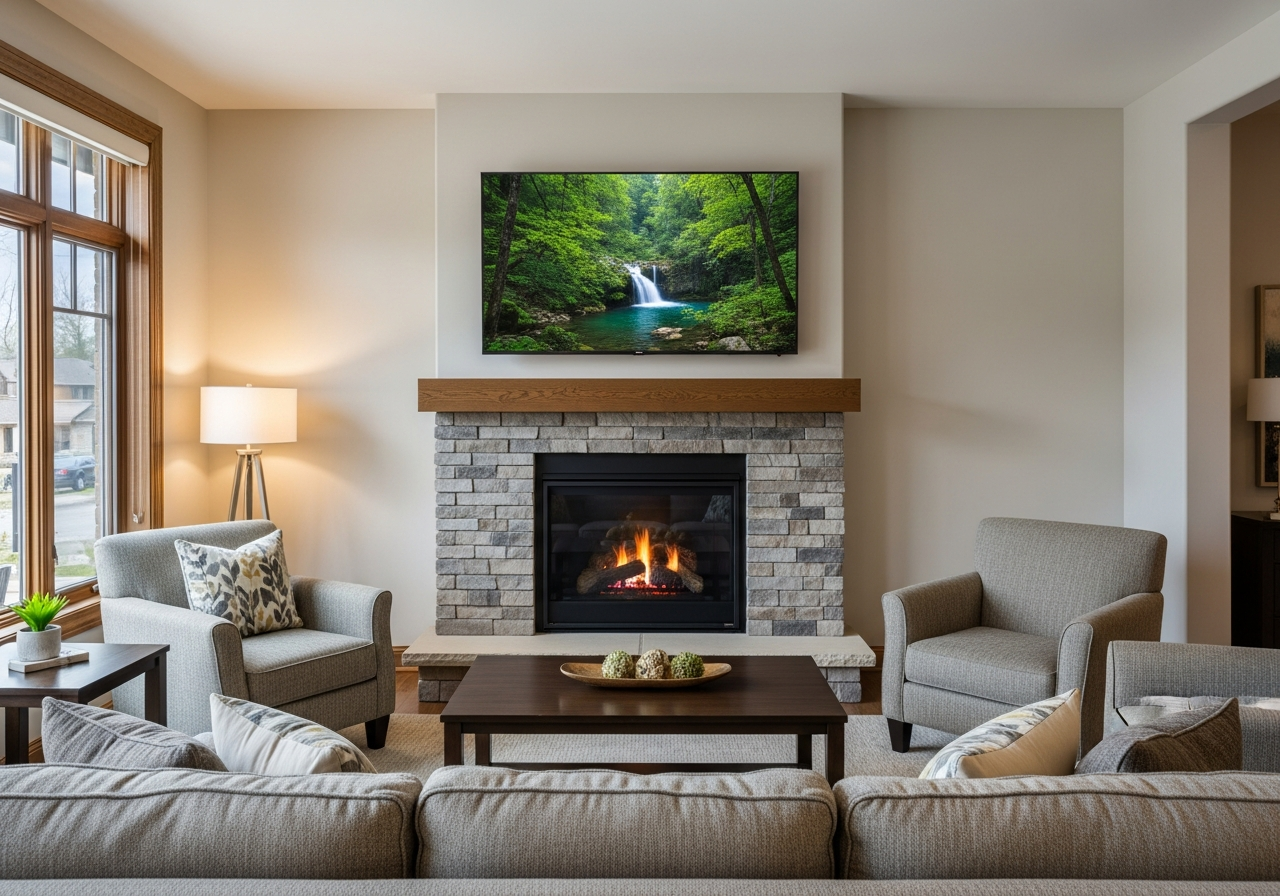
You’ve seen it in countless home design photos and probably considered it yourself. A sleek TV mounted above the fireplace is the perfect solution for your living room layout. It saves wall space, creates a focal point, and looks clean and modern.
The Real Problems With TVs Above Fireplaces
Your Neck Will Pay the Price
The biggest issue isn’t aesthetic—it’s physical comfort. When you mount a TV above a fireplace, you’re forcing yourself to look up for extended periods.
The ideal TV height places the center of the screen at eye level when you’re seated. For most people sitting on a couch, that’s about 42 inches from the floor. Fireplaces typically sit 48 to 60 inches high, meaning your TV center ends up 60 to 75 inches off the ground.
That’s roughly 20 to 30 inches higher than comfortable viewing height.
Watch a two-hour movie in this position, and you’ll understand why physical therapists cringe at this setup. Neck strain, headaches, and shoulder tension become regular companions. You might not notice during a 30-minute show, but binge-watching becomes genuinely uncomfortable.
Heat Damages Electronics
Fireplaces generate significant heat, and that heat rises directly toward your expensive television.
Even if your fireplace isn’t roaring 24/7, the occasional use creates temperature fluctuations that electronics hate. Modern TVs contain sensitive components designed to operate within specific temperature ranges. Excessive heat shortens their lifespan and can cause:
- Screen discoloration over time.
- Reduced picture quality.
- Component failure.
- Warped plastic housing.
- Shortened overall lifespan.
Gas fireplaces produce less heat than wood-burning ones, but they still create enough warmth to affect your TV. Electric fireplaces are better, though they still generate heat.
The Glare Problem Nobody Mentions
Fireplaces often occupy prominent wall positions with windows nearby. Mounting your TV there means dealing with reflections and glare from multiple angles.
The flickering light from an active fireplace also creates viewing problems. Try watching a dark movie scene while flames dance below—your eyes constantly adjust between the bright fire and the screen, causing eye fatigue.
Cable Management Becomes a Nightmare
That clean, minimalist look in design photos? It requires serious planning and often professional installation.
Running cables through your wall to hide them sounds simple until you remember that most fireplaces have brick or stone surrounds. Drilling through masonry costs more and creates permanent holes. If you rent, this might not even be an option.
Plus, fireplaces have chimneys and flues creating obstacles inside your wall cavity. What seems like a straightforward cable run often requires creative routing or exposed conduits.
When This Setup Actually Works
Despite these drawbacks, some situations make the TV-above-fireplace arrangement acceptable.
Your Fireplace Is Purely Decorative
If you never actually use your fireplace, heat damage becomes irrelevant. Many modern homes include fireplaces for aesthetics rather than function. In these cases, the main concerns are viewing angle and glare.
You Have a Low-Profile Fireplace
Modern linear fireplaces sit much lower than traditional models. Some units install almost flush with the floor, allowing your TV to mount at a reasonable height above them.
If the top of your fireplace sits below 30 inches, you might achieve proper TV height without severe neck strain.
The Room Layout Leaves No Choice
Some rooms genuinely lack alternative wall space. If your living room has windows on three walls and a fireplace on the fourth, your options shrink considerably.
In these situations, consider a pull-down TV mount. These mechanisms let you lower the TV to the proper viewing height when in use, then raise it when entertaining or showing off your fireplace.
Better Alternatives to Consider
Place Your TV on a Different Wall
The simplest solution often works best. Look around your room and identify walls that allow comfortable viewing angles.
Yes, this might mean your furniture faces away from the fireplace. That’s actually fine. Your fireplace can serve as an ambient background rather than competing with your TV for attention.
Create Two Separate Focal Points
Arrange your seating to enjoy both features independently. Position your main sofa toward the TV on one wall, then add chairs angled toward the fireplace.
This layout works especially well in larger rooms where you can define distinct zones for different activities. The TV area handles movie nights and gaming, while the fireplace area creates conversation space.
Use a Media Console
A low media console positions your TV at the correct height while providing storage for components and accessories. This setup looks intentional rather than like an afterthought.
If your fireplace wall is your only option, consider installing your TV beside the fireplace rather than above it. This arrangement maintains a single focal wall while keeping your screen at eye level.
Install a Mantel Mount
If you must mount above the fireplace, invest in a quality pull-down mount. These systems let you raise your TV to 20 inches and pull it forward several inches from the wall.
When lowered for viewing, these mounts significantly reduce neck strain. When raised, they maintain the clean aesthetic you want. Quality models cost $300 to $600 but preserve both your comfort and your TV’s lifespan.
What Designers Recommend Instead
Interior designers consistently suggest treating your fireplace and TV as separate elements deserving their own space.
Modern design trends actually favor asymmetry and multiple focal points rather than forcing everything onto one wall. A well-placed TV on a different wall creates better room flow and more flexible furniture arrangements.
If architectural elements like built-in shelving flank your fireplace, use them for books, art, and decorative objects. Let your fireplace stand as a design feature without the distraction of a large black screen hovering above it.
Making the Best Decision for Your Space
Before mounting that TV, ask yourself these questions:
- Do you actually use your fireplace regularly?
- Can you comfortably watch TV at the proposed height for 2+ hours?
- Does your room layout genuinely prevent other TV placement options?
- Are you willing to invest in a quality pull-down mount system?
- Can you effectively manage cables through masonry, or are you okay with visible wiring?
If you answered no to most of these questions, explore alternative placements. Your neck, your TV, and, honestly, your overall viewing experience will benefit.
The Bottom Line
Mounting your TV above the fireplace looks appealing in photos where you see a static room rather than real people watching for hours. The reality involves neck pain, heat exposure, glare issues, and complicated installation.
Designers push back against this trend because they’ve seen the aftermath—clients who regret the decision after living with it, TVs damaged by heat, and uncomfortable viewing experiences that diminish how people use their favorite room.
Your living room should reflect how you actually live, not just how it photographs. For most people, that means keeping the TV at proper eye level and letting the fireplace exist as its own beautiful feature.
