Overview
HMD Global quietly re-entered the Android tablet market with the Nokia T20. In testing it proved to be a competent device for video playback and other basic tasks, but its performance keeps it firmly in the budget entertainment category rather than the productivity or power segment.
Models and price
The T20 ships in two configurations. The Wi‑Fi model is priced at 229 euros with 3 GB RAM and 32 GB storage, while the 269 euro version adds 4 GB RAM, 64 GB storage and 4G cellular support. The review unit here was the pricier 4G model.
Competition
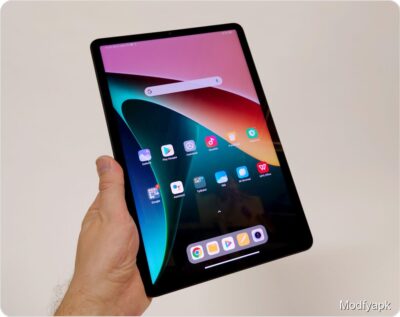
There are not many direct competitors at this price point. Close alternatives include last year’s Lenovo Tab M10 FHD Plus (about 170 euros) and Samsung’s budget tablets such as the Galaxy Tab A7 4G (around 200 euros). The Xiaomi Pad 5, released this fall, delivers noticeably more performance but costs 389 euros.
Display and media
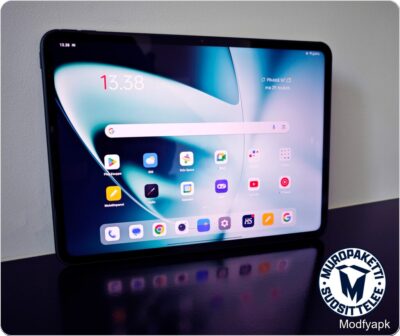
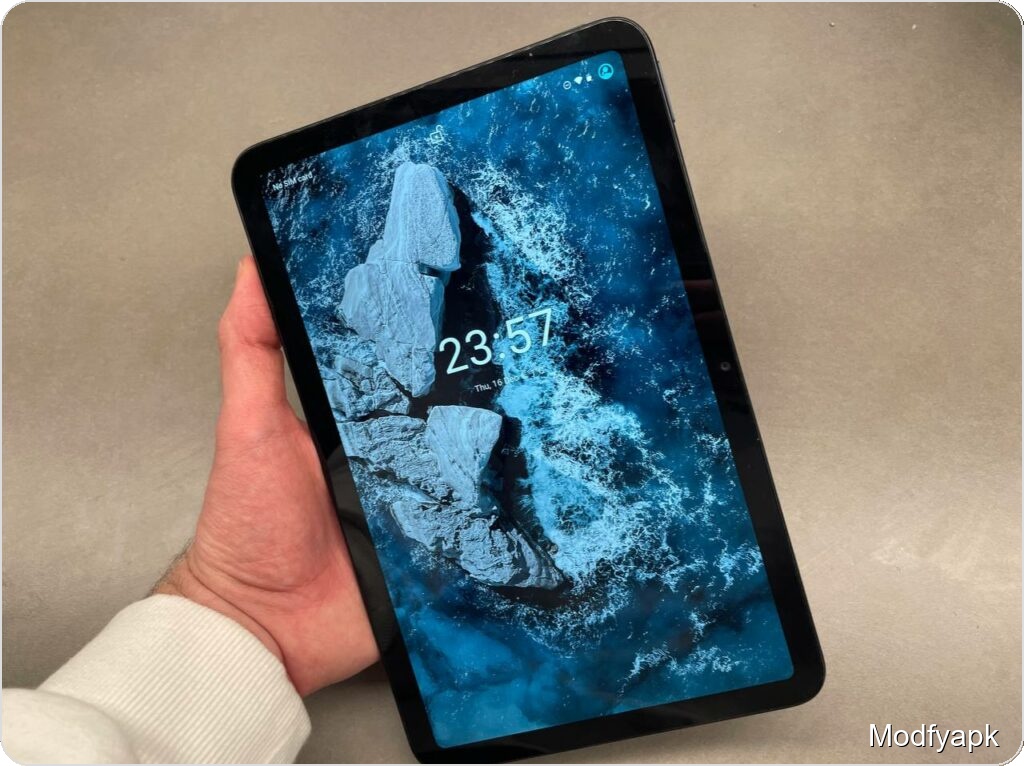
The T20 uses a 10.36‑inch LCD with a 2000 x 1200 resolution (225 PPI). It is large and, for the price bracket, a quality panel that suits movie watching, e‑reading, web browsing and light gaming.
The screen has relatively thick bezels, which make two‑handed handling easier and allow the front camera to sit on the long edge without a notch. Viewing angles are good enough for two people to watch side by side, and the panel’s advertised 400 nits peak brightness is adequate for typical indoor use.
That said, the LCD cannot match pricier competitors or AMOLED panels for deep blacks. Crucially, the T20 lacks Widevine L1 support, so HD streaming is unavailable; services like Netflix are limited to around 480p.
Design and build
The chassis is aluminum and feels sturdy in hand without creaks or flex. Weight comes in at about 460 to 470 grams depending on model (Wi‑Fi / LTE), and the dimensions are 247.6 x 157.5 x 7.8 mm.
The finish is not slippery, though the rear attracts fingerprints. If you orient the tablet so the front camera is on the long top edge, volume buttons sit along the top and the power button is on the left edge. Button feedback is good.
Audio, ports and expandability
Nokia outfits the T20 with Ozo‑branded stereo speakers and retains a 3.5 mm headphone jack at the lower right corner. The speakers provide decent sound for videos and casual music listening, though bass is limited and they do not compete with external speakers or headphones.
The tablet also includes a microSD slot for expanding storage.
Cameras
The rear camera is an 8‑megapixel unit housed in a slightly raised module in the upper left corner. It is basic and mainly useful for quick document snaps rather than high‑quality photography.
Photo software is minimal, offering photo, portrait and video modes. Images tend to be grainy with modest color and contrast, which aligns with the tablet’s budget positioning.
The front camera is 5 megapixels with fixed focus. It is fine for video calls but the fixed focus makes images and video easily fall out of focus.
Biometrics and software
There is no fingerprint sensor. Unlocking relies on a password, PIN, pattern or face unlock via the front camera. Face unlock performance was inconsistent in testing and struggled in low light, and it is not as secure as hardware biometric options.
Software is a clean Android 11 experience with a few preinstalled apps such as ExpressVPN, which requires a separate subscription. HMD promises two Android version updates up to Android 13 and monthly security updates for three years.
Performance
The T20 runs on a Unisoc T610 SoC. Built on a 12 nm process, it has two Cortex‑A75 cores at 1.8 GHz and six Cortex‑A55 cores at 1.8 GHz. The review unit included 4 GB of RAM and 64 GB of storage; a 3 GB / 32 GB variant is also available.
Real‑world performance is modest. UI animations often lack smoothness and app launch times can be slow. Routine tasks like web browsing and messaging are generally usable if you accept occasional stutters. Casual games such as Candy Crush run okay, but graphically heavier titles show clear slowdowns.
Benchmarks underline the gap to more powerful tablets. PCMark Work 3.0 scored 7558 on the Nokia T20 versus 11277 on the Xiaomi Pad 5. Geekbench 5 results were 348 single‑core and 1261 multi‑core for the T20, compared with 715 and 2756 for the Pad 5.
Battery life and charging
Battery life is a bright spot. The T20 packs an 8200 mAh battery that easily lasts multiple days under light use and can power through several movies on a single charge.
Charging speed is a weak point. The tablet supports up to 15 W charging, but the included charger is only 10 W. With that charger a full charge from empty takes over four hours, so do not rely on a last‑minute top‑up before travel.
Who should buy it
The Nokia T20 is best positioned as an affordable home multimedia tablet. Its solid screen, reliable battery life and metal build make it a good choice for streaming, reading and casual browsing. The absence of Widevine L1 and the underwhelming SoC limit its appeal for HD streaming and heavy multitasking.
It is not a laptop replacement: weak performance, lack of official keyboard accessories and slow charging hold it back. Still, as a sturdy, budget tablet for kids, students or anyone who prioritizes battery life and a good display over speed, it is a reasonable option.
Pros and cons
Good
- Reasonable price
- Display is strong for the class
- Stereo speakers and 3.5 mm jack
- Excellent battery life
Bad
- Weak performance
- Slow charging
- Subpar camera quality
- No Widevine L1 support