Design and positioning
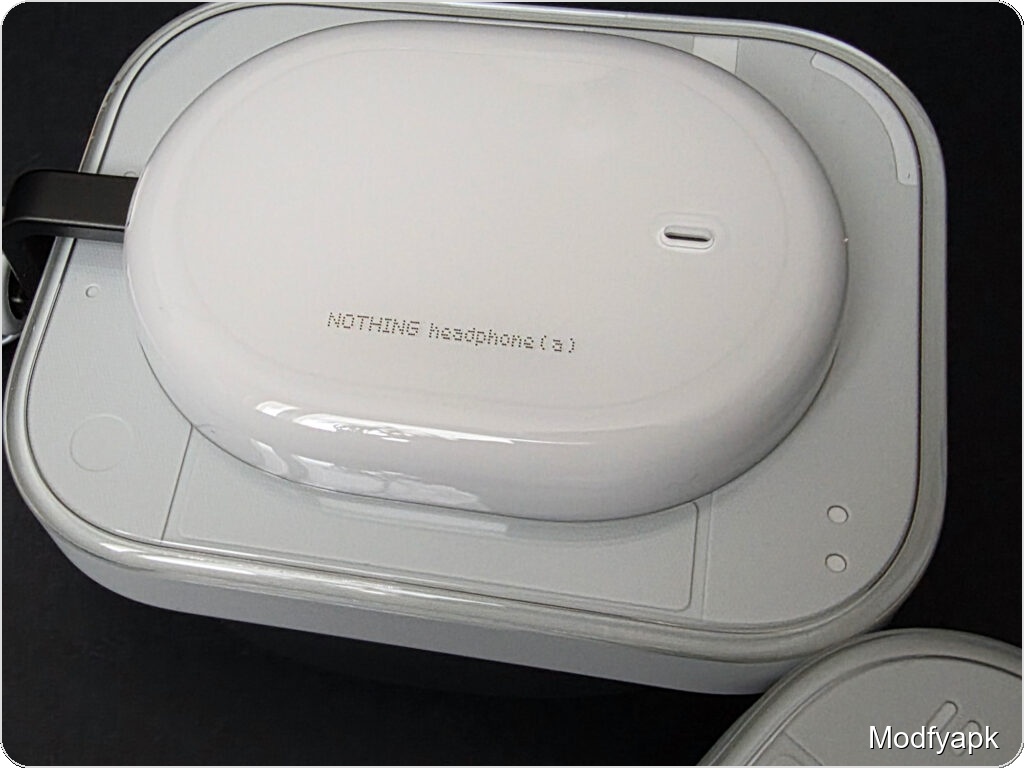
Nothing is expanding its headphone lineup with the Headphone (a), a more affordable over-ear that borrows the brand’s signature transparent look while cutting costs elsewhere.
The official suggested price is 179 euros, with Nothing’s online store listing it at 159 euros. That puts the (a) well below the company’s earlier Headphone (1), which launched above the 300-euro mark and aimed squarely at premium competitors like Bose, JBL and Sony. Direct rivals at street price include the JBL Live 770NC, Sennheiser Accentum Plus and Sony WH-CH720N.
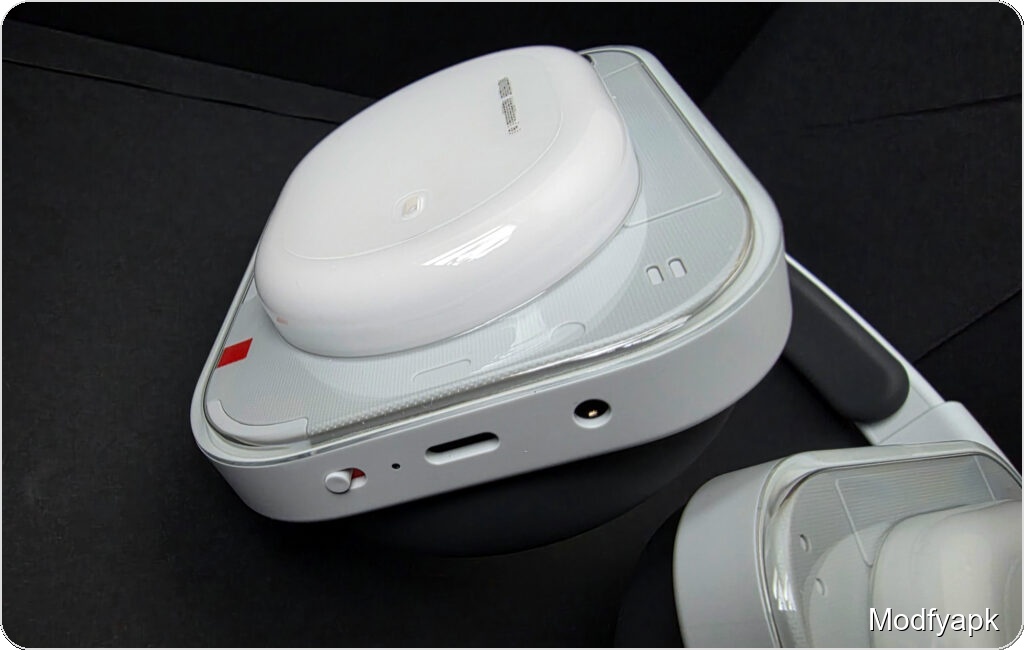
There are four color options. Black and white stick to a restrained aesthetic; yellow and pink offer louder accents. On the three brighter finishes the color change is limited to the outer portion of the ear cup, while the black version is fully black.
Unboxing and build
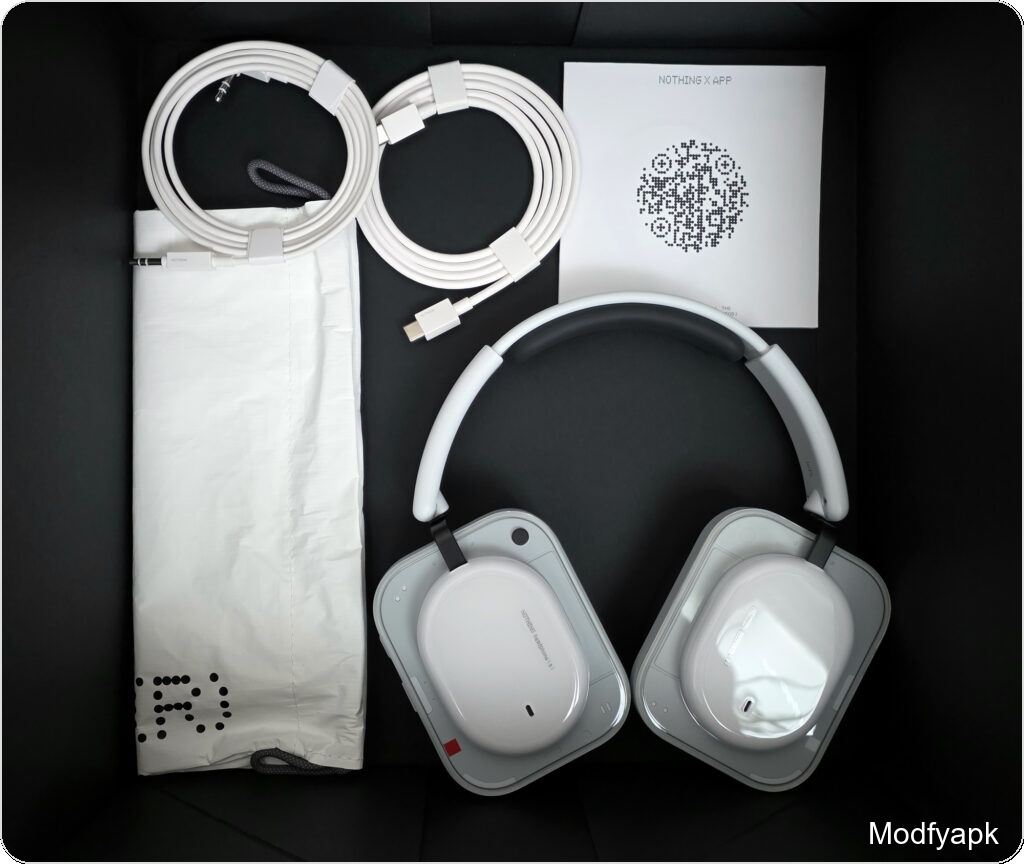
The first sign of cost trimming appears as soon as you open the box: there’s no protective hard case, only a lightweight pouch. The pouch does include a small pocket for the two included cables, one USB-C and one 3.5 mm, and wired listening is supported if you prefer or need a wired connection.
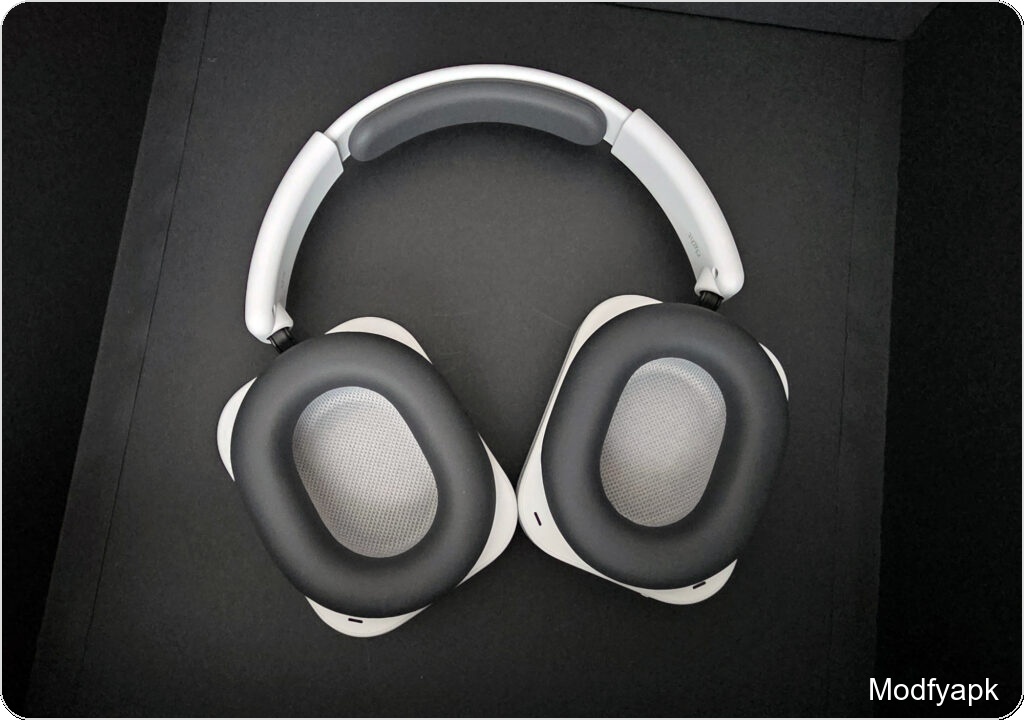
The headphones are noticeably plastic but neatly finished. Only the short link between the headband and the cups is metal. That plastic construction shows most in the headband adjustment, where the fine-tuning feels imprecise and a bit fiddly once the headphones are on. The headband padding is somewhat short but not uncomfortable in use.
At 310 grams the Headphone (a) sit on the heavier side, yet fit comfortably thanks to leatherette ear pads. Long sessions can warm the ears, though not excessively, and clamping force is enough to keep the cans secure while still accommodating glasses.
Controls and app
The standout feature here is the control scheme. Nothing has clearly thought through the physical controls, and they are among the best in this price segment.
The power control is a simple, tactile slider that reliably turns the headphones on and off. The headphones do not detect whether they are being worn and so do not automatically pause playback when taken off.
On the right earcup a rolling volume control sits above a paddle-style switch. The roller adjusts volume smoothly and can be pressed to play or pause; a long press triggers an extra function. The paddle is pushed forward or backward to skip tracks or scrub; holding it enables fast forward or rewind and it also handles call answer/end. Both controls are easy to find by touch and feel intuitive in use.
A third button on the right cup can be mapped to one of several preset functions such as mic mute, noise control or voice assistant; a long press assigns an additional action.
The Nothing X mobile app (Android and iOS) complements the hardware with clear controls and a robust equalizer. The app’s two EQ modes are especially welcome, giving flexible tone shaping without complexity.
Sound and ANC
Nothing has not chased extreme neutrality. The (a) leans toward an energetic, entertaining sound rather than a flat reference response.
In my listening—mostly newer and older electronic music—the headphones deliver a satisfying core sound. Bass is generous and punchy without overwhelming mids, and vocals remain clear. Upper frequencies can show a touch of harshness at times, noticeable but not severe. Resolution, separation and soundstage do not match top-tier models, but for the price Nothing’s tuning is compelling and often feels more lively than the somewhat more neutral Sennheiser Accentum Plus.
Active noise cancellation performs reasonably well on lower frequencies, but midrange and vocals cut through more readily. ANC offers useful noise reduction, but it does not come close to the best wireless noise-cancelling models.
Battery life
Battery life is a revelation. Nothing’s published numbers are ambitious: with ANC on using AAC, the company claims up to 75 hours of playback; with LDAC the figure is 62 hours. Without ANC the company lists 135 hours (AAC).
Across a roughly three-week test I repeatedly used the headphones for commutes and home listening. At the midpoint of the test the headphones were fully charged, then logged about 20 hours of listening with ANC and LDAC active. After those 20 hours the app still reported roughly 70 percent battery remaining.
Even allowing for faster discharge near the end of the cycle, the manufacturer’s figures now seem plausible and are genuinely impressive. After the formal test period the headphones continued to deliver hours of listening without falling below 60 percent battery.
Verdict
Nothing Headphone (a) impresses where it counts for this price point. The physical controls are inventive and highly usable, the sound profile is lively and enjoyable, the mobile app is feature rich, and battery life is outstanding.
The trade-offs are clear: a predominantly plastic build, only a soft pouch for protection, ANC that is competent but not class-leading, no on-head detection, and a fiddly headband adjustment. Those compromises keep the price down and are consistent with the product’s positioning.
All told, if you like Nothing’s design language the Headphone (a) delivers strong value through excellent controls, solid sound and extraordinary battery life.
Pros and cons
Good
- Distinctive, functional physical controls
- Sound is excellent for the class
- Standout styling compared with the crowd
- Feature-rich, clear mobile app
Bad
- ANC only average for the class
- No hard carrying case, just a pouch
- No wear detection
- Headband adjustment feels imprecise
Specifications
Price: 179 euros (official recommended). Element: 40 mm. Rated frequency response: 20–20,000 Hz. Microphones: 4. Connections and codecs: Bluetooth 5.4, SBC, AAC, LDAC. Mobile app: Nothing X (Android and iOS). Battery and claimed runtime: 1,060 mAh; 75 h (ANC, AAC) / 135 h (no ANC, AAC). Dimensions and weight: 177 x 78 x 190.4 mm; 310 g. Included: protective pouch.
Note: official recommended price updated to 179 euros.