

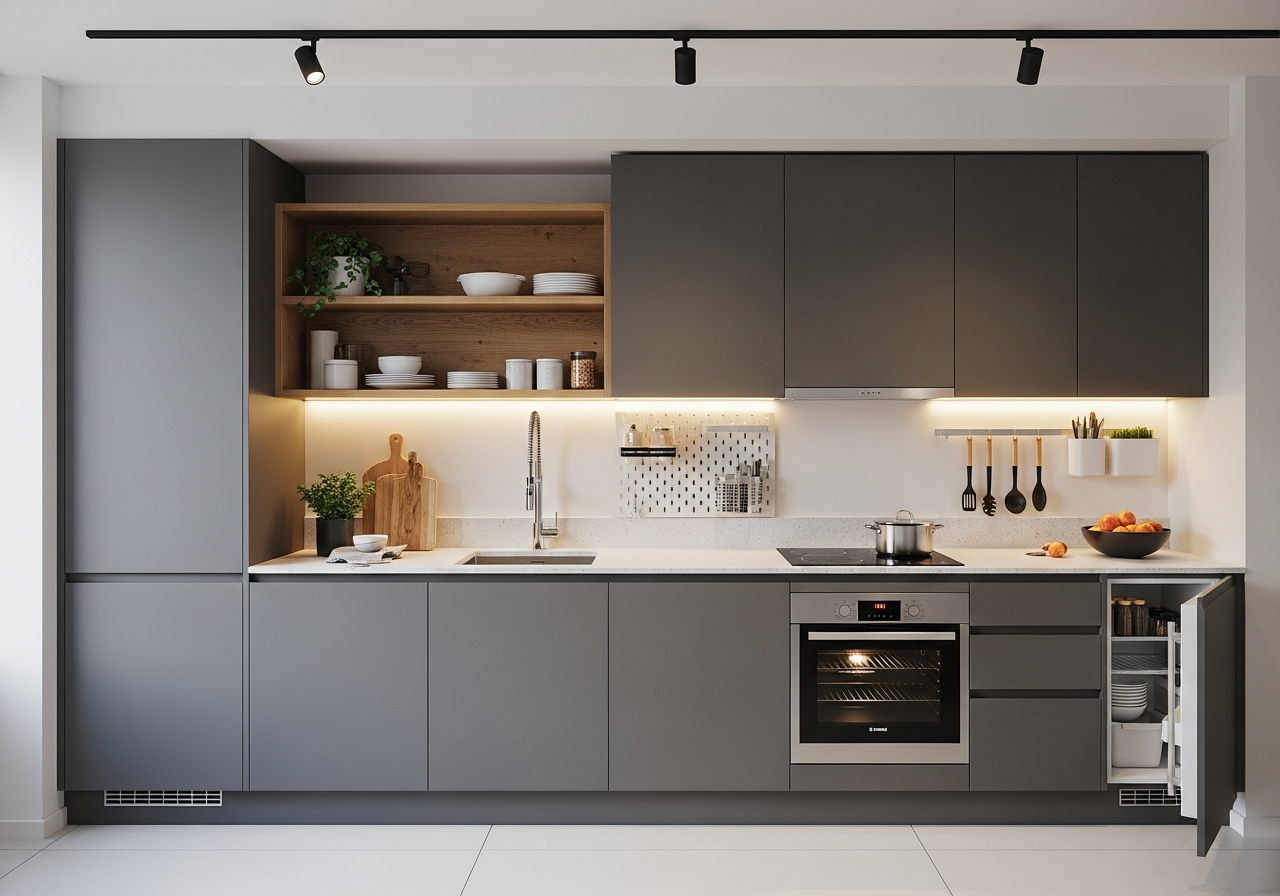
Small kitchens demand smart solutions. The one-wall kitchen layout delivers exactly that—a streamlined design that packs everything you need into a single wall while keeping your space open and functional.
What Is a One-Wall Kitchen?
A one-wall kitchen places all appliances, cabinets, and countertops along a single wall. You’ll find your sink, stove, and refrigerator lined up in one continuous run. This layout works brilliantly in studios, tiny homes, and open-plan spaces where every square foot counts.
The design eliminates the traditional work triangle. Instead, everything sits within arm’s reach along one straight line. You won’t waste steps moving between different work zones.
Why Choose This Layout?
Space efficiency stands as the biggest advantage. When you’re working with 100 square feet or less, spreading your kitchen across multiple walls doesn’t make sense.
Cost savings matter too. You’ll need less cabinetry, fewer countertops, and shorter plumbing and electrical runs. Installation becomes simpler and faster.
The layout opens up your floor plan. Without kitchen elements jutting into the room, you gain precious space for dining tables, living areas, or simply better traffic flow.
Ideal Spaces for One-Wall Kitchens
Studio apartments benefit most from this design. The compact footprint preserves living space while providing full kitchen functionality.
Basement apartments and mother-in-law suites work well with this layout. You can’t tuck the kitchen along one wall and dedicate the remaining space to comfortable living areas.
Small condos and lofts embrace the one-wall approach. The design complements modern open-plan living without visual clutter.
Vacation homes and rental properties see practical advantages. Guests get everything they need without navigating complex kitchen layouts.
Standard Dimensions and Planning
Plan for 8 to 13 feet of wall space minimum. This gives you enough room for essential appliances and adequate counter space.
Your base cabinets should measure 24 inches deep. Upper cabinets typically run 12 inches deep, creating a balanced look while maximizing storage.
Counter height stays standard at 36 inches. Leave at least 15 inches of counter space on either side of your cooktop for safe food preparation.
Appliance Placement Strategy
The refrigerator is at one end. Position it first when planning your layout. This placement lets people grab drinks or snacks without crossing your work area.
Your sink typically sits in the middle section. Central placement balances the layout and simplifies plumbing runs. You’ll have counter space on both sides for dish drying and food prep.
The cooktop or range comes next. Place it between the sink and the opposite end from the refrigerator. Keep at least 12 inches of counter space beside it for hot pots and serving plates.
Dishwashers fit best next to the sink. This positioning shortens plumbing connections and creates an efficient cleanup zone.
Maximizing Storage Solutions
Vertical space becomes your best friend. Install cabinets all the way to the ceiling. Those top shelves store items you use less frequently.
Pull-out organizers transform base cabinets. Sliding shelves, corner units, and drawer systems put everything within easy reach.
Toe-kick drawers add hidden storage. That 4-inch space below your base cabinets can hold flat items like baking sheets and cutting boards.
Wall-mounted rails and magnetic strips keep utensils organized without consuming counter space. Hang frequently used tools where you can grab them instantly.
Pantry cabinets with pull-out shelves work better than traditional deep cabinets. You’ll see everything you own without digging through stacked items.
Counter Space Optimization
Every inch of counter matters in a one-wall kitchen. Aim for 36 to 48 inches of continuous workspace between your sink and cooktop.
Cutting boards that fit over your sink create temporary work surfaces. Pull them out when you need extra space, then tuck them away.
Rolling carts provide mobile counter space. Move them into position while cooking, then roll them aside when you’re done.
Keep counters clear of permanent fixtures. Store small appliances in cabinets and bring them out only when needed.
Lighting Requirements
Under-cabinet lighting illuminates work surfaces without shadows. LED strips consume minimal energy while providing bright, focused light.
Pendant lights add task lighting over key work zones. Hang them 30 to 36 inches above your countertop for optimal visibility.
Recessed ceiling lights provide general illumination. Space them 4 feet apart along the length of your kitchen wall.
Natural light enhances the space. Position your one-wall kitchen opposite windows to maximize daylight.
Material Selection
Light-colored cabinets make small kitchens feel larger. White, cream, and pale gray reflect light and create visual spaciousness.
High-gloss finishes amplify this effect. Reflective surfaces bounce light around the room.
Slim cabinet hardware maintains clean lines—oversized pulls and knobs visually clutter compact spaces.
Continuous countertops without seams create a streamlined appearance. Quartz and solid surface materials work well for one-piece installations.
Ventilation Considerations
Range hoods remove cooking odors and moisture. Choose a model that vents outside rather than recirculating air when possible.
Measure your wall space carefully before selecting a hood. Compact models designed for small kitchens provide adequate ventilation without overwhelming the layout.
Under-cabinet range hoods save space. They tuck beneath your upper cabinets while still delivering strong performance.
Microwave-hood combinations serve dual purposes. You’ll gain counter space by mounting your microwave above the range.
Common Design Mistakes
Overcrowding the wall creates a cramped feeling. Resist the urge to install every possible cabinet and appliance.
Neglecting the work zone triangle causes inefficiency. Even in a linear layout, maintain logical spacing between your refrigerator, sink, and cooktop.
Skipping upper cabinets wastes valuable storage. Unless you’re creating an intentionally minimal design, use that vertical space.
Placing the refrigerator in the middle disrupts the workflow. End placement keeps the door swing from interfering with cooking activities.
Color Schemes That Work
Monochromatic palettes create visual continuity. Stick to variations of one color from floor to ceiling.
Two-tone designs add interest without chaos. Pair light upper cabinets with slightly darker base cabinets.
Bold accent walls opposite your kitchen draw the eye away from the compact layout. This technique makes the space feel larger.
Reflective backsplashes using glass or glossy tiles amplify light. Mirror-like surfaces create depth perception.
Budget-Friendly Options
Ready-to-assemble cabinets cost significantly less than custom options. Modern RTA cabinets offer quality construction at reasonable prices.
Laminate countertops have improved dramatically. Today’s options mimic stone and wood convincingly while fitting tight budgets.
Open shelving replaces some upper cabinets. You’ll save money while creating an airy, modern aesthetic.
Standard-size appliances cost less than specialized compact models. Plan your layout around common dimensions to avoid premium pricing.
Upgrading an Existing One-Wall Kitchen
New cabinet fronts refresh the entire space. Replace doors and drawer fronts without touching the cabinet boxes.
Updated hardware creates an immediate impact. Swap old pulls and knobs for modern alternatives in minutes.
Fresh paint transforms cabinets. Choose durable cabinet-specific paint for surfaces that withstand daily use.
Replacing countertops delivers maximum visual change. Modern materials like butcher block or concrete offer distinctive looks at various price points.
Making It Work Long-Term
Discipline maintains functionality. Return items to designated spots immediately after use.
Regular decluttering prevents overflow. Review your belongings quarterly and remove items you don’t use.
Seasonal rotations keep relevant items accessible—store holiday baking equipment when you’re not using it.
Multi-purpose tools reduce clutter. Choose items that serve multiple functions instead of single-use gadgets.
The Bottom Line
One-wall kitchens prove that good design doesn’t require abundant space. Smart planning, vertical storage, and careful appliance selection create fully functional kitchens in minimal footprints.
Whether you’re designing a studio apartment or maximizing a small condo, this layout delivers efficiency without sacrifice.
