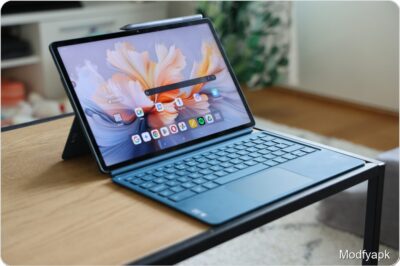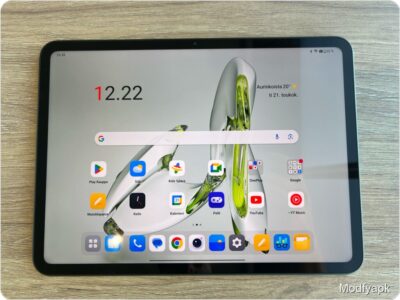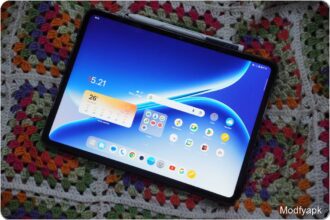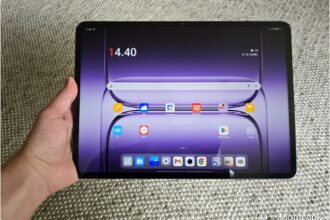
OnePlus Pad 2 keeps the formula but upgrades performance
Last year’s OnePlus Pad proved a capable, reasonably priced tablet, and the OnePlus Pad 2 follows the same playbook with a clear focus on raw performance upgrades. It still offers a large display, long battery life, and solid real-world speed — and the €549 price is surprisingly reasonable for what you get.
Android tablets occupy a wide range of price points. Budget models often sit in the €200–€300 bracket and come with obvious compromises. At the other extreme are Samsung’s Galaxy Tab S models, built with work-capable features and price tags that start near €1,000, while Apple’s latest iPad generations begin around €700.
That middle ground of true all-purpose Android tablets has been thinly served. OnePlus targeted that gap with the original Pad, and the Pad 2 continues in the same segment with meaningful upgrades.
What’s new: flagship silicon, more memory
Released in mid-July and available in early August, the Pad 2’s headline change is the system-on-chip swap from MediaTek to Qualcomm’s Snapdragon 8 Gen 3. That moves the tablet into flagship-class performance territory. Storage has been doubled to 256 GB and RAM increased to 12 GB. Those specs combine to justify the device’s €549 price point.
The retail box includes the tablet, documentation, and a USB-A to USB-C cable. No charger is included. OnePlus’ 80 W SuperVOOC charger is available separately for about €40.
Display: big, sharp, but with quirks
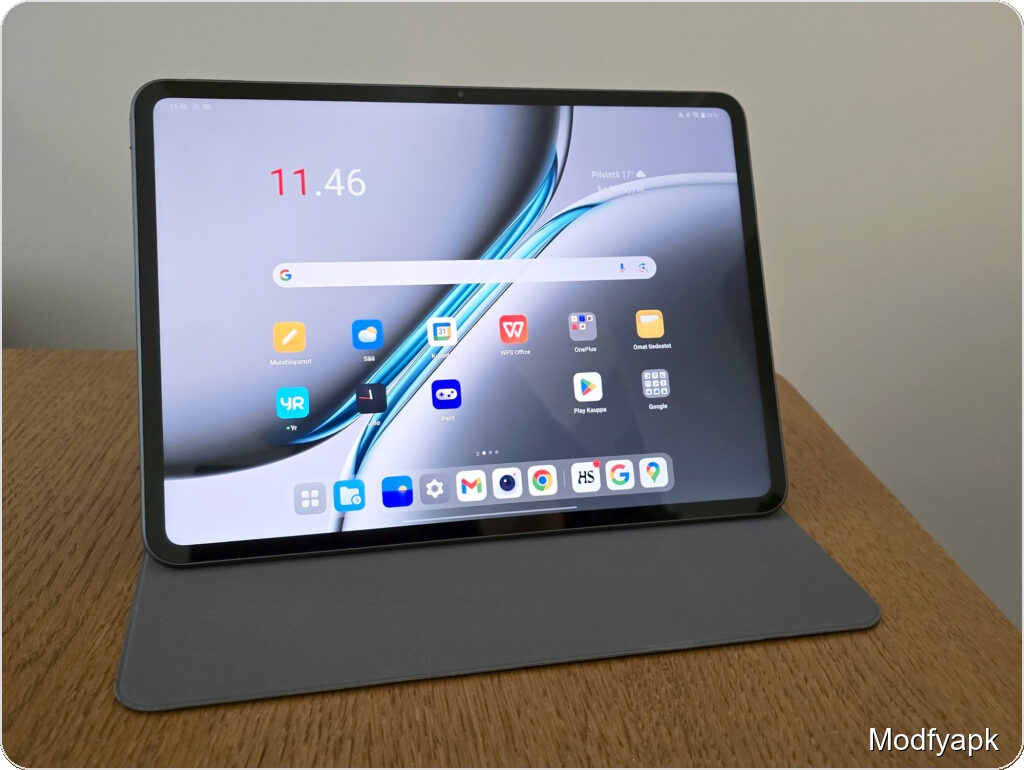
The Pad 2’s display is one of its clear strengths. At 12.1 inches it’s satisfyingly large and its 3000 x 2120 resolution yields roughly 303 pixels per inch, producing a crisp image.
The 7:5 aspect ratio is a bit taller than typical tablet panels, which makes the device flexible for portrait and landscape use. Camera placement favors landscape, although the screen’s shape is more naturally suited to portrait browsing.
There are trade-offs. The panel is LCD, so black levels do not match the best OLED panels. More noticeably, the refresh-rate switching can stutter. The display supports automatic switching between 30, 48, 50, 60, 90, 120 and 144 Hz, and sometimes misses the optimal rate, causing a slight jerkiness. Scrolling in dark mode initially produced brief reddish pixel artifacts, a problem mitigated by a software update released in early September. These issues do not break everyday use, but Samsung’s S-series tablets still feel smoother.
Peak brightness reaches 900 nits while typical brightness settles around 500 nits, which proved sufficient for indoor use and bright summer sun. Viewing angles are excellent and color shifts are negligible from extreme angles.
Design and build
The Pad 2 is thin and light for a 12-inch tablet: 6.5 mm thick and 584 grams. The slim profile and rounded metal frame make the tablet feel lighter than its weight and comfortable to hold one-handed.
Physical controls are sensibly placed. A power button and volume keys sit near a corner on different edges, offering a firm tactile feel that prevents accidental presses. The display bezels are narrow, contributing to a premium look and an 88 percent screen-to-body ratio. The bezels are perhaps a touch too slim, which led to more occasional mis-touches than on thicker-bezel devices.
The back is a restrained nimbus gray aluminum with a matte finish that resists fingerprints. A large camera bump mars the clean look and protrudes enough to be vulnerable without protection, though it does not make the device unstable on a table. Despite its thinness, the Pad 2 feels solid.
There is no fingerprint reader. That limits biometric convenience to face unlock, which works fairly quickly even in dim light, but a fingerprint scanner would be faster and more reliable.
OnePlus did not give the Pad 2 any IP rating. At this price, the omission feels like an unnecessary sting; even basic dust and splash protection would be welcome for a tablet intended for varied use.
Cameras and media playback
Cameras are clearly secondary on this tablet. The front camera is 8 MP for video calls, and the rear camera is 13 MP for notes and casual snaps. The rear module is serviceable for documentation but not a primary photography tool.
Only YouTube played HDR material during testing, despite the display being Dolby Vision compatible. Wide color reproduction does not match OLED-based devices, and the weaker black level is most apparent with HDR content. Still, color accuracy and vibrancy are good enough for most uses, and the Pad 2’s increased local peak brightness over its predecessor helps the viewing experience.
Audio
Audio is solid for a tablet. The Pad 2 adapts output depending on orientation and sounds best in landscape mode, where its six speakers can create a reasonable sense of space. The overall signature leans toward the treble, and louder material can sound slightly sibilant. There is little true bass, though lower mids are present. For indoor media playback and video calls the Dolby Atmos-compatible setup is entirely serviceable.
Performance and connectivity
The Snapdragon 8 Gen 3 handles performance. One of the CPU’s Cortex-X2 cores reaches up to 3.3 GHz and graphics are driven by an Adreno 750 GPU. The platform also enables Wi‑Fi 7 and Bluetooth 5.4, though there is no LTE or 5G option. The Pad 2 ships with 12 GB of LPDDR5 RAM and 256 GB UFS 3.1 storage.
Benchmark comparisons against the original OnePlus Pad show clear gains. Tests run with a dedicated performance mode enabled produced the following results:
PCMark Work 3.0 — OnePlus Pad 2: 11,530; OnePlus Pad: 10,416.
Geekbench 6 — OnePlus Pad 2: 939 (single-core), 4,651 (multi-core); OnePlus Pad: 1,046 (single-core), 3,130 (multi-core).
3DMark Wildlife Extreme — OnePlus Pad 2: 4,586; OnePlus Pad: 2,385.
The numbers reflect what you expect: class-leading performance. In practice the Pad 2 is among the fastest Android tablets available and handles demanding apps and games with ease. Games launch with Hyperboost mode engaged by default to favor peak performance.
Battery life and charging
Battery life was tested by looping 4K HDR video over Wi‑Fi using two different clips. Playback ran 14 to 16 hours on a single charge depending on the content. That’s excellent and should cover long-haul flights without a top-up.
The Pad 2 ships without a charger, so charging performance depends on the charger you use. Using OnePlus SuperVOOC technology, the device supports up to 67 W fast charging. In tests with a 100 W SuperVOOC charger, the large 9,510 mAh battery reached 50 percent in about 24 minutes and 65 percent in 30 minutes. Full charge completed in roughly 57 minutes.
Software and updates
The Pad 2 runs OxygenOS 14.1 based on Android 14. The interface will feel familiar to OnePlus users and shares many elements with the Pad and Pad Go. OnePlus bundles AI features for photo editing now and promises further AI functionality under an AI Toolbox before year’s end, including audio and text tools.
OxygenOS was smooth in testing with no noticeable lag. OnePlus offers three major OS upgrades, so the tablet is guaranteed updates through Android 17, and security updates are promised for four years, through 2028.
Multitasking and productivity
OnePlus calls its tablet multitasking view Open Canvas. It mirrors features used on other OnePlus devices to let you float two to three apps on screen. The system can position an app partially offscreen to give another app more room while keeping quick access to the hidden content. You can also add app combos to a smart sidebar and bring up a taskbar from the bottom for quick switching. Traditional split-screen is supported as well.
Accessories
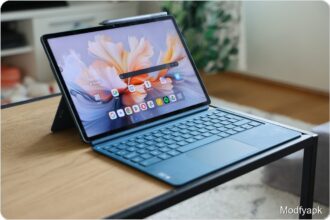
Accessories include a Folio Case 2 that magnetically attaches and holds the tablet at two viewing angles. The faux-leather cover fit well and the €59 price is reasonable for the feature set. OnePlus Stylo 2 costs €99, and a QWERTY Smart Keyboard is available for €149.
Verdict
For €549 the OnePlus Pad 2 is a strong value when you factor its flagship-caliber performance, roomy sharp display, long battery life, and solid software update promise. Cheaper Android tablets exist, but they require larger compromises in performance and features.
The previous OnePlus Pad is still often cheaper in sales and can be an even better value for budget-minded buyers. But if you want flagship-level speed for gaming and future-proofed updates, the Pad 2 is the natural choice.
The Pad 2 excels at most tablet tasks: the screen is sharp and bright enough, the sound is good for the class, and the software runs smoothly. Still, at this price it is odd to omit a fingerprint reader, microSD slot, and any IP rating. The device is very good, but not without meaningful omissions.
Pros
- Flagship-level performance
- Solid, premium feel
- Large, high-resolution display
- Generous update commitment for a tablet
- Fast charging with OnePlus SuperVOOC
- Good tablet-class audio
Cons
- Oversized camera bump
- No fingerprint sensor
- Camera image quality only adequate
- No IP protection at this price