Introduction
Oppo’s Find X9 arrives in Finland as a quietly competent flagship with one unmistakable strength: an enormous battery. The handset pairs a large 7,025 mAh cell with 80 W wired and 50 W wireless charging while packing MediaTek’s new Dimensity 9500 chipset, a 6.59-inch 1.5K AMOLED, and a triple 50 MP camera array.
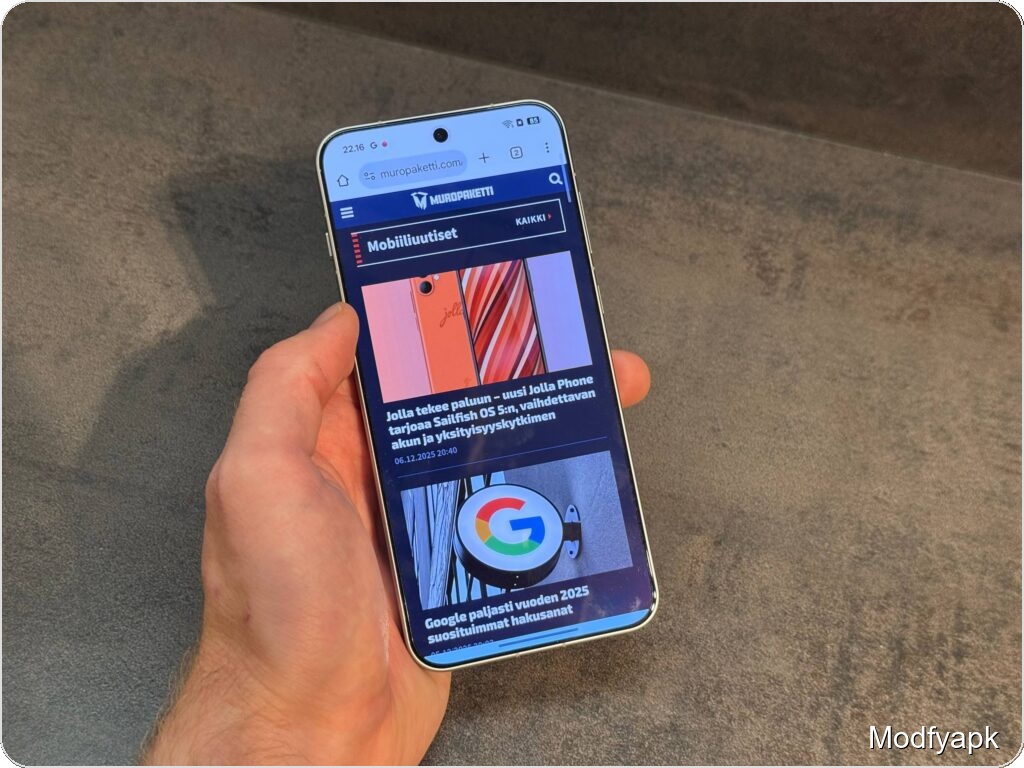
Oppo has only recently established its own operation in Finland, even though the brand is a major player in China and is known globally as OnePlus’s parent company. The Find X9 launched in early October as Oppo’s core model for the region, with a Pro sibling announced for the Nordics shortly afterward.
The Find X9 on sale in Finland comes in a single configuration: 12 GB RAM and 512 GB storage, priced at 999 euros. Power is the exclusive retailer. Color options for Nordic markets are black and gray. The phone carries IP66, IP68, and IP69 ratings for water and dust resistance.
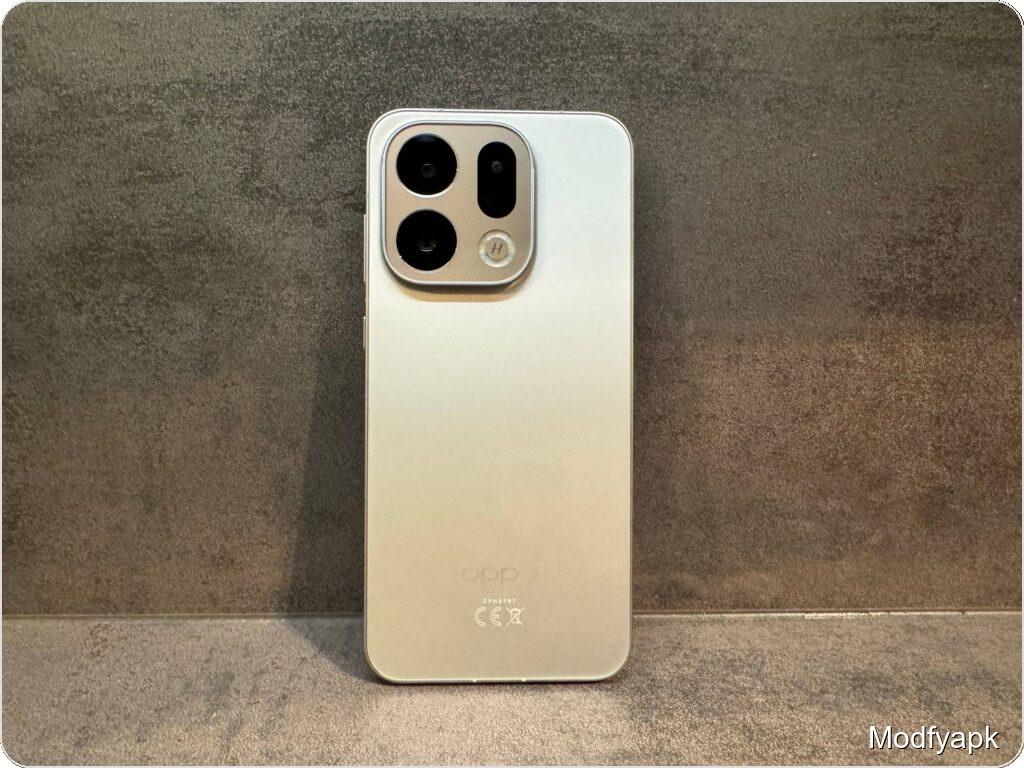
Hardware highlights start with the Dimensity 9500, a 3 nm flagship-class SoC designed to compete with Qualcomm’s Snapdragon 8 Elite Gen 5. Oppo uses a vapor chamber cooling solution for the chip. Software is ColorOS 16 based on Android 16.
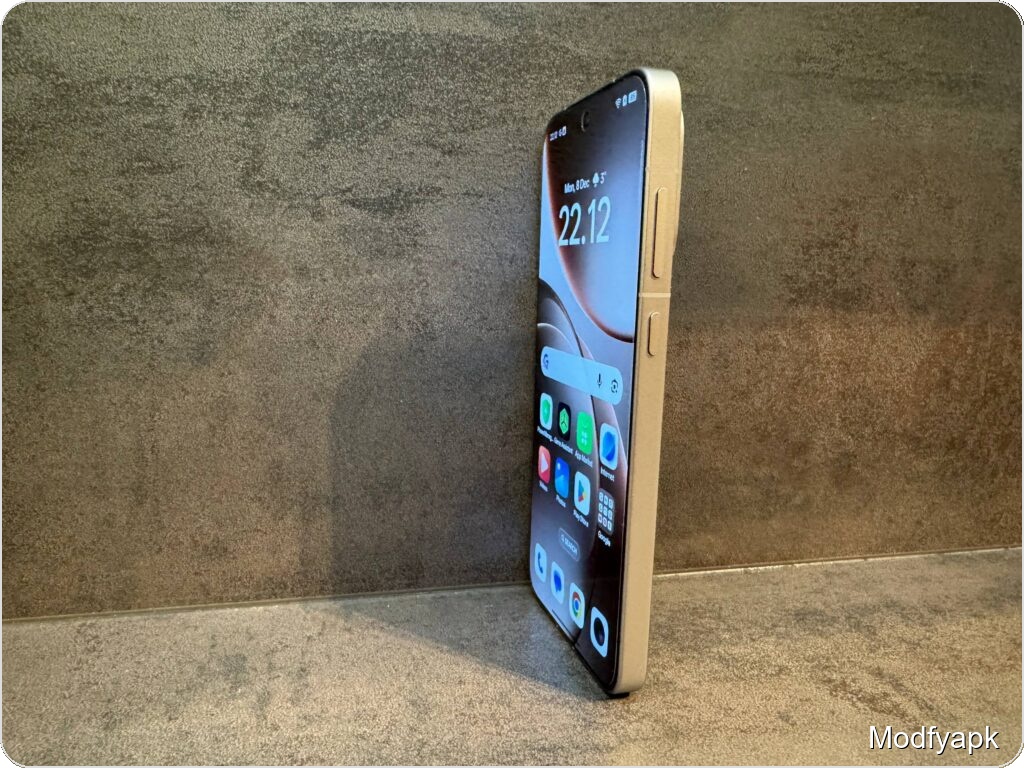
The battery technology leans on silicon-carbon a.k.a. “pii-hiili” techniques and delivers a 7,025 mAh capacity. Wired SuperVOOC charging works at 80 W; wireless AirVOOC supports 50 W. Note that the retail box includes only the phone and a charging cable, so you’ll need an 80 W USB‑PD capable adapter to use the fast wired charging.
Design and display
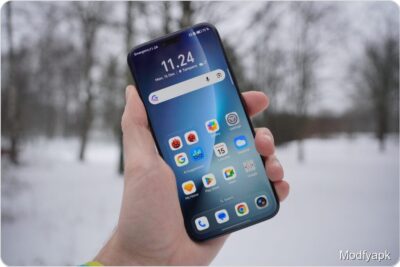
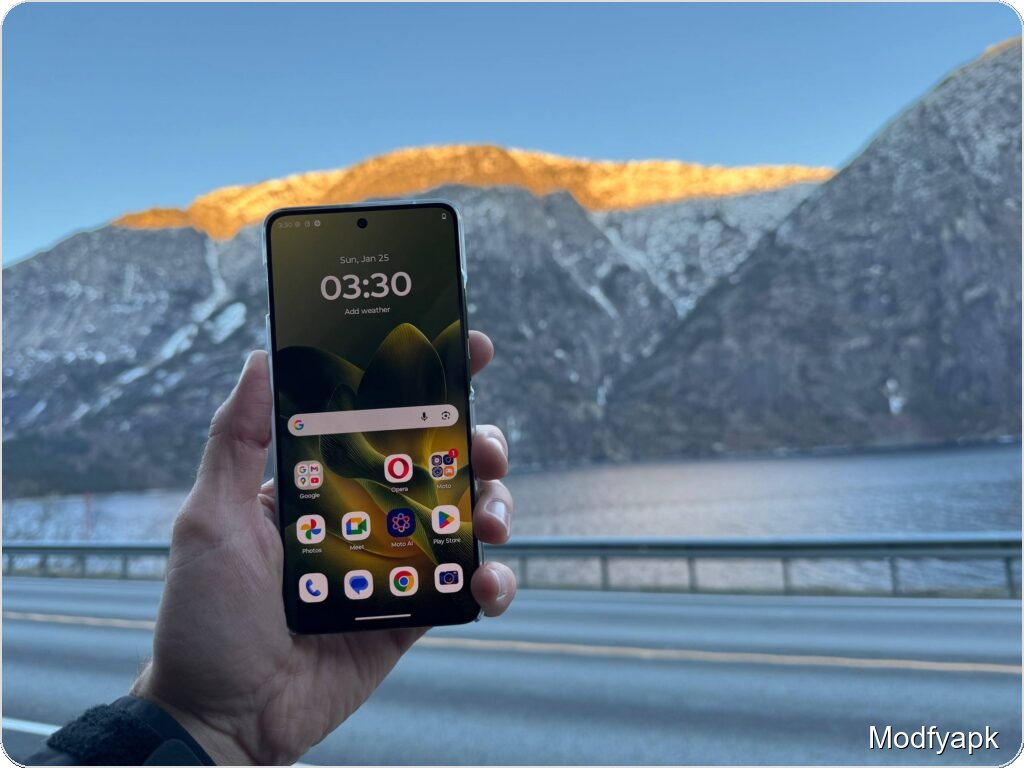
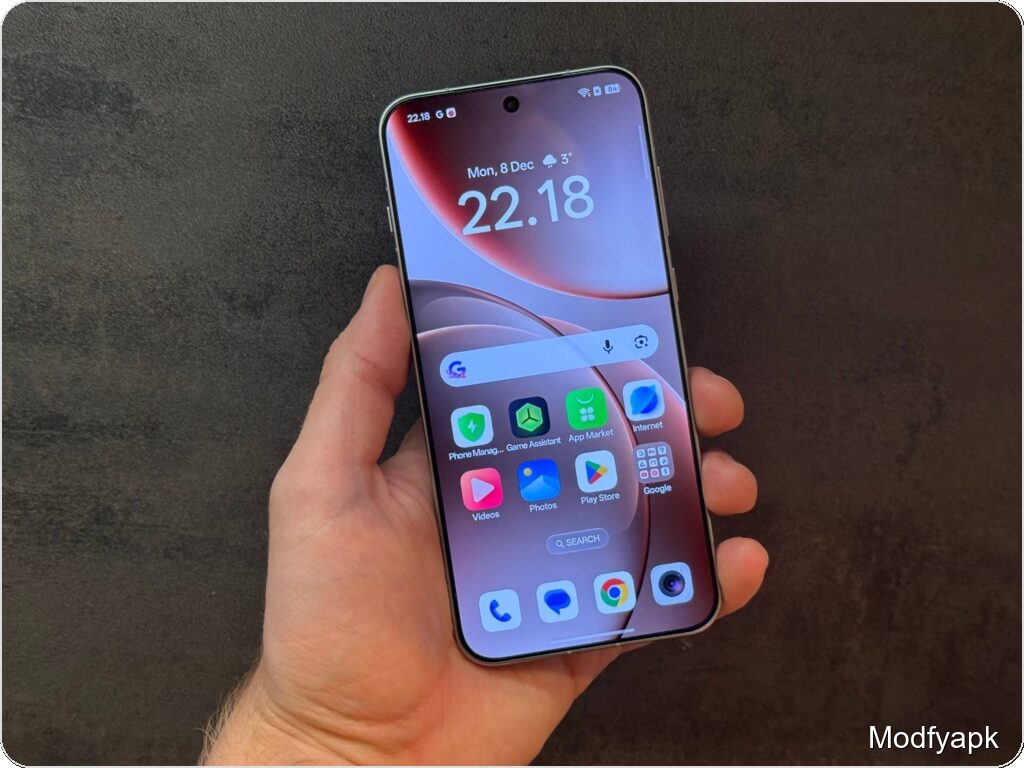
Design is restrained and familiar. The Find X9 favors a nearly bezel-less front with a symmetrical 1.1 mm frame and a flat panel rather than curved edges. A small hole-punch camera sits at the top of the display and the in-frame earpiece keeps the look clean. Gorilla Glass 7i covers the front and blends into an aluminum chassis.
The unit measures a surprisingly slim 7.99 mm at the sides and uses matte edges for a secure grip. The rear is a flat, matte glass finish that resists fingerprints and feels both light and sturdy. Oppo moved the camera module to the upper-left corner and trimmed the visual bulk compared with previous models; a metal rim adds structural strength without excessive protrusion.
Weight is 203 grams and the phone feels balanced in hand. The under-screen fingerprint reader uses ultrasonic technology and reads reliably.
The 6.59-inch AMOLED panel runs at a 1.5K resolution (2760 x 1256) and supports a 120 Hz adaptive refresh rate. Oppo did not include LTPO, so the refresh rate cannot scale smoothly between 1 and 120 Hz; that impacts always-on display efficiency and some animation smoothness. Color reproduction is vivid and accurate, covering 100% of DCI-P3 with multiple color modes including a Pro option.
Brightness is a standout: 1,800 nits for full-screen outdoor visibility and a peak point brightness of 3,600 nits for HDR content. Dolby Vision is supported. The display also incorporates 3,840 Hz PWM dimming at low brightness levels and DC dimming for higher brightness, which reduces flicker and makes night-time use easier on the eyes.
Stereo speakers are serviceable for casual use but not exceptional.
Software and features
ColorOS 16 on Android 16 looks modern, with consistent animations and smoother performance than older ColorOS releases. The new Flux Home Screen offers finer customization of icons, folders, and widgets.
Oppo promises five major Android updates and six years of security patches. The device includes a physical Snap Key switch for quick shortcuts; you can map it to actions like AI assistant, camera, or a flashlight. Snap Key also supports fast capture of on-screen information, which Oppo’s software sorts into categories and can surface details — like dates — for calendar insertion. The phone integrates Gemini and Oppo’s Mind Space features to pull out useful content snippets.
Camera
The Find X9’s Hasselblad-branded camera trio consists of three 50 MP sensors. The primary camera is a 1/1.4-inch Sony LYT-808 with an f/1.6 aperture and optical image stabilization. The ultrawide is a 50 MP Samsung Isocell JN5 with a 120° field of view, a 1/2.75-inch sensor, and f/2.0. The telephoto camera unit is a 50 MP sensor (Sony LYT-600) with a 1/1.95-inch size, f/2.6 aperture, and 3.2x optical zoom. All three are supported by a spectral sensor to measure ambient light, and Oppo’s Lumo image processing handles the computational work.
In good light, photos are recorded at 50 MP; in lower light the phone switches to pixel binning, producing 25 MP or 12 MP results depending on conditions.
Overall image quality is solid and reliable. The main camera reproduces natural colors and handles dynamic range well, with respectable detail even in low light. Still, photos often have a slightly even tone that lacks the punchy contrast and color signature of the very best flagships.
The ultrawide maintains good color but softens toward the edges. The 3x optical telephoto camera is useful and practical, but it does not outclass competitors that extend stronger performance at longer focal lengths. The 32 MP front camera (f/2.4) is perfectly fine for social media shots.
Video tops out at 4K at 120 fps with Dolby Vision. Video performance mirrors stills: stable and sharp in many situations, though stabilization and exposure responsiveness trail the best devices in the segment.
Performance
The Dimensity 9500 inside the Find X9 is a 3 nm flagship SoC with an eight-core layout: 1x 4.21 GHz C1-Ultra, 3x 3.5 GHz C1-Premium, and 4x 2.7 GHz C1-Pro, paired with an Arm G1-Ultra GPU. Day-to-day performance is very smooth; apps launch quickly and the UI stays fluid even under heavy multitasking.
Under sustained heavy load, however, the device shows noticeable thermal throttling. In demanding games or stress tests the phone heats up and performance drops, and the handset can feel uncomfortably warm to hold without a case. That said, the chip’s peak performance is comparable to last-generation Snapdragon 8 Elite-class silicon in many benchmarks.
In our comparisons against Pixel 10 (Tensor G5), Galaxy S25 (Snapdragon 8 Elite for Galaxy), Honor Magic7 Pro (Snapdragon 8 Elite), and OnePlus 13 (Snapdragon 8 Elite), the Find X9 sits roughly on par with Snapdragon 8 Elite-level phones in Geekbench 6, Antutu, PCMark, and GFXBench synthetic tests.
Battery life and charging
The 7,025 mAh battery is the Find X9’s headline feature. In real-world use the phone easily reaches a full day and often pushes into a second day on moderate usage. In a battery endurance test it took the top spot in our Geekbench battery benchmark.
Oppo’s 80 W wired charging fills the battery from empty to full in about an hour. SuperVOOC is compatible with USB-PD chargers as well, but you must supply your own high-wattage adapter because none is included in the box.
What’s in the box
| Included | Phone, charging cable |
| Not included | Power adapter |
Specifications
| Price | 999 euros (12 + 512 GB) |
| Display | 6.59″ FHD+ 120 Hz AMOLED (2760 x 1256) |
| Chipset | MediaTek Dimensity 9500 |
| Cameras | 50 MP main f/1.6 23mm 1/1.4″ PDAF OIS; 50 MP tele f/2.6 73mm 1/1.95″ 3x optical zoom PDAF OIS; 50 MP ultrawide f/2.0 15mm 120° 1/2.76″ PDAF OIS; Front 32 MP; 4K 120 fps Dolby Vision video |
| Battery & Charging | 7025 mAh, 80 W wired fast charge |
| Connectivity | Wi‑Fi 802.11 a/b/g/n/ac/6/7 dual-band, Wi‑Fi Direct, Bluetooth 6.0, GPS, BDS, Galileo, QZSS, Glonass |
| Other | IP68 & IP69 water and dust resistance |
Conclusion
The Oppo Find X9 is a dependable lower‑tier flagship that nails the essentials and stands out primarily for battery life. It combines strong everyday performance, a broadly capable camera setup, a refined UI experience, and a premium build. Oppo’s update promise of five Android upgrades and six years of security patches is respectable.
That said, at 999 euros the Find X9 does not offer dramatic differentiators beyond its massive battery. Sustained performance is constrained by thermal throttling, and the camera system, while solid, does not outpace the best devices in the segment. Value-seekers might find comparable or better options among discounted older flagships such as the Galaxy S25 or other models that can surface at lower street prices.
If the Find X9 lands in discounted stock later, it becomes an easier recommendation; at full price it is a solid phone that still trails the most exciting flagships in headline performance and imaging.
Pros and Cons
Pros
- Huge battery with fast charging
- Well-rounded, reliable performance for most tasks
- Premium feel and strong display brightness
Cons
- Thermal throttling under sustained heavy load
- Camera system is competent but not class-leading