

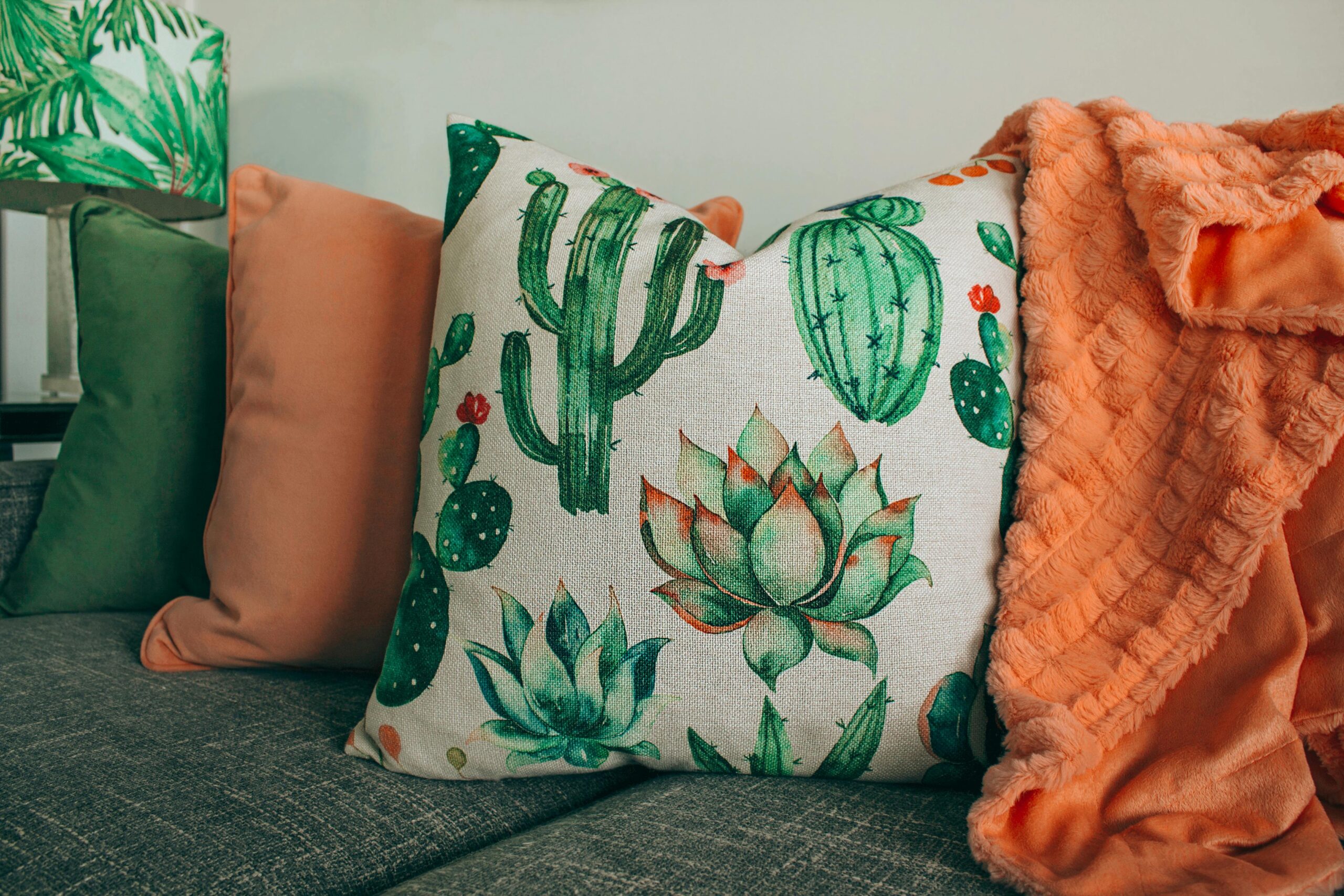
Getting pillow placement right transforms your living room from basic to magazine-worthy. But most people either overcrowd their couch or leave it looking bare and uninviting.
Why Pillow Placement Actually Matters?
Your couch is the focal point of your living room. The pillows you choose and how you arrange them set the entire mood of the space.
Proper pillow placement creates visual balance. It makes your seating more comfortable and inviting. Poor placement makes your sofa look cluttered, messy, or strangely empty.
The difference between amateur and professional styling often comes down to pillow arrangement. Get this right, and your whole room feels more pulled together.
The Designer Formula: Pillows by Sofa Size
Here’s the breakdown designers follow:
Loveseat (4-5 feet): 2-3 pillows Standard Sofa (6-7 feet): 3-5 pillows Sectional Sofa (8+ feet): 5-9 pillows
These aren’t strict rules, but they give you a starting point. The key is balancing visual weight without overwhelming your seating space.
The Three-Layer Approach
Professional designers think in layers. This creates depth and makes your arrangement look intentional rather than random.
Back Layer: Larger pillows (22-24 inches) go against the back corners. These anchor your arrangement and provide lumbar support.
Middle Layer: Medium pillows (18-20 inches) sit in front of the larger ones. They add color, pattern, or texture to your design.
Front Layer: Smaller accent pillows (16-18 inches) or lumbar pillows complete the look. These bring in your boldest patterns or contrasting colors.
Not every arrangement needs all three layers. A simple two-layer setup works perfectly for smaller sofas or minimalist styles.
Standard Sofa Arrangements That Always Work
Let’s break down proven formulas for the most common sofa size.
The Classic Five-Pillow Setup
This works beautifully on a standard 7-foot sofa:
- Two 22-inch pillows in the back corners.
- Two 20-inch pillows in front of those.
- One 18-inch accent or lumbar pillow in the center.
This arrangement creates symmetry while leaving plenty of seating space. The center pillow serves as a focal point.
The Modern Four-Pillow Arrangement
Perfect for a cleaner, more contemporary look:
- Two 22-inch pillows in the corners.
- Two 18-inch contrasting pillows in front.
This setup feels less formal. It works exceptionally well in smaller living rooms where you need to preserve seating capacity.
The Asymmetrical Three-Pillow Style
Great for a relaxed, collected-over-time aesthetic:
- One 24-inch pillow in the left corner.
- One 20-inch pillow in the center.
- One lumbar or decorative pillow on the right.
Asymmetry looks effortlessly stylish when done right. The key is balancing visual weight even when the arrangement isn’t perfectly mirrored.
Sectional Sofa Strategies
Sectionals need different thinking because of their L-shape or U-shape configuration.
Treat each section separately but maintain consistency across the whole piece. If you use large corner pillows on one side, repeat that approach on the other sections.
For an L-shaped sectional:
- Place 2-3 pillows on the longer section.
- Add 2-3 pillows to the shorter section.
- Consider a single statement pillow at the corner junction.
For U-shaped sectionals, distribute pillows evenly across all three sections. Aim for 7-9 total pillows, focusing on the ends and corners while keeping the center more open for seating.
Loveseat and Small Sofa Solutions
Smaller sofas require restraint. Too many pillows make them unusable for actual sitting.
Stick with 2-3 pillows maximum. One option:
- Two matching 20-inch pillows in the corners.
- One contrasting 16-inch pillow in the center (optional).
Another approach uses just two larger pillows (22 inches) placed at angles in the corners. This feels more relaxed and casual.
Color and Pattern Distribution Rules
Your pillow colors should connect to other elements in the room. Pull shades from your rug, curtains, or artwork.
Follow the 60-30-10 rule designers love:
- 60% of your pillows are in your dominant color (usually neutrals).
- 30% in your secondary color.
- 10% in an accent color for pop.
For patterns, use this distribution:
- One large-scale pattern.
- One medium-scale pattern.
- One small-scale pattern or solid.
- Solids to balance busy patterns.
Never match all your pillows perfectly. That looks catalog-staged rather than professionally designed. Mix textures and patterns while maintaining a cohesive color story.
Texture Mixing Techniques
Texture adds visual interest that color alone can’t achieve. Combine different materials for depth.
Effective combinations include:
- Linen with velvet.
- Cotton with faux fur.
- Silk with chunky knit.
- Leather with woven textiles.
Mix smooth with rough, matte with shiny. This creates contrast that makes your arrangement more dynamic.
In warmer months, lean toward lighter textures like cotton and linen. Winter calls for velvet, wool, and faux fur. Switching textures seasonally refreshes your space without buying new furniture.
Shape Variations Beyond Square
Most people default to square pillows, but mixing shapes adds sophistication.
Lumbar pillows (typically 12×20 or 14×24 inches) work beautifully as center or end pieces. Their horizontal orientation contrasts nicely with square pillows.
Round pillows soften all those right angles in your room. Use them sparingly as accent pieces, not as primary pillows.
Bolster pillows at the ends of a sofa create a tailored, designer look. They’re especially effective on mid-century modern or formal traditional sofas.
Pillow Size Guidelines by Sofa Depth
Your sofa’s depth determines appropriate pillow sizes.
Shallow sofas (30-32 inches deep): Use 18-20 inch pillows maximum. Larger sizes will push you too far forward.
Standard depth (33-36 inches): The full range of 18-24 inch pillows works well.
Deep sofas (37+ inches): You can go bigger with 24-26 inch back pillows for proper support.
Consider your sofa’s arm height, too. Low arms pair well with taller, firmer pillows. High arms look better with softer, squishier options.
Common Mistakes to Avoid
Too many pillows are the biggest error. If guests need to remove pillows before sitting, you’ve overdone it.
Using all the same size creates a boring, uniform look. Vary your sizes by at least 2-4 inches between layers.
Placing pillows in a straight line looks stiff and formal unless that’s specifically your style. Slightly overlapping or angling them adds natural flow.
Forgetting about scale is another issue. Huge pillows on a small loveseat look ridiculous. Tiny pillows on a large sectional disappear.
Ignoring the rest of your room means your pillows won’t tie into your overall design. They should complement your existing color palette and style.
Seasonal Pillow Swaps Made Simple
You don’t need to replace all your pillows seasonally. Switch out 2-3 key pieces instead.
Keep neutral base pillows year-round. These are your large corner pillows in colors like cream, gray, or beige.
Change your accent pillows with the seasons:
Spring/Summer: Light blues, coral, yellow, white, linen, and cotton
Fall/Winter: Deep burgundy, forest green, rust, navy, velvet, and wool
This approach saves money and storage space while keeping your room feeling fresh.
Budget-Friendly Pillow Styling
Quality pillow inserts matter more than expensive covers. Invest in good down-alternative inserts, then use affordable covers.
Buy covers, not complete pillows. This lets you change looks without replacing inserts. Look for options with hidden zippers for a cleaner appearance.
Mix high and low pieces. Splurge on one or two statement pillows, then fill in with budget options in complementary solids.
Shop home goods stores for covers rather than high-end boutiques. You’ll find similar styles at a fraction of the cost.
The Final Touch
Fluff and adjust your pillows regularly. They look best when they appear naturally placed rather than rigidly positioned.
The right pillow arrangement should feel effortless, not overthought. Start with the basic formulas provided, then adjust based on your personal style and how you actually use your sofa.
