Design and feel
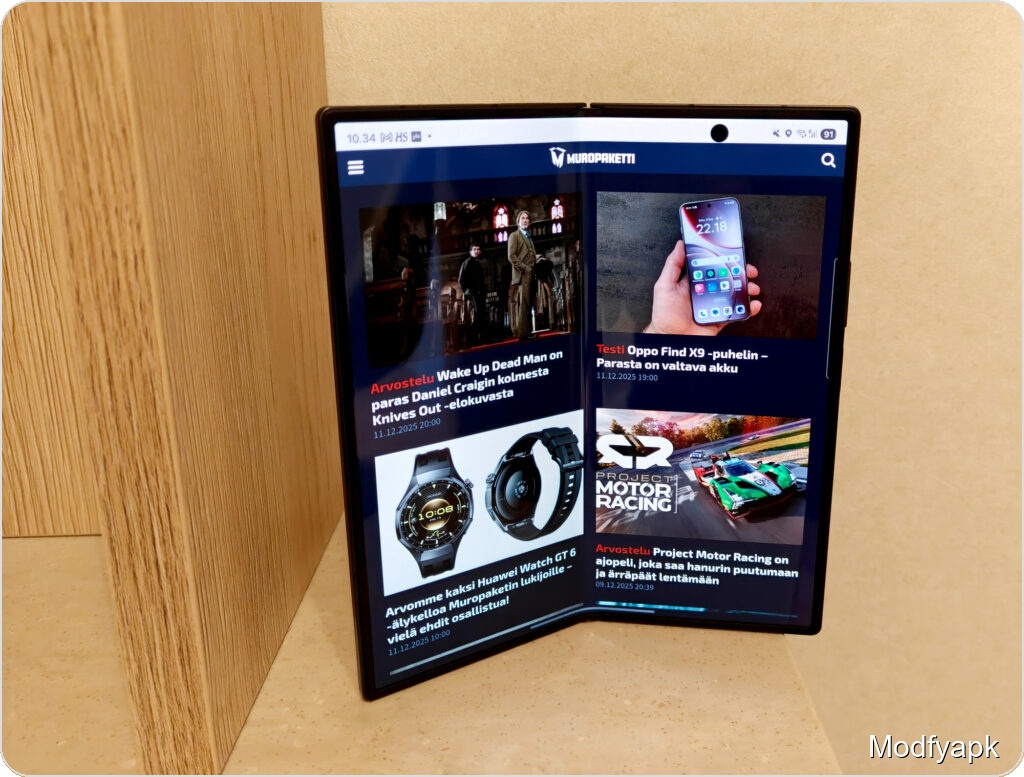
The Galaxy Z Fold7 marks a small but important leap for Samsung’s folding lineup. Where previous generations refined millimeters and grams around a bulky hinge, this one rethinks proportions: taller and wider but noticeably thinner. The result is a foldable that feels, in everyday use, much closer to a conventional flagship.
Closed dimensions are 158.4 x 72.8 x 8.9 mm and the phone weighs 215 g. Opened, the device measures 158.4 x 143.2 x 4.2 mm. Compared with the Fold6, the Fold7 is longer, wider and significantly slimmer, and the weight has dropped by roughly ten percent. That slimmer profile makes the device feel balanced when opened and far less bulky in a pocket.
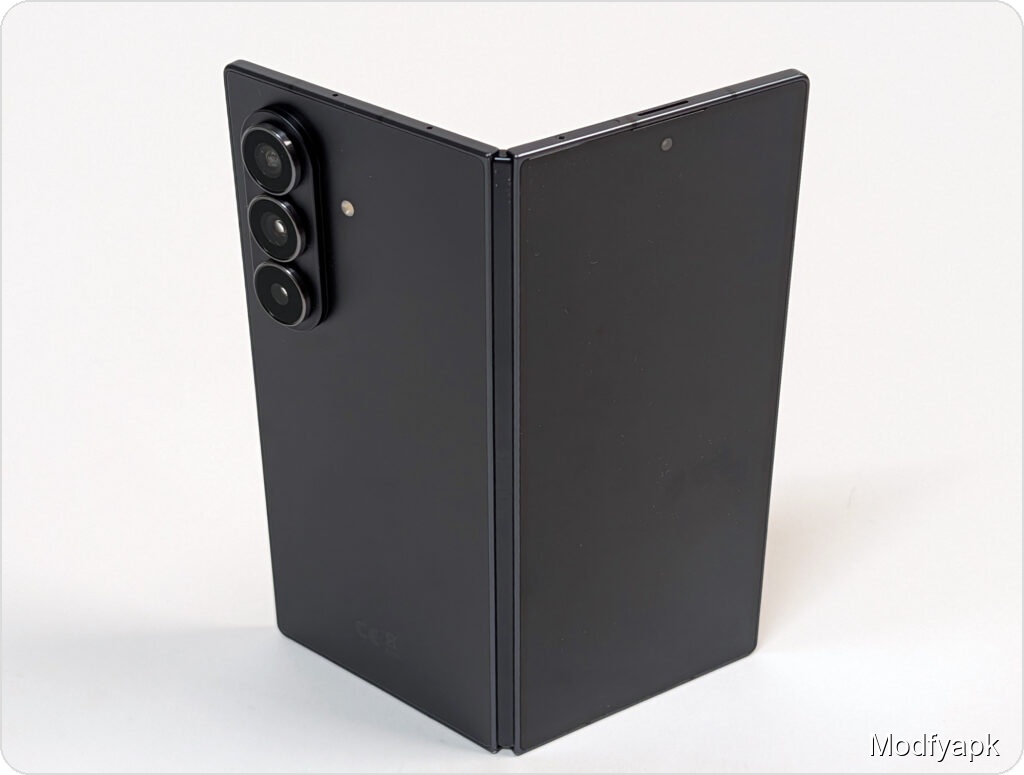
The industrial design remains square-edged, perhaps a touch too angular for some tastes, and the rear camera bump is conspicuously tall. On a flat surface the closed phone will rock; opened, it settles. The camera island is also easy to feel in a pocket and is an area that could be refined on a future model.
Samsung keeps high-end materials: Gorilla Victus 2 on the back and Gorilla Victus Ceramic 2 up front. Surfaces feel premium but a bit slippery, so users who want extra grip will likely add a case or adhesive tape. The hinge is stiff; you need two hands to open the device, and over nearly five months of testing it did not loosen.
Packaging and color options
In the box you get only a quick start guide, a SIM tool and a USB-C cable. At these prices there is no charger or protective case included.
The test unit is the top-spec 1 TB Silver Shadow. Other options are Blue Shadow and Jetblack. The two less expensive storage tiers use 12 GB of RAM, while the 1 TB model ships with 16 GB.
Displays
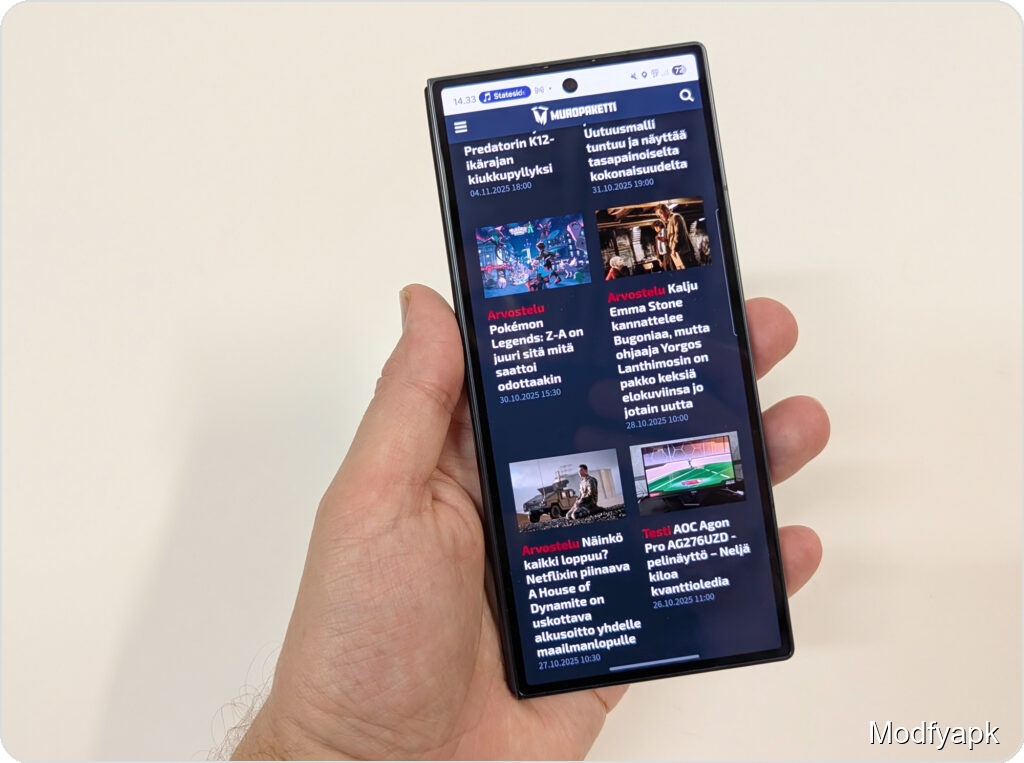
The cover screen is a 6.3-inch Dynamic AMOLED 2x panel with 2520 x 1080 resolution and a refresh rate that adapts from 1 to 120 Hz. The increased width makes the front keyboard far more usable than on previous Fold models.
The main inner display is an 8-inch Dynamic AMOLED 2x panel with 1968 x 2184 resolution and peak brightness up to 2600 nits. Like the outer screen, its refresh rate scales from 1 to 120 Hz. Color, contrast and viewing angles are excellent, and the main display is great for video and multitasking. A visible central crease remains when viewing from the side, but it is less pronounced than in earlier models and becomes easy to ignore in daily use.
To slim the device, Samsung has moved away from an under-display selfie solution: the inner camera is now visible and larger than before.
Build and durability
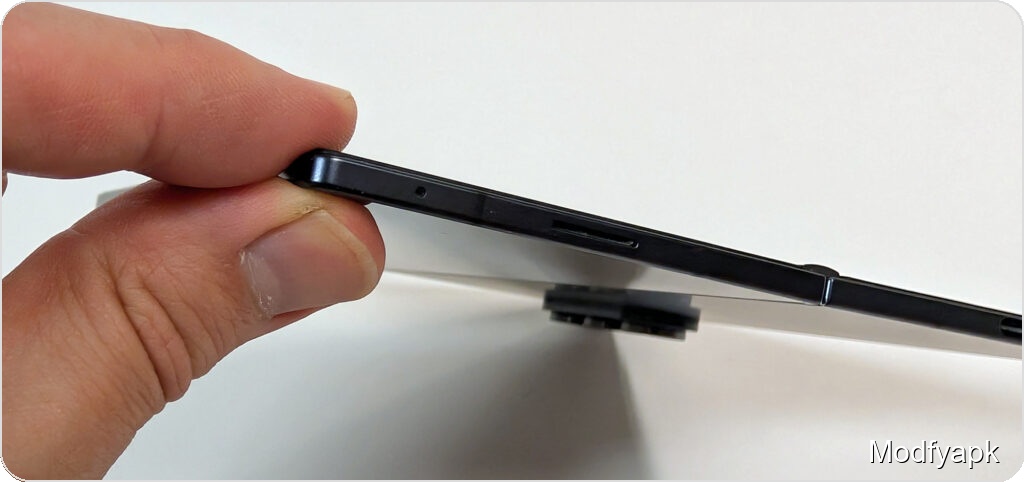
The Fold7’s IP48 rating means it is protected against immersion in fresh water and against small particles, though it is not fully dustproof. The hinge hides the fold when closed and leaves a flat surface across the inner display, but small dust can still get into the gap. The build feels robust and resilient to twisting, and the hinge held up well across extended use.
Software and AI
One UI 8.0 based on Android 16 ships from day one. Samsung’s foldable software maturity shows: apps and settings that work across both screens are easy to find, and multitasking feels polished. The OS adds new AI features such as Gemini Live for real-time content interpretation and Circle to Search enhancements for gaming. Direct AI translations still do not support Finnish.
The taskbar on the inner display, improved multi-window handling and the ability to overlap two partially shared windows make switching between apps smoother. Samsung promises seven Android version updates and seven years of security patches.
Cameras
Samsung focused its camera upgrade on the main sensor. The Fold7 uses a 200 MP Isocell HP2 main camera with a 1/1.3-inch sensor; default output remains 12 MP. The ultrawide is 12 MP (f/2.2) and now supports autofocus. The telephoto camera is a 10 MP sensor with 3x optical zoom and OIS (f/2.4).
In good light the main camera produces excellent results, with strong detail, controlled noise and pleasing color. Image quality is comparable to other recent Samsung flagships using the same sensor. The telephoto camera and ultrawide are competent but lag the main camera in fine detail and low-light performance. The ultrawide benefits from the new autofocus, which also enables close-up wide-angle shots, but its color rendering can differ slightly from the other lenses.
Video: all three cameras can shoot 4K at 60 fps; 8K is supported at 30 fps. Stabilization on the main camera is reliable and colors are vivid without excessive processing.
Front-facing cameras: a 10 MP cover camera (f/2.2) and a 10 MP inner camera (f/1.8). Both are serviceable for selfies, and you can use the cover screen as a viewfinder with the main rear camera for higher-quality self-portraits.
Performance
The Fold7 runs Qualcomm’s Snapdragon 8 Elite for Galaxy with up to 16 GB LPDDR5X RAM in the 1 TB model. CPU configuration includes high-frequency Oryon V2 Phoenix cores up to 4.47 GHz and an Adreno 830 GPU. In everyday use the phone feels snappy, with solid thermal management during long sessions. Wireless charging produced the warmest temperatures, while normal app usage stayed cool.
Benchmark results are mixed against a group of recent flagships: in Geekbench the Fold7 is very strong and only the Galaxy S25 Ultra outpaces it. In AnTuTu the Honor Magic V5 posts higher scores, and PCMark favored the Magic V5 as well. GFXBench shows stronger graphics performance than last year’s Fold6 but still behind some competitors.
Battery and charging
The Fold7 uses a 4400 mAh battery. Real-world endurance varied across the long test period: heavy days with constant use of both displays could force a mid-day top-up of 10–15 minutes, while typical days often lasted from morning to evening. In demanding use be prepared for occasional charges.
Charging tops out at 25 W wired, which feels conservative compared with today’s faster chargers. Wireless charging at 15 W and reverse wireless charging at 4.5 W are supported. Samsung’s charge curve is relatively quick initially: 0 to 50 percent takes just under 30 minutes, 0 to 90 percent about an hour, and a full charge finishes in about 1 hour 25 minutes.
Connectivity and extras
The Fold7 includes USB-C, dual nano-SIM plus eSIM, and the usual flagship-grade wireless stack. Biometric unlocking uses a side-mounted power button with an integrated fingerprint reader that is fast and reliable.
Premium support in Finland includes 24/7 chat, expedited service through Resete partner locations in three cities, loan device coverage and a new nationwide home pickup service for repairs.
Price and verdict
Samsung’s pricing is at the high end. Official retail prices start at 2,199 € for the 256 GB model, 2,329 € for 512 GB and 2,649 € for the 1 TB flagship. The Fold7 ships in 12 GB + 256/512 GB and 16 GB + 1 TB configurations.
For many users the Fold7 is the first Samsung fold that does not demand major compromises. It slips into a pocket like a conventional phone, delivers flagship performance, and its main camera is now on par with other premium devices. Weaknesses include a relatively small battery for the class, modest charging speeds and a prominent rear camera bump that can make the phone wobble on a table.
Where the Fold7 shines is in refinement: thinner profile, wider screens that improve typing and multitasking, durable hinge behavior and a strong seven-year update commitment. For power users and anyone who values a large, flexible display the Fold7 is an easy recommendation. For buyers focused purely on value, a Galaxy S series flagship will offer a better price-to-performance tradeoff.
| Price | 2199 € / 2329 € / 2649 € (256 GB / 512 GB / 1 TB) |
| Memory & Storage | 12 GB + 256/512 GB or 16 GB + 1 TB |
| Cover display | 6.3″ Dynamic AMOLED 2x, 1–120 Hz, 2520 x 1080 |
| Main display | 8″ Dynamic AMOLED 2x, 1–120 Hz, up to 2600 nits, 1968 x 2184 |
| Rear cameras | 200 MP main (f/1.7, OIS, Dual Pixel AF), 12 MP ultrawide (f/2.2), 10 MP tele (3x opt., f/2.4, OIS) |
| Front cameras | 10 MP cover (f/2.2), 10 MP inner (f/1.8) |
| SoC | Qualcomm Snapdragon 8 Elite for Galaxy |
| Ports | USB-C |
| Battery | 4400 mAh, 25 W wired, 15 W wireless, 4.5 W reverse wireless |
| Dimensions & Weight | 158.4 x 72.8 x 8.9 mm, open 158.4 x 143.2 x 4.2 mm, 215 g |
| OS | Samsung One UI 8 (Android 16) |
| Colors | Blue Shadow, Jetblack, Silver Shadow |
| Other | IP48, Gorilla Glass Ceramic 2, 2x nano-SIM + eSIM |
Pros
Refined design, sturdy build, long software support, excellent displays, strong real-world performance.
Cons
Slow charging, modest battery capacity, high price.