

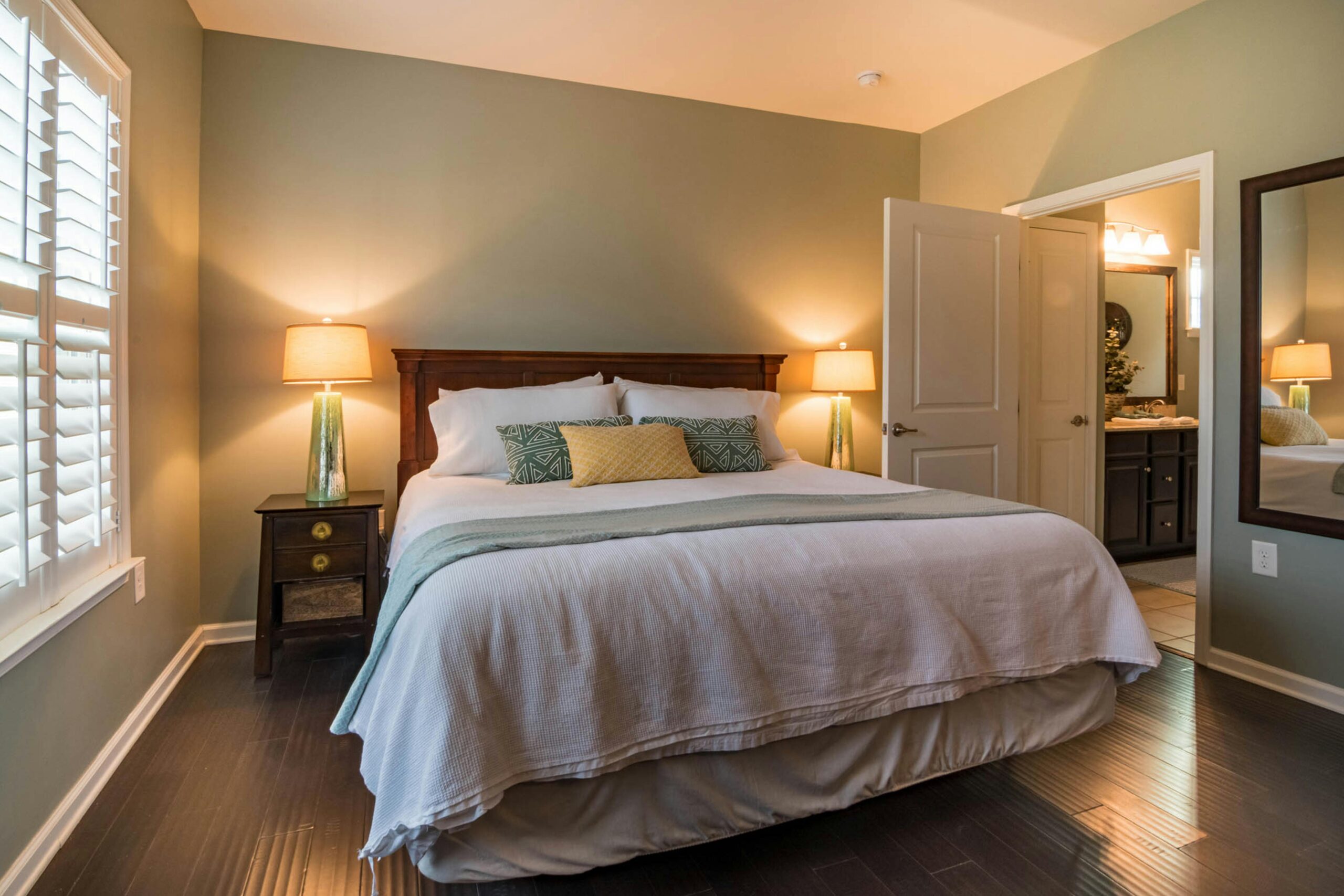
You spend roughly a third of your life in bed, so it makes sense to get the positioning right. But should you follow ancient feng shui principles or practical considerations when deciding where your bed should face?
The Feng Shui Perspective on Bed Placement
Feng shui, the ancient Chinese practice of harmonizing energy flow, has specific rules about bed placement. According to these principles, your bed should never directly face the door.
The reasoning goes like this: when your bed faces the door, you’re in the “coffin position.” In traditional Chinese culture, deceased people are carried out feet-first through doorways. Sleeping with your feet pointing directly at the door is considered bad luck and creates restless energy.
Instead, feng shui experts recommend the “command position.” Place your bed diagonally from the door where you can see the entrance without being directly in line with it. This position gives you a sense of security and control over your space.
As for windows, feng shui also discourages placing your bed directly under a window. The idea is that windows represent openings where energy escapes, creating instability and poor sleep quality.
What Science and Sleep Experts Say?
Modern sleep research doesn’t care much about energy flow, but it does care about sleep quality. And interestingly, some feng shui principles align with scientific recommendations.
Sleep specialists emphasize the importance of feeling safe and secure in your bedroom. When you can’t see the door from your bed, your subconscious mind stays alert, potentially disrupting deep sleep. This matches the feng shui concept of the command position.
Draft exposure is another practical concern with window placement. Sleeping directly under a window can expose you to temperature fluctuations, outside noise, and light pollution. These factors genuinely affect sleep quality, regardless of energy flow theories.
The Real Problems with Facing the Door
Beyond superstition, there are legitimate reasons to avoid pointing your bed straight at the door.
Privacy becomes an issue in shared living spaces. Anyone walking past your open door gets a direct view of you sleeping. This creates vulnerability, especially if you live with roommates or have children who might burst in unexpectedly.
Light and noise travel straight from hallways into your room when your bed faces the door. Every time someone turns on a light or walks past, the disruption reaches you directly.
Draft issues matter too. Doors often have gaps that allow air movement. When your bed faces the door, you’re directly in the path of these drafts, which can disrupt body temperature regulation during sleep.
The Window Dilemma Explained
Windows present their own set of challenges for bed placement.
Direct sunlight becomes your natural alarm clock, whether you want it or not. Morning sun hitting your face might work great if you need to wake at dawn, but it’s terrible for weekend sleep-ins or night shift workers.
Street noise amplifies when your head is right next to the window. Traffic sounds, neighbors, and early morning activity all become more intrusive.
Temperature control gets harder. Windows are the least insulated part of most rooms. In winter, cold radiates from the glass. In summer, heat builds up. Your body needs a stable temperature for quality sleep.
Security concerns shouldn’t be ignored either. Ground-floor bedrooms with beds under windows create both real and perceived safety issues.
Finding Your Best Bed Position
Here’s the practical approach that balances feng shui wisdom with real-world needs.
Start by identifying your room’s “power positions.” These spots let you see the door without facing it directly, keep you away from direct window exposure, and leave space for movement around the bed.
Diagonal placement usually wins. Position your bed so the headboard sits against a solid wall, with a clear view of the door from an angle. This satisfies both feng shui principles and practical security needs.
If your room layout forces you to choose between facing the door or facing a window, pick based on your specific problems. Light sleepers should avoid windows. People who feel anxious about room entry should avoid direct door alignment.
Room Layout Constraints and Solutions
Not every bedroom cooperates with ideal placement theories. Small rooms, awkward shapes, and architectural features often limit your options.
When you can’t avoid placing your bed near the door, create a visual barrier. A folding screen, tall plant, or strategically placed furniture can block the direct sightline while maintaining room function.
For beds that must go under windows, invest in blackout curtains and heavy drapes. Add a substantial headboard that creates separation between you and the window. Consider moving the bed a few inches away from the wall so you’re not directly against the glass.
Multiple windows work in your favor. Position your bed between windows rather than directly under one. This gives you natural light without direct exposure.
Practical Tips for Better Sleep Regardless of Position
Your bed’s direction matters less if you address these fundamentals.
Invest in quality window treatments. Blackout curtains, cellular shades, or even temporary blackout film can control light from any direction. Add white noise machines or fans to mask disruptive sounds.
Create a buffer zone around your bed. Even six inches of space between your headboard and the wall improves air circulation and reduces that trapped feeling.
Use your furniture strategically. A dresser or bookshelf between your bed and the door creates psychological security without blocking the room’s energy flow.
When to Break the Rules?
Sometimes breaking feng shui and conventional advice makes perfect sense.
Studio apartments often require placing beds near windows or doors simply because there’s nowhere else to put them. Work with what you have rather than stressing about ideal positioning.
Your sleep schedule could benefit from window placement. If you struggle with early rising, a bed that catches morning sun is what you need.
Personal comfort trumps all rules. If you sleep great with your bed facing the door, keep it there. Quality sleep is the ultimate goal, not perfect energy alignment.
The Bottom Line on Bed Positioning
The best bed position strikes a balance between ancient wisdom and modern practicality. Feng shui has some things right because it aligns with how humans naturally feel secure and comfortable in spaces.
Place your bed where you can see the door without directly facing it. Keep your head away from windows when possible. Prioritize solid wall support behind your headboard. These principles work whether you believe in energy flow or want better sleep.
Test different positions if you’re unsure. Sleep quality is subjective and personal. What works for feng shui practitioners might not work for you, and that’s perfectly fine.
