

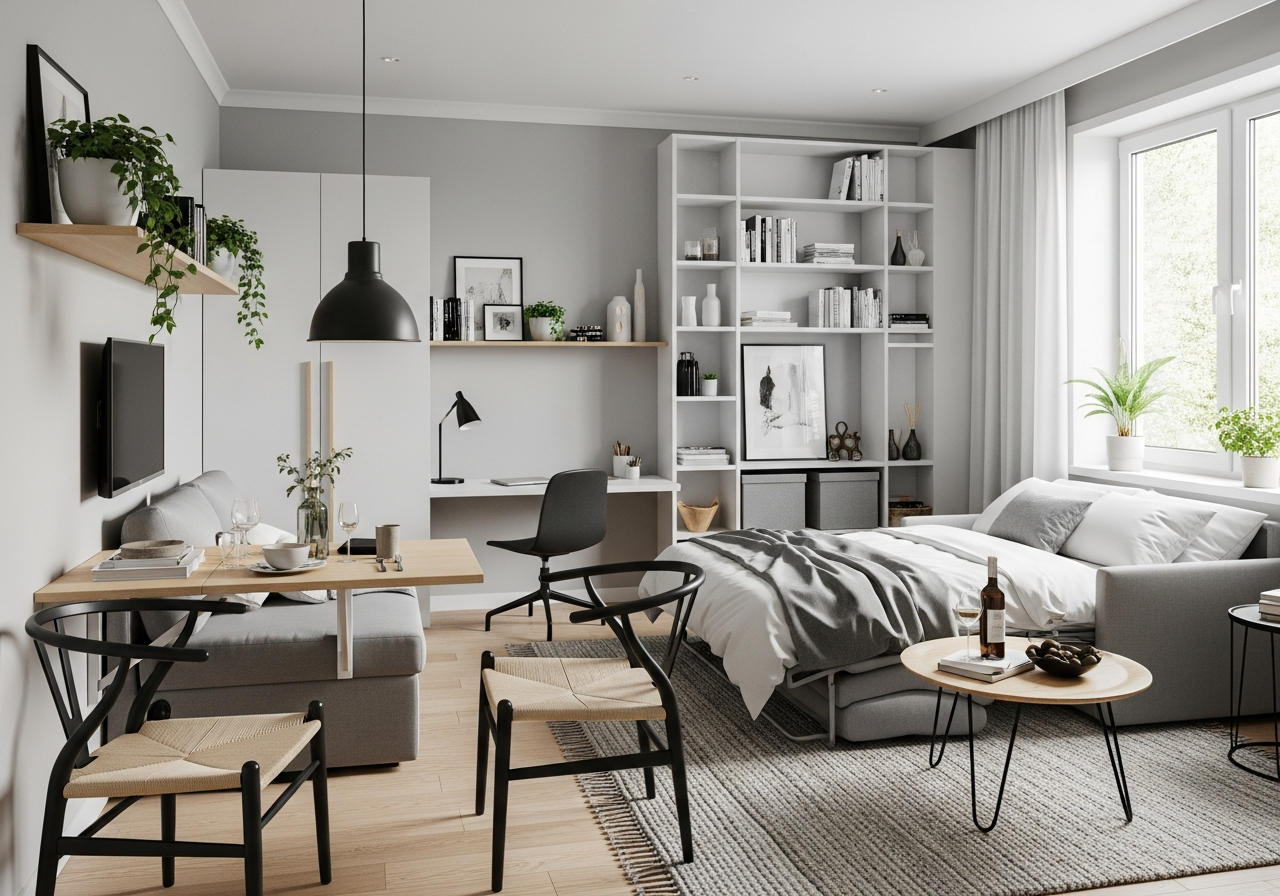
Living in a studio apartment doesn’t mean sacrificing style or functionality. The key to making a small space work lies in strategic furniture placement that creates distinct zones while maintaining flow and openness.
Why Furniture Layout Matters in Studio Apartments?
Your furniture arrangement can make or break a studio apartment. A well-planned layout maximizes every square foot, creates the illusion of separate rooms, and ensures you can move comfortably through your space. Poor placement leaves you bumping into furniture and feeling cramped, even in a decent-sized studio.
1. The Classic Room Divider Layout
This arrangement uses a bookshelf, folding screen, or shelving unit to separate your sleeping area from your living space.
How to set it up:
- Place your bed against the far wall
- Position a tall bookshelf perpendicular to the wall, creating a visual barrier
- Arrange your sofa facing away from the bedroom area
- Add a coffee table and rug to define the living zone
This layout works exceptionally well because the divider provides privacy for your sleeping area while adding valuable storage. Choose an open-back shelving unit to maintain light flow and prevent the space from feeling blocked off.
Best for: Studios between 400-600 square feet with rectangular floor plans.
2. The Floating Furniture Arrangement
Instead of pushing everything against the walls, this layout positions furniture away from the perimeter to create distinct activity zones.
Pull your sofa 12-18 inches from the wall and place it perpendicular to your bed. Add a console table behind the sofa for extra surface space and visual separation. Your bed sits against one wall while the living area floats in the center, naturally dividing the space without physical barriers.
This approach makes your studio feel larger because it creates depth and dimension. The negative space around furniture pieces prevents that “packed in” feeling common in small apartments.
Best for: Square-shaped studios with at least 350 square feet.
3. The Multi-Functional Zone Layout
This arrangement embraces furniture that serves multiple purposes, eliminating the need for separate pieces.
Essential multi-functional pieces:
- Murphy bed or wall bed that folds up during the day
- A dining table that doubles as a desk
- An Ottoman with storage that serves as both seating and a coffee table
- Sleeper sofa for guests
During the day, fold up your Murphy bed to reveal a full living room. Your dining table transitions into a workspace, and storage ottomans provide seating when friends visit. This layout gives you the functionality of a one-bedroom apartment in a studio footprint.
Best for: Extremely small studios under 350 square feet or anyone who works from home.
4. The L-Shaped Layout
This arrangement positions your bed and living area in an L-configuration, creating natural separation without dividers.
Place your bed along one wall, ideally in a corner or alcove if your studio has one. Arrange your sofa perpendicular to the bed along the adjacent wall. This creates an L-shape that naturally separates sleeping and living zones while maintaining an open feel.
Add a small side table at the corner where the two zones meet to bridge the spaces. A floor lamp here provides light for both areas without requiring multiple fixtures.
Best for: Studios with alcoves or architectural features that suggest natural zones.
5. The Gallery Wall Layout
This creative approach uses your bed as a focal point rather than hiding it away.
Position your bed as the centerpiece of the room with a stunning headboard or gallery wall behind it. Make it look intentional and stylish, like something from a boutique hotel. Your seating area sits opposite the bed, with a coffee table and rug creating a distinct living zone.
The key is treating your bed like a daybed by adding throw pillows and styling it to look like seating during the day. Choose a beautiful duvet and decorative pillows that complement your overall design scheme.
Best for: Studio dwellers who embrace minimalism and want a cohesive, designed look.
6. The Kitchen-Centric Layout
Many studios have the kitchen along one wall. This layout uses the kitchen as a natural divider.
Place your dining table or bar-height counter immediately adjacent to the kitchen area. This creates a buffer between cooking and living spaces. Your living area sits beyond the dining zone, with the sofa facing away from the kitchen. The bed occupies the farthest corner or wall from the kitchen, separated by your living furniture.
This arrangement follows the natural flow of daily activities—cooking, eating, relaxing, sleeping—creating a logical progression through your space.
Best for: Studios with galley or single-wall kitchens.
7. The Angled Arrangement
Breaking away from straight lines, this layout angles key furniture pieces to create visual interest and maximize space.
Angle your bed at 45 degrees in a corner, which surprisingly uses less floor space than placing it flat against a wall. Position your sofa at a slight angle as well, creating a dynamic conversation area. The angled placement naturally directs traffic flow around furniture rather than through functional zones.
This unconventional approach makes your studio feel less boxy and more intentionally designed. The angles create small pockets of space perfect for plants, floor lamps, or a reading chair.
Best for: Studios with interesting architectural features or awkward corner spaces.
Essential Furniture Pieces for Any Studio Layout
Regardless of which layout you choose, certain furniture pieces prove invaluable in studio living:
- A properly sized sofa: Choose a loveseat or apartment-sized sofa rather than a full sectional. You need seating without overwhelming your space.
- A real bed frame with storage: Platform beds with built-in drawers eliminate the need for a separate dresser.
- Vertical storage: Tall bookcases and wall-mounted shelves draw the eye upward and maximize storage without eating floor space.
- A compact dining solution: A small round table, drop-leaf table, or wall-mounted fold-down table provides eating and working space without permanence.
- Strategic lighting: Floor lamps, wall sconces, and pendant lights eliminate the need for bulky table lamps while defining different zones.
Layout Mistakes to Avoid
Knowing what doesn’t work helps as much as knowing what does.
- Oversized furniture kills studio layouts faster than anything else. That section from your previous apartment won’t work here. Measure your space and choose appropriately scaled pieces.
- Blocking windows makes your studio feel like a cave. Keep furniture low near windows or arrange pieces to frame rather than obstruct natural light.
- Too many small pieces create visual clutter even when you have adequate floor space. Five small side tables scattered around look messier than one larger console table.
- Ignoring vertical space leaves valuable storage potential untapped. Studio living requires thinking in three dimensions, not just two.
Measuring and Planning Your Layout
Before moving a single piece of furniture, grab a measuring tape and graph paper or use a free online room planner.
Measure your studio’s dimensions, including the location of windows, doors, closets, and outlets. Measure your furniture pieces or the dimensions of items you plan to buy. Create a scaled floor plan and experiment with different arrangements on paper before committing physically.
Leave at least 30 inches for walkways between furniture pieces. You should move through your space comfortably without turning sideways or relocating items.
Making Your Chosen Layout Work
Once you’ve selected a layout, these strategies help it function even better.
Use area rugs to define zones. A rug under your living area furniture visually separates it from your sleeping space, even without physical dividers.
Create visual separation with paint or wallpaper. If your lease allows, painting your sleeping nook a different color from your living area reinforces the distinction.
Invest in proper window treatments. Curtains or blinds give your sleeping area privacy and help you sleep when positioned near living spaces.
Add height variation. Mix tall and short furniture pieces to create visual interest and prevent your studio from feeling flat.
The Reality of Studio Living
Perfect Pinterest-worthy layouts look amazing, but might not match your real life. The best layout for your studio depends on how you actually live.
If you work from home, prioritize a dedicated workspace even if it means a smaller living area. If you entertain frequently, focus on flexible seating options. If sleep quality matters most, invest in proper bedroom-zone separation.
Your furniture layout should evolve as your needs change. Don’t be afraid to rearrange every few months until you find what truly works for your lifestyle.
Final Thoughts
Studio apartment living challenges you to think creatively about space, but the right furniture layout transforms limitations into opportunities for clever design.
These seven arrangements provide proven frameworks, but your perfect layout combines elements from multiple approaches based on your specific space and needs.
