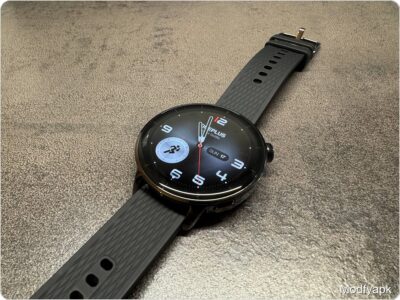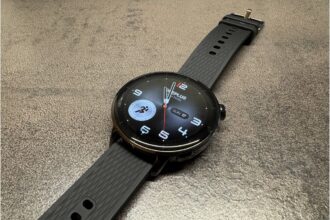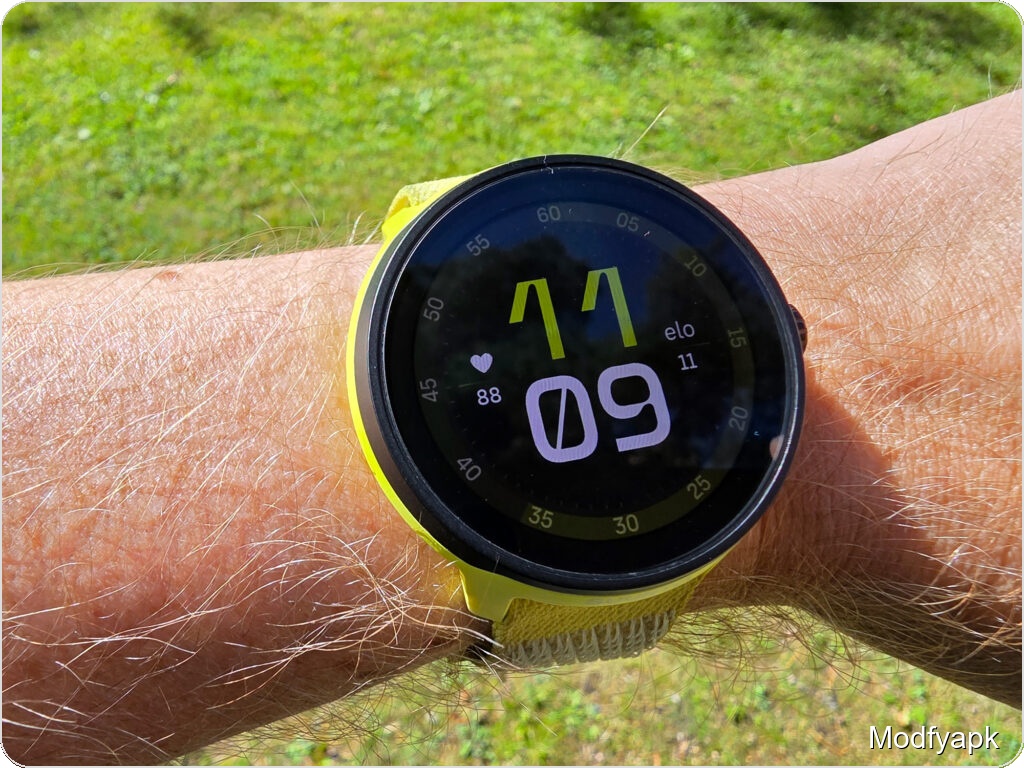
The Suunto Run, Suunto’s newest addition to the range, is aimed at the affordable end of the market. Its lime-yellow appearance is eye-catching, yet the item is actually a lightweight and tiny sports watch. In testing, it appeared comfortable on the wrist, albeit some features still need to be improved.
Key specifications
| Price | 249 € |
| Display | 1.32″ (AMOLED, 466 x 466 pixels, Gorilla Glass) |
| Connectivity | Bluetooth |
| Materials | Glass fiber reinforced polyamide and stainless steel |
| Case size, thickness, weight | 46 mm, 11.5 mm, 36 g |
| Battery life (claimed) | Up to 12 days (smartwatch mode), up to 40 h (GNSS mode) |
| Other | Textile strap (22 mm), water resistant 50 m, 4 GB internal storage |
Hardware and design
The review unit includes an AMOLED touchscreen, dual-frequency GPS, and a variety of sport and recovery capabilities. The pricing is its main selling point, with a suggested retail price of 249 euros.
At that price, the watch is a good alternative for runners and active people who want a lightweight, comfortable gadget. Textile and silicone straps are available in four different colors: black, gray, orange, and lime yellow. The review model arrived in lime, with a textile strap.
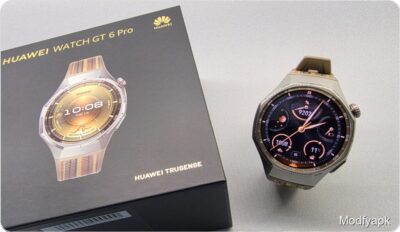
Competitors, such as the Polar Pacer and Garmin Forerunner 165, are within the 200-300 euro price range. Smartwatches with advanced fitness capabilities, such as the previously reviewed Huawei Watch Fit 4 Pro, are similarly priced.
Unboxing and building
Packaging is sparse. The box contains the watch, a strap, a USB-C charging cable, and fast start guidelines. The USB-C cable requires a separate power supply.
The Suunto Run is 46 x 46 x 11.5 millimeters, and the case (without strap) weighs just 36 grams. The watch’s main advantage is its lightness; it feels almost imperceptible on the wrist and suits thinner wrists thanks to its compact size.
Suunto achieved the low weight by employing glass fiber-reinforced polyamide for the case, a stainless steel bezel, and Gorilla Glass to protect the display. After six weeks of testing, there were no apparent marks on the case, indicating that the construction is sturdy.
After a few weeks, the textile strap showed signs of wear. The lime color is vibrant but easily shows dirt; at the conclusion of the test, the strap required washing. Users who have this issue can switch to the silicone option.
Display and controls
The 1.32-inch AMOLED display is impressive for its size, with 466 x 466 pixels. An always-on option is available, but it should be avoided for battery life reasons; automatic brightness works well. Overall, the screen outperforms its pricing class.
Suunto emphasized physical controls. Two buttons flank the central revolving crown. The touchscreen works, but you seldom use it because the buttons and crown handle most interactions.
The UI differs from full smartwatches but is easy to understand. The top button launches workouts and settings. The bottom button serves as the back. pushing the crown brings up the exercise menu; rotating it on the home screen scrolls between recent workouts and customizable widgets; and pushing it confirms choices. It may appear awkward in print, but the system gets familiar quickly. The buttons are small but functional, especially with thin gloves.
Battery life and charging
Battery longevity is a strong suit. Suunto claims up to 12 days in smartwatch mode with activity and sleep tracking enabled, and up to 20 hours of continuous GPS sports use.
In actuality, the watch lasted slightly more than a week with light use and activity monitoring, assuming no always-on display and restricted placement. With about an hour of GPS activity per day, the battery lasted approximately 4 to 5 days.
One bothersome characteristic was that at low percentages, the watch often provided unduly optimistic remaining-time predictions for runs. The battery died after two runs, despite the fact that the percentage readout and time estimate indicated an adequate charge. The watch also shut down twice while being worn; both times, it resumed with more than 10% charge, indicating that a full drain was implausible, and the cause is unknown.
Although the assessment did not include lengthy endurance testing, power saving mode can considerably lengthen runtimes, potentially doubling them even when GPS is engaged.
The charging speed is minimal. The provided cable charged around 70% in an hour; a complete charge took 1 hour 55 minutes. Wireless charging is not supported, and certain charge cycles necessitate resetting the watch to initiate charging.
Tracking and accuracy
Throughout the review, the watch was largely utilized for walks and runs.
Suunto’s sensor performance is not particularly impressive. Early runs had difficulty obtaining an accurate heart rate reading, and it was difficult to establish a strap tension and position that generated consistent results. On a few early runs, the watch produced blatantly incorrect readings that did not improve with tightening or brief removal.
When properly positioned on the wrist, the optical heart rate sensor operated reasonably well, its reaction time when the heart rate dropped was poor. Average heart rate numbers were comparable to competitors, but responsiveness lagged.
Suunto utilizes dual-frequency GPS with GNSS capability. GPS accuracy outperformed heart rate tracking, although it remained below the strongest competitors in the test.
Step counting followed a similar pattern. Competing devices detected short movements more quickly; the Suunto Run frequently required a brief training session before steps were registered. During an active workout, the step count was considerably more comparable to peers.
Features and software
Despite its name, the watch is designed for more than just jogging. It has over 30 sport modes, including gym workouts, triathlons, interval training, and various run profiles (road, trail, and track).
Continuous heart rate measurement and blood oxygen monitoring are health-related characteristics. The watch measures steps, calories, and sleep quantity and quality, and it uses this information, along with workout data, to calculate recuperation.
The Suunto Run proved to be a dependable sleep tracker, performing similarly to competitor products such as a Samsung smartwatch and the Oura ring. Whereas other devices produced inconsistent sleep findings from night to night, Suunto typically fell somewhere in the middle.
Although not a true wristwatch, the device displays weather, phone notifications for calls and apps, and can store music on its 4 GB internal memory. Outdoor standard features such as a compass and a barometer are included, and the watch can navigate a predefined route.
The companion mobile app is feature-rich and generally user-friendly. It instantly displays recent workouts and fitness summaries, with most front-page topics linking to more detailed information. The app’s recuperation and fitness trend reports are especially useful and explained in simple terms for newbies. Data can be linked with other sports services, such as Strava.
One oddity: the app’s projected fitness age appeared to be overly optimistic, displaying the reviewer nearly 15 years younger than his chronological age. That outcome may be flattering but not entirely realistic.
Pros and cons
Good
- Comfortable to wear.
- Strong battery life.
- Sharp display.
- Good-looking, seemingly durable materials.
Bad
- The sensor requires precise placement on the wrist.
- Occasional slow GPS lock and heart-rate acquisition.
- Intermittent unresponsive button behavior.
- Overall measurement accuracy could be better.
Conclusion
Suunto Run is a fairly mixed package. Its best features are the 36-gram weight and the nice AMOLED display. The interface is simple to learn, and physical controls enable full operation without relying on touch. The battery life is impressive, and the strap is comfy, making the watch easy to wear. The app’s fitness and recuperation summaries are both comprehensive and informative.
Cons: uneven sensor function and occasional unresponsive buttons. Heart rate monitoring necessitates accurate strap positioning and tension. Positioning, GNSS lock, and step detection are slower or less precise than several competitors.
The Suunto Run is an excellent choice for new or moderately experienced runners looking for a comfortable, focused sports watch without too many smart features. If you want more smartwatch capabilities and tighter tracking at a similar price, the Huawei Watch Fit 4 Pro has more features and is generally more accurate.