

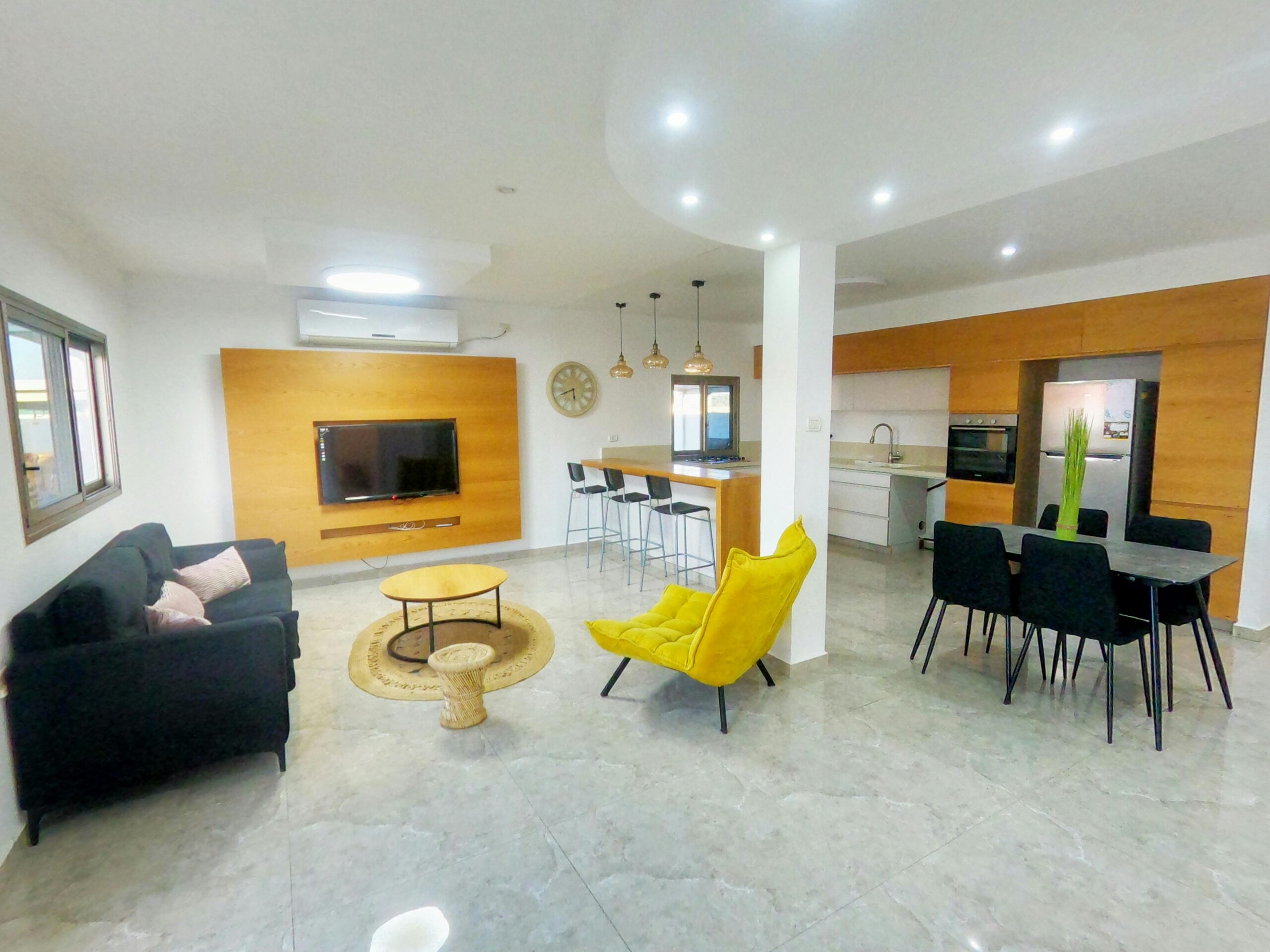
Large rooms present a unique challenge. That awkward 20×20 space or bigger can feel empty, cold, and confusing to furnish. You’ve got all this square footage, but it doesn’t work.
Why Large Rooms Feel Wrong?
Walk into an oversized room, and something feels off. The problem isn’t the size—it’s how we try to fill it.
Most people default to perimeter placement. Couch against the wall, TV on the opposite side, maybe a chair shoved in a corner. In a 20×20+ room, this creates a dead zone in the middle that screams, “I don’t know what I’m doing.”
The distance between seats becomes too far for conversation. You’re shouting across the room to talk to someone sitting 15 feet away. The TV sits so far from the couch that you need binoculars. And somehow, despite all this space, the room feels uncomfortable.
What the Furniture Island Technique Actually Does?
Think of your large room as multiple smaller rooms sharing the same floor plan. Each “island” serves a specific purpose and functions independently while contributing to the whole.
A furniture island is a self-contained grouping that floats away from the walls. It has clear boundaries, serves a specific function, and feels complete on its own.
In a 20×20 living room, you might create a conversation island around the fireplace, a reading island by the window, and a gaming island in the corner. Each works alone, but together they make the entire room functional.
The Core Principles
Anchor each island with a rug.
The rug defines where the island starts and stops. It’s not just decoration—it’s a physical boundary that tells your brain “this is a distinct space.”
For a seating island, use an 8×10 or 9×12 rug. All front legs of furniture should sit on it. Back legs can float off if needed, but front legs anchored create visual cohesion.
Maintain clear pathways
People need to walk through your room. Leave 30-36 inches between islands for main pathways. Secondary paths can squeeze down to 24 inches, but any tighter and you’re creating obstacle courses.
Map your natural walking patterns before placing furniture. Where do you enter? Where are you headed? Don’t force people to zigzag around islands like a slalom course.
Create conversation distances
Seating on an island should be 4-8 feet apart. Closer feels invasive. Farther kills the conversation. This is why floating furniture off walls matters—you can position pieces at proper distances instead of wherever the wall happens to be.
Balance the visual weight.
Large furniture creates visual anchors. Distribute them evenly across the room so one side doesn’t feel lopsided. If your sectional sits in one quadrant, put substantial pieces—like a media console or bookshelf—in other quadrants to balance it out.
Building Your First Island: The Main Seating Area
Start with your primary function. In most living rooms, that’s conversation and TV watching.
Position your sofa or sectional away from the wall. Yes, this feels weird at first. Do it anyway. Pull it out 2-3 feet minimum. In a 20×20 room, you can go 4-5 feet without issues.
Arrange additional seating to face the sofa at a slight angle. Two chairs work better than a loveseat—they’re more flexible and create better flow. Place them perpendicular or at 45-degree angles to the sofa.
Add a coffee table centered in the grouping. Keep it within 18 inches of the sofa. This creates your focal point and gives people a place to set drinks without doing gymnastics.
Layer in side tables next to seating. These shouldn’t match—coordination looks more sophisticated than matchy-matchy. They need to be at the functional heights for lamps and drinks.
Secondary Islands That Actually Work
The reading nook island
One comfortable chair, a side table, a good lamp, and a small bookshelf. Place this near natural light if possible. A 5×7 rug defines the space.
This island needs less clearance. You can’t tuck it partially into a corner while still maintaining the island concept by floating it slightly away from both walls.
The work surface island
A desk or console table with task lighting. Add a comfortable chair and a small storage unit. This works well between other islands or against a short wall section.
Keep this island streamlined. Work surfaces attract clutter, and clutter destroys the intentional feel you’re building.
The entertainment island
Media console, TV, and some storage for equipment. This can float in the room or sit against a wall—it’s one of the few pieces that works either way.
Angle it toward your main seating island. Don’t let walls dictate TV placement. Figure out the optimal viewing angle and distance, then position accordingly.
Common Mistakes That Kill the Technique
Using furniture that’s too small makes islands disappear. In a 20×20+ room, you need substantial pieces. That apartment-sized loveseat looks like doll furniture. Size up.
Creating too many islands fragments the space into chaos. Three islands max for a 20×20 room. Four if one is tiny. More than that, and you’re just cluttering with extra steps.
Forgetting about lighting. Each island needs its own light source. Overhead lighting alone creates harsh shadows and undermines the cozy zones you’re building: table lamps, floor lamps, or wall sconces for each area.
Blocking sightlines completely. Islands should define space without creating walls. Keep furniture heights varied so you can see across the room. All tall pieces clustered together create a visual barrier that defeats the openness you’re working with.
The Behind-the-Sofa Secret
That gap behind your floated sofa is prime real estate. Don’t leave it empty.
A console table back there adds function and purpose. It holds lamps, displays, and storage baskets. More importantly, it justifies why the sofa sits away from the wall—you’re using that space deliberately.
Keep the console table slightly shorter than your sofa length and about 12-18 inches from the sofa back. This creates a natural pathway and gives the island definition from behind.
Adapting for Odd Shapes
Not every large room is a perfect square. L-shaped rooms, rooms with bay windows, or spaces with architectural quirks need adjusted approaches.
In L-shaped rooms, treat each leg as its own zone—main seating island in the larger section, secondary function in the smaller leg. Use the corner where they meet for a transitional piece like a tall plant or bookshelf.
Rooms with fireplaces or built-ins have obvious focal points. Build your main island around these features, then add secondary islands that complement rather than compete.
Bay windows beg for a reading island. The natural light and architectural interest do half the work. Just add seating and a small side table.
Scale Matters More Than You Think
Furniture scale makes or breaks this technique. In a 20×20 room, you need pieces that match the volume.
Sofas should be 84-96 inches long minimum. Anything smaller looks lost. Sectionals work great if you’ve got 25+ feet to work with.
Coffee tables need presence. Aim for 48-54 inches long. Round tables should be 40-48 inches in diameter. Those tiny 36-inch options disappear in large spaces.
Area rugs must be substantial. 8×10 is your starting point. 9×12 or 10×14 often works better. Small rugs make islands look like afterthoughts.
Making It Work on a Budget
You don’t need expensive furniture to execute this technique. You need the right sizes and intentional placement.
Shop estate sales and consignment stores for substantial pieces. Large furniture from the 80s and 90s was built bigger—perfect for oversized rooms and usually cheap because people downsized.
Use what you have differently before buying new. Pull pieces off walls, add budget rugs from discount stores, and rearrange into islands. See what gaps remain before spending money.
DIY console tables from simple boards and hairpin legs. These cost $50-75 and solve the behind-sofa issue perfectly.
Seasonal Adjustments
Large rooms let you rotate island functions with seasons or needs. The flexibility is part of the appeal.
In summer, shift the reading island closer to the windows for the breeze and light. In winter, pull seating islands closer to the fireplace or away from drafty windows.
Holiday gatherings need reconfiguring into one large seating island. Daily life might prefer multiple smaller zones. Your room adapts because nothing’s bolted down.
The Traffic Flow Test
Before you commit, live with your layout for a week. Notice where you naturally walk. Do you constantly navigate around furniture? Are you taking weird routes to avoid islands? Adjust.
Good furniture island technique feels natural. You shouldn’t notice the layout—you should use the room comfortably. If you’re conscious of the arrangement, something’s off.
Walk through at different times of day. Morning routines differ from evening patterns. Your layout should accommodate both without forcing you into gymnastics.
Final Reality Check
The furniture island technique transforms unusable large rooms into functional, comfortable spaces. But it requires commitment to pulling furniture away from walls—the single hardest mental shift most people face.
Stop thinking about “space” as wasted. That openness makes islands work. The breathing room between zones prevents your 20×20 room from feeling like overstuffed storage.
Start with one main island. Live with it. Add secondary islands gradually. This technique isn’t all-or-nothing. Incremental changes let you adapt without overwhelming the space or your budget.
