

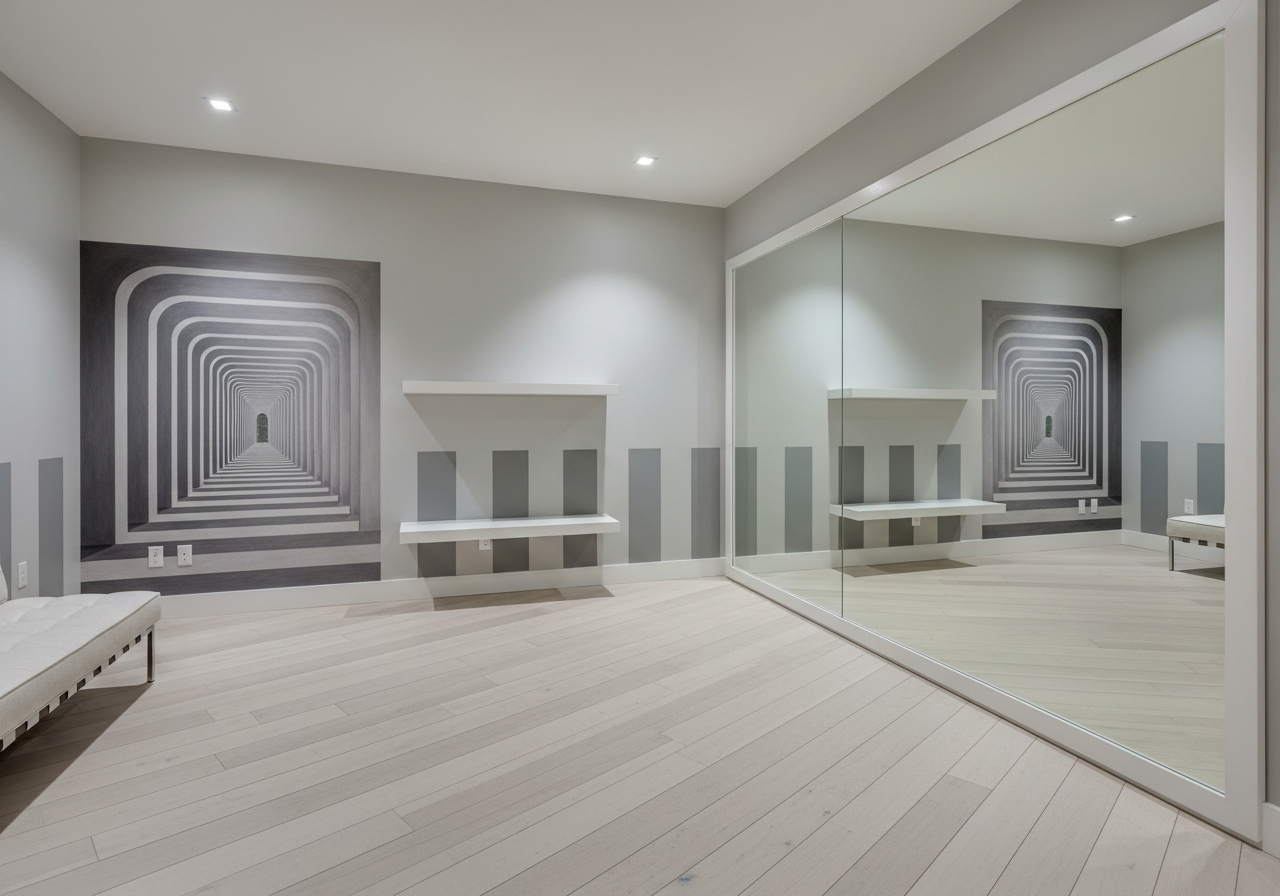
An 11-foot-wide room sits in that tricky middle ground. It’s not tiny, but it’s not generous either. You’ve got just enough space to work with, but one wrong move and the whole room feels cramped and claustrophobic.
You don’t need to knock down walls or spend thousands on renovations. Strategic optical illusions can genuinely transform how spacious your room feels.
Why 11-Foot Rooms Feel Smaller Than They Are?
Before we jump into solutions, let’s understand the problem. Most people make their 11-foot rooms feel cramped through common mistakes.
Dark paint absorbs light and makes walls feel closer. Oversized furniture crowds the floor space. Heavy curtains block natural light. Clutter accumulates on every surface. Poor lighting creates shadows that shrink the perceived size.
Your room might actually have decent square footage, but these factors trick your brain into thinking otherwise.
The Mirror Multiplication Effect
Mirrors are the oldest trick in the design book because they actually work. But placement matters more than size.
Mount a large mirror directly across from your main window. This doubles the natural light and creates the illusion of another window. Your brain perceives more depth because it sees what appears to be an extension of the room.
Avoid placing mirrors where they reflect clutter or blank walls. That multiplies the problem. Instead, angle them to capture light sources, outdoor views, or the most open areas of your room.
Leaning a floor mirror against a wall works better than hanging it in narrow rooms. The slight angle adds dimension and makes the ceiling appear higher.
Paint Colors That Push Walls Back
Light colors reflect more light, but that’s not the whole story. The specific shade and finish matter enormously.
Cool tones like soft grays, light blues, and pale greens make walls recede visually. Warm colors like beige and cream feel cozy but can close in a narrow space. If you love warm tones, use them as accents rather than wall colors.
Matte finishes absorb light and can feel flat in small spaces. Eggshell or satin finishes reflect just enough light to add depth without looking shiny. Save the high gloss for trim and doors where you want to create a subtle contrast.
Paint your ceiling the same color as your walls or go one shade lighter. The continuous color eliminates visual breaks that make rooms feel boxed in. White ceilings can actually feel lower because they create a distinct boundary line.
Furniture Arrangement That Creates Flow
The biggest mistake in 11-foot rooms is pushing all furniture against the walls. This actually makes the room feel narrower because you’ve created a hollow center with no purpose.
Float your furniture away from walls when possible. Pull your sofa 12 inches from the wall. This creates depth and makes the room feel layered rather than flat.
Choose furniture with exposed legs rather than skirted pieces that sit directly on the floor. When you can see under and around furniture, the floor space appears larger. Furniture that blocks the floor line makes rooms feel crowded.
Keep your largest pieces against the longest walls. Place a sofa along an 11-foot wall rather than perpendicular to it. This creates a natural flow and doesn’t interrupt sight lines.
The Vertical Expansion Strategy
Most people forget about the vertical dimension. Drawing the eye upward makes ceilings feel higher, and rooms feel more spacious.
Hang curtains at ceiling height, not at the window frame. The vertical lines of floor-to-ceiling drapes create an illusion of height. Choose light, flowing fabrics that don’t add bulk.
Use vertical stripes sparingly but strategically. A single accent wall with vertical elements makes that wall feel taller. Vertical paneling, tall bookshelves, and floor-to-ceiling artwork all employ this principle.
Install shelving higher on walls rather than at eye level. This pulls attention upward and creates more usable floor space. High shelves also create the impression of taller walls.
Lighting Layers That Open Space
One overhead light fixture is the enemy of spatial perception. It creates a single pool of light with dark corners that feel cramped.
Layer your lighting at different heights. Use floor lamps in corners to push back shadows. Add table lamps at mid-level to create warmth. Include wall sconces to highlight vertical space. Overhead lighting should be dimmable ambient light, not your only source.
Natural light deserves special attention. Remove heavy window treatments that block sunlight. If you need privacy, use sheer curtains that filter light without blocking it completely. Bottom-up shades let you control privacy while keeping upper windows exposed for maximum light.
Hidden LED strips along the top of cabinets or behind furniture create a floating effect. The indirect light bounces off walls and ceilings, making boundaries feel less defined.
Scale and Proportion Secrets
Choosing the right size furniture transforms an 11-foot room. Too large and you can’t move. Too small, and the room feels cluttered with scattered pieces.
For seating, a standard sofa runs 84-96 inches. In an 11-foot room, you want the smaller end of that range. Better yet, consider a 72-inch loveseat or apartment-scale sofa specifically designed for tighter spaces.
Coffee tables should provide a surface area without overwhelming. A 48-inch length works well in most 11-foot rooms. Keep depth under 24 inches so it doesn’t block circulation.
Choose one or two substantial pieces rather than many small items. A single large piece of artwork looks more spacious than a gallery wall of small frames. One substantial plant in a corner beats five small plants scattered around.
Strategic Color Contrast
Monochromatic doesn’t mean boring, and it definitely doesn’t mean everything must match. Using variations of a single color family creates cohesion that makes spaces feel larger.
Your walls, furniture, and textiles should stay within a two to three shade range. A light gray wall with charcoal furniture and steel blue accents maintains visual continuity. The eye travels smoothly through the space instead of stopping at each color change.
Reserve high contrast for small accent pieces. A black picture frame against a white wall creates a focal point but doesn’t break up the space. Black furniture against white walls divides the room into distinct sections that feel separate and smaller.
The Clear Pathways Principle
Physical clutter creates visual chaos. Your brain interprets a cluttered room as smaller because it can’t process all the boundaries and edges.
Maintain at least 30 inches of clear pathway through your room. This isn’t wasted space. It’s visual breathing room that makes the entire area feel larger.
Remove anything that doesn’t serve a clear purpose. That decorative bowl collecting junk, the extra throw pillows, the stack of magazines you’ll never read. Each item adds visual weight.
Closed storage beats open shelving in small spaces. A clean-lined cabinet looks spacious. An open shelf packed with items looks cluttered even when organized.
Transparent and Reflective Materials
Glass, acrylic, and metallic finishes let light pass through or bounce around. This creates less visual interruption than solid, opaque materials.
A glass coffee table takes up the same physical space as a wood one, but it doesn’t block your view of the floor. Your brain perceives more continuous floor space.
Acrylic chairs work beautifully in tight dining areas. They provide seating without adding visual bulk. Metallic finishes on light fixtures and hardware reflect light and add subtle dimension.
Avoid going overboard. One or two transparent pieces create the illusion. Too many and your room looks like a furniture showroom rather than a home.
The Continuous Floor Line
Your flooring choice and how you use it dramatically affect perceived space. Continuous flooring throughout connected rooms makes the entire area feel larger.
If you’re choosing new flooring, run planks parallel to the longest wall. This draws the eye along the length and exaggerates the dimension.
Area rugs should be large enough that furniture sits on them, not around them. A too-small rug makes furniture look oversized and disconnected. The right-sized rug unifies the space and defines zones without breaking up floor space.
Pattern and Texture Balance
Patterns add interest but can overwhelm small spaces. The key is controlling scale and quantity.
Large-scale patterns work better than small, busy prints in confined areas. A large floral or geometric design feels sophisticated. Tiny repeating patterns look cluttered and close in walls.
Limit patterns to two or three items in a room. A patterned rug, solid furniture, and one patterned throw pillow. More than that, the eye doesn’t know where to rest.
Texture adds depth without visual weight. A chunky knit throw, a nubby linen pillow, or a textured wall hanging creates interest while maintaining a neutral color palette.
The Final Touch: Declutter Ruthlessly
No optical illusion works if your room is packed with stuff. Spaciousness requires editing.
Remove 20% of what’s currently in your room. Put it in storage for a month. You won’t miss most of it, and your room will immediately feel larger.
Every surface doesn’t need decoration. Space is a design element. It gives your eye a place to rest and creates the calm, open feeling you’re after.
Regular purging maintains the illusion. Set a reminder every three months to remove items that have accumulated. Maintaining spaciousness is easier than creating it from scratch.
