

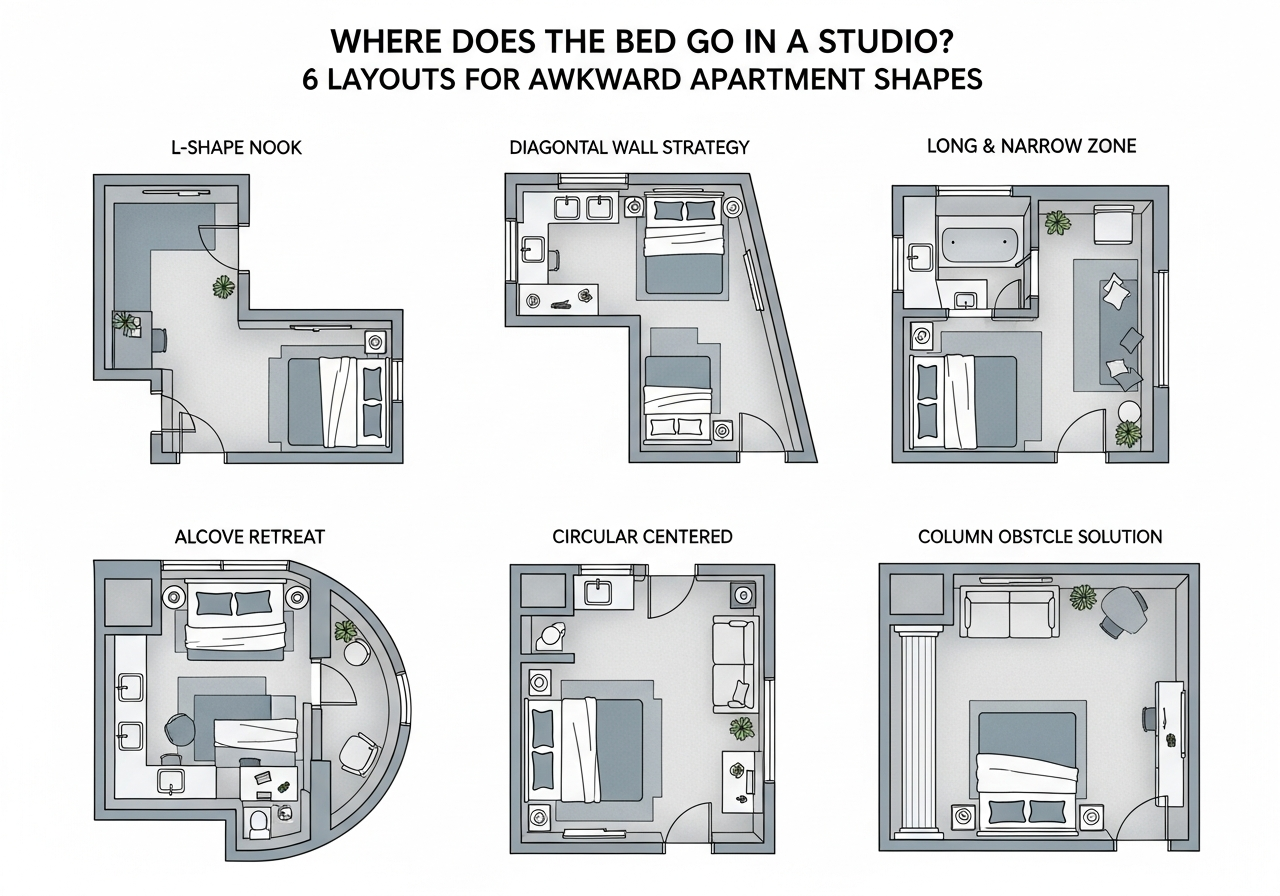
Finding the right spot for your bed in a studio apartment can feel like solving a puzzle. You’re working with one main room that needs to function as your bedroom, living room, and sometimes even your office.
The placement of your bed sets the tone for your entire space, affecting everything from how you sleep to how you entertain guests.
Why Bed Placement Matters in Small Spaces?
Your bed takes up significant square footage in a studio. Put it in the wrong spot, and you’ll feel cramped every time you walk through your front door. Place it strategically, and you create distinct zones that make your studio feel twice its actual size.
The goal is simple: your bed should feel like it belongs in a bedroom area, not like you’re sleeping in your living room or kitchen.
Layout 1: The Classic Corner Bed
Best for: Square or rectangular studios with at least one corner away from the entrance
Push your bed into the corner farthest from your front door. This instantly creates a separate sleeping zone and maximizes your open floor space.
Position the bed so the headboard meets both walls. This arrangement gives you two free sides for nightstands or storage. The corner acts as a natural anchor, making your bed feel intentional rather than randomly placed.
Add a room divider or tall bookshelf perpendicular to the bed. This creates a visual barrier between your sleeping area and the rest of your studio. You can use curtains on a ceiling track for a softer division that you can open during the day.
The setup works because it keeps your bed out of the main traffic flow and creates a distinct boundary between sleeping and living spaces.
Layout 2: Against the Longest Wall
Best for: Long, narrow studios or railroad-style apartments
Center your bed along the longest wall in your studio. This layout works particularly well when you have a long, narrow space that feels like a hallway.
Place your sofa or seating area on the opposite wall, creating two parallel zones. Position a narrow console table or bookshelf at the foot of your bed to act as a visual divider. This setup maintains clear pathways on both sides while defining separate areas.
Keep at least 24 inches of clearance on both sides of your bed for easy access. If your studio is extremely narrow, consider a daybed or twin bed instead of a full or queen.
Why this works: The symmetry makes the space feel organized. Your bed becomes part of the room’s architecture rather than an obstacle.
Layout 3: The Alcove Solution
Best for: Studios with alcoves, nooks, or L-shaped layouts
Some studios come with built-in alcoves or architectural quirks. These recessed areas are perfect for beds because they create natural separation without taking up precious floor space.
Slide your bed into the alcove and add curtains across the opening. During the day, tie them back. At night, close them for privacy and darkness. This approach turns an awkward architectural feature into a cozy sleeping nook.
If your alcove is shallow, position your bed with the headboard in the recess and the bed extending slightly into the main room. Add floating shelves above for storage and personality.
The benefit: Alcoves automatically create bedroom boundaries without room dividers or furniture placement tricks.
Layout 4: Bed as a Room Divider
Best for: Large studios or loft-style spaces with high ceilings
In spacious studios, your bed can actually function as the divider itself. Position it perpendicular to the wall, extending into the room. This creates a distinct bedroom zone behind it and a living area in front.
Add a low bookshelf or console table behind the headboard to reinforce the separation. This setup works especially well when you have enough square footage to maintain clear pathways around all sides of the bed.
Make sure you have at least 36 inches of clearance around the bed for comfortable movement. This layout requires more space but creates the most dramatic separation between sleeping and living areas.
Key advantage: You maximize the feeling of having separate rooms without building walls or installing permanent structures.
Layout 5: The Window Wall Strategy
Best for: Studios with windows along one wall and awkward door placement
Placing your bed under or near windows seems counterintuitive, but it can be your best option in studios with challenging layouts. This works when your windows have good coverings and aren’t drafty.
Center the bed on the window wall with blackout curtains or shades. The natural light during the day makes this area feel like a proper bedroom. Add a low-profile headboard to prevent pillows from falling behind the bed.
Position your seating area away from the windows, anchored around your TV or focal point. This creates natural zones based on function and light.
Why it succeeds: Windows often occupy the wall with the most uninterrupted space, making it practical for a bed despite conventional wisdom suggesting otherwise.
Layout 6: The Murphy Bed Alternative
Best for: Extremely small studios or spaces with irregular shapes
When floor space is at an absolute premium, consider a lofted bed or wall bed system. Loft beds elevate your sleeping area, freeing up the space underneath for a desk, seating, or storage.
Platform lofts work in studios with ceilings at least 9 feet high. You’ll need enough headroom above the mattress to sit up comfortably. Use the area below for your most-used furniture pieces.
Wall beds (Murphy beds) fold up completely during the day, transforming your studio from bedroom to living room. Modern versions include integrated shelving or sofas that automatically move when you lower the bed.
This approach wins when you need every square foot to multitask, and traditional bed placement leaves you with unusable space.
Making Any Layout Work Better
Regardless of which layout you choose, these strategies improve functionality:
Create clear pathways. Maintain at least 24-30 inches of walking space around furniture. Your studio should never feel like an obstacle course.
Use vertical space. Install shelves above your bed, use tall bookcases as dividers, and maximize wall storage. This keeps your floor space open and your belongings organized.
Choose an appropriate bed size. A queen bed in a 300-square-foot studio might be too large. Consider a full or even twin bed to maintain livable space.
Layer your lighting. Add bedside lamps, floor lamps in the living area, and overhead lighting. Different light sources help distinguish zones and add ambiance.
Define zones with rugs. Place one rug under your bed and another in your living area. This visual trick makes your studio feel like it has separate rooms.
Common Mistakes to Avoid
Don’t place your bed directly facing the front door. You’ll feel exposed every time someone enters, and it immediately announces “bedroom” to visitors.
Avoid blocking windows completely unless necessary. Natural light makes small spaces feel larger and more pleasant.
Skip furniture that’s too large for your space. Oversized pieces make studios feel cramped. Choose appropriately scaled furniture that fits your square footage.
Don’t neglect the space under your bed. Use risers to create storage space or invest in a bed frame with built-in drawers.
Finding Your Perfect Setup
Walk through your studio and identify your space’s natural divisions. Look for corners, alcoves, or walls that create boundaries—notice where natural light enters and how traffic flows from your door to different areas.
Measure everything before committing to a layout. Know your bed dimensions, doorway widths, and clearance needs. Sketch your floor plan or use a free online room planner to test arrangements.
Start with your largest piece (the bed) and build around it. Once you’ve determined the best bed placement, arranging the rest becomes easier.
