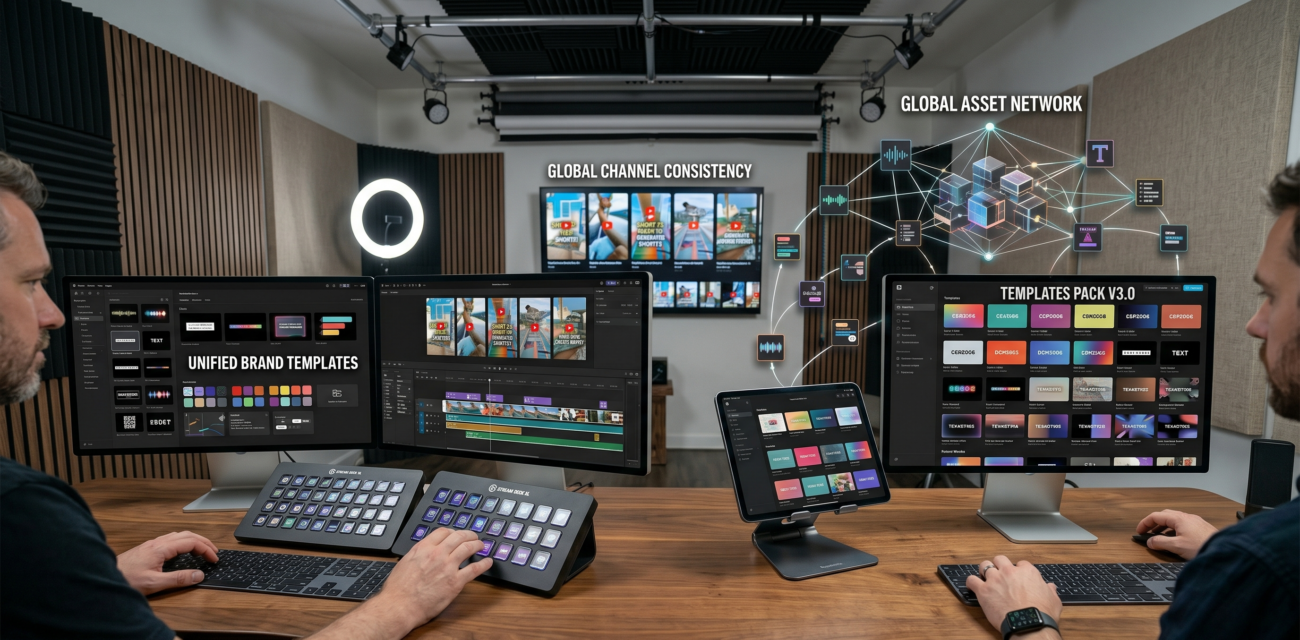
YouTube Shorts have become a critical growth engine for creators, but the grind of producing vertical content that stands out while maintaining brand consistency is exhausting. Many creators burn hours reworking the same visual styles, syncing captions, and adjusting transitions for each clip.
The solution? Templates. But not just any templates, ones built with intentionality and backed by data-driven tools.
MotionLaps: When Speed Meets Viral-Ready Automation?
MotionLaps isn’t your typical template library. It’s a full-stack automation platform that transforms basic script ideas into polished Shorts in minutes. The workflow is deceptively simple: input a script (or generate one via AI), choose a voice actor, and let the system auto-sync visuals with royalty-free music.
In tests across multiple Shorts channels, creators using MotionLaps reported a 70% reduction in editing time compared to manual workflows.
The platform’s real strength lies in its customizable visual styles—from photorealism to anime-inspired aesthetics. A tech education channel with 120K subscribers saw a 22% boost in watch time after switching to MotionLaps’ “Dark Fantasy” templates, which aligned with their niche audience’s preferences.
Its multi-platform scheduling feature also eliminates the need for separate planning tools.
| Key Features | Performance Impact |
|---|---|
| Full AI Automation | Reduces editing time by 60-80% |
| Custom Visual Styles | Improves audience retention by 15-25% |
| Script-to-Video Integration | Eliminates the need for a separate voice recording |
| Multi-Platform Scheduling | Saves 5+ hours weekly on content planning |
Envato Elements
Envato Elements is a goldmine for creators who already have editing software fluency. Its template catalogue spans thousands of professionally designed options, from kinetic typography to minimalist transitions.
However, the platform’s value proposition hinges on volume. A gaming channel with 250K subscribers found that after 6 months of using Envato’s templates, their content consistency improved, but only after dedicating 10+ hours to curate a personalised template library.
The subscription model ($16/month) works for agencies or high-volume creators, but casual users might find the learning curve steep. Navigation without specific keywords can be overwhelming. Imagine sifting through 500+ templates to find a simple lower-third animation.
| Pros | Cons |
|---|---|
| Unlimited downloads for $16/month | Steep learning curve for beginners |
| Professional-grade templates | Requires existing software skills |
| Regular updates with trending effects | Overwhelming asset library without search filters |
Motion Array
Motion Array bridges the gap between template libraries and full production suites. Its social media templates are just the tip of the iceberg—plugins, SFX libraries, and stock footage make it a one-stop shop.
A lifestyle channel with 90K subscribers used Motion Array’s plugins to automate lower-third animations and found their average CTR increased by 18% after implementing consistent branding elements.
The platform’s AI voiceover feature is particularly useful for creators who struggle with on-camera presence. While the subscription starts at $29/month, the bundled assets often justify the cost for mid-tier creators.
CapCut
CapCut dominates mobile editing for a reason. Its drag-and-drop templates are pre-synced with trending audio tracks, making it a favourite among Gen Z creators. In a case study from a dance tutorial channel with 500K subscribers, switching to CapCut templates led to a 35% increase in shares within 3 months.
The auto-caption feature supports 20+ languages, and its template system allows colour customisation to match brand palettes. However, advanced users may outgrow its limitations—think of it as a high-performance scooter versus a motorcycle.
Filmora
Filmora’s template-driven approach appeals to creators who want TikTok-level polish without steep learning curves. Its vertical video presets automatically adjust aspect ratios, while overlays and transitions can be saved as reusable templates. A comedy channel with 75K subscribers reported that using Filmora’s “viral template” pack reduced their editing time from 45 minutes to 12 minutes per Short.
The platform’s asset library integrates seamlessly with Envato Elements, allowing creators to layer templates with premium graphics. Its instant export feature is a boon for last-minute uploads.
Adobe Premiere Mobile: Professional Power in a Pocket-Sized Package
Adobe’s mobile Shorts editor brings desktop-grade precision to smartphones. Its Firefly-powered AI features generate unique assets, while multi-track timelines accommodate complex edits.
A travel vlogger with 180K subscribers used Premiere Mobile’s templates to maintain consistent colour grading across 50+ Shorts, resulting in a 12% uptick in subscriber growth.
The integration with Adobe Express allows seamless asset transfers, making it ideal for creators already embedded in Adobe’s ecosystem.
Building Your Template Arsenal: A Tactical Guide
The most effective Shorts creators don’t rely on a single tool. They stack complementary platforms to optimise different workflow stages.
Here’s how:
- Pre-Production: Use Canva to storyboard templates and plan colour schemes.
- Editing: Combine CapCut for quick cuts with MotionLaps for automated voiceovers.
- Post-Production: Polish with Premiere Mobile’s advanced transitions or VN’s keyframe animations.
The Monetisation Factor: Templates That Scale
Consistent templates aren’t just about aesthetics; they’re a monetisation hack. YouTube’s algorithm favours channels that maintain a steady upload cadence and visual coherence. A beauty channel with 320K subscribers saw its RPM (revenue per mille) spike by 40% after adopting a unified template strategy, as its Shorts began attracting brand partnerships.
The Tools That Matter Most (And the Ones to Skip)
Not all platforms deserve your time. InShot, while popular, introduces watermark friction that hurts brand perception. VN’s advanced features are overkill for creators producing fewer than 10 Shorts weekly. Descript excels in talking-head content but lacks the visual punch needed for trend-driven Shorts.
For scheduling, Hootsuite ($99/month) and Buffer (free tier) dominate multi-platform management, while Later ($25/month) excels in visual content calendars.
Final Takeaway
The creators winning the Shorts game aren’t necessarily the most creative—they’re the most efficient. By building a template stack that matches their content rhythm, they free up mental bandwidth for storytelling and audience engagement. Whether you’re a solo creator or part of a team, the right templates can turn chaos into consistency, one 60-second clip at a time.